“No. I’m standing here telling you that you still have choices. But you need to stop lying.”
He looked away.
For the rest of the evening, nobody said much.
Before leaving, I approached my father.
“Dad, please don’t sign anything else until an independent attorney reviews it.”
He nodded slowly.
Then he said something I hadn’t expected.
“Hayes, I don’t know how we got here.”
I looked at him.
“Neither do I.”
The following month was difficult for everyone.
My parents hired an independent attorney and a financial adviser.
They discovered that Barrett had accumulated considerably more debt than anyone had realized.
His business had not collapsed overnight. It had been struggling for months.
He had continued borrowing money to cover earlier obligations, hoping that one major investment would solve everything.
It never came.
The financial professionals helped my parents understand their exposure and take appropriate steps to protect their remaining assets.
The documents involving their house were reviewed carefully, and they received advice about the legal options available to them.
Barrett was also forced to confront the consequences of his decisions.
His company lost several potential investors.
Others demanded formal explanations and independent reviews.
I heard that he had spent several weeks meeting with lawyers and accountants.
I didn’t celebrate any of it.
I knew financial failure could destroy people’s confidence, marriages, and futures.
But I also knew that pretending nothing had happened would only make things worse.
Meanwhile, my professional life continued.
After completing the required ethics review and obtaining the appropriate approvals, I accepted a limited advisory position with an independent security organization.
It was not a secret appointment or a shortcut into Sullivan’s company.
The work was carefully separated from my government responsibilities, and every requirement was documented.
Sullivan respected those boundaries.
He never asked me to use government access for private purposes.
And I never offered to do so.
A few months later, he invited me to another business event.
This time, the invitation was addressed directly to me.
Not as someone’s younger brother.
Not as an unwanted guest.
As Hayes Kensington.
One afternoon, I received an unexpected phone call.
It was Barrett.
I almost let it go to voicemail.
But something made me answer.
“Hello?”
“Hayes.”
His voice sounded different.
Tired.
Quieter.
“Hey, Barrett.”
There was a long pause.
Then he said:
“Can we meet?”
I looked at the clock.
“What’s going on?”
“Nothing bad. I just want to talk.”
We agreed to meet at a small coffee shop near my apartment.
When I arrived, he was already sitting by the window.
He wore an ordinary jacket instead of the expensive designer clothing he had always preferred.
His watch was gone.
His car was no longer parked outside.
He looked older.
I ordered coffee and sat opposite him.
For a while, we discussed ordinary things.
Work.
The weather.
Our parents.
Then he finally spoke.
“I lost the house.”
I looked at him.
“What happened?”
“The financial situation became worse than we thought. Mom and Dad were able to protect some of their assets, but they decided to sell the house before things became more complicated.”
I nodded.
“Are they okay?”
“They’re staying in a smaller place now. It’s not what they’re used to, but they’re safe.”
“That’s good.”
Barrett looked into his coffee.
“Blair filed for separation.”
I didn’t know what to say.
He continued.
“She said she couldn’t trust me anymore. I can’t really blame her.”
I remained silent.
Then he looked up.
“Do you remember when we were kids?”
I smiled faintly.
“Some things.”
“You used to follow me everywhere.”
I laughed.
“You were my older brother. I thought you knew everything.”
He smiled for the first time.
“I remember.”
Then his expression changed.
“I used to think that being the older brother meant I had to be the successful one. Dad always talked about me like I was going to become someone important.”
I listened.
“And every time you did something well, I felt like people might start comparing us.”
I stared at him.
He continued.
“I didn’t want to be compared with you. So I made sure everyone saw you as the one who wasn’t doing well.”
His eyes became watery.
“I made jokes about your job. I laughed when Mom and Dad insulted you. I told Blair things about you that weren’t true.”
He stopped.
Then he said the words I had waited years to hear.
“I’m sorry, Hayes.”
I looked at him.
He wiped his eyes.
“I know saying sorry doesn’t fix anything. I know I can’t undo what I did. But I need you to know that I understand now.”
For a moment, I couldn’t speak.
I had imagined this conversation many times.
In some versions, I imagined telling him everything I had held inside.
In others, I imagined walking away without giving him another chance.
But sitting across from him, I realized something.
I didn’t need to win.
I didn’t need to remind him that Sullivan had respected me.
I didn’t need to list every achievement he had ignored.
I simply needed to decide what kind of person I wanted to be.
“Barrett,” I said quietly, “I never wanted to compete with you.”
He looked up.
“I wanted a brother.”
His eyes filled with tears.
“I know.”
“And I don’t need you to become unsuccessful for me to feel successful. I never did.”
He nodded.
We sat there for a long time.
Before leaving, he asked:
“Do you think we can ever be close again?”
I considered the question.
“Maybe. But it will take time.”
He nodded.
“I understand.”
Then I stood, shook his hand, and walked out.
It wasn’t a perfect reconciliation.
But it was an honest beginning.
PART 5
Six months after the Sterling Christmas Gala, something happened that I never imagined.
My mother called me on a Sunday morning.
“Hayes, would you come over for dinner?”
I hesitated.
“Is everything okay?”
“Yes. Your father and I want to see you.”
I agreed.
That evening, I drove to their new home.
It was a modest two-bedroom house in a quiet neighborhood.
There was no enormous driveway, no expensive furniture, and no luxury decorations.
But it looked comfortable.
My mother opened the door.
For a moment, she simply stared at me.
Then she smiled.
“Come in, sweetheart.”
The dining table was set for three.
My father was sitting in the living room, reading the newspaper.
When he saw me, he stood.
“Hayes.”
“Dad.”
He approached and shook my hand.
It felt strange.
We had hugged many times when I was younger, but in recent years, our relationship had become little more than occasional phone calls and uncomfortable family gatherings.
Dinner began quietly.
My mother served roasted chicken, potatoes, and vegetables.
We talked about ordinary things.
My father’s health.
My mother’s garden.
My work.
This time, she actually listened when I explained what I had been doing.
She asked questions.
She didn’t interrupt.
And when I mentioned a difficult project, she looked genuinely interested.
After dinner, my father placed his fork down.
“Hayes, there’s something we need to tell you.”
I looked at him.
He took a deep breath.
“Your mother and I have been thinking about the way we’ve treated you.”
My mother lowered her eyes.
My father continued.
“We spent years praising Barrett because he looked successful. We believed expensive things, business connections, and social status were proof that someone had made something of themselves.”
He paused.
“And we treated you as though you had failed because you didn’t live the way we expected.”
I said nothing.
My mother reached for a tissue.
“I remember telling people that you were a burden.”
Her voice broke.
“I remember laughing when Blair insulted you. I remember telling you to stay quiet because I was afraid you would embarrass us.”
She looked at me.
“I don’t know how to explain how ashamed I feel.”
I looked down at the table.
She continued.
“You were helping your father when he was sick. You were working long hours. You were building your own life. And we never even bothered to understand it.”
My father took a breath.
“We owe you an apology.”
I looked at both of them.
For years, I had wanted to hear those words.
But now that they were finally saying them, I realized that an apology didn’t erase the past.
It simply gave us a chance to approach the future differently.
“I appreciate you saying that,” I replied.
My mother reached across the table and took my hand.
“Can you forgive us?”
I looked at her.
“I can try. But I need you to understand something.”
She nodded.
“I won’t go back to being the person everyone makes jokes about. I won’t accept being treated like I’m less important because I don’t have an expensive car or a large house.”
My father nodded slowly.
“You shouldn’t have to.”
“And I don’t want to be invited somewhere because someone needs something from me. I want to be invited because you actually want me there.”
My mother squeezed my hand.
“You will always have a place here.”
I smiled.
“Then let’s start by making that true.”
For the first time in a very long time, dinner ended without an argument.
Barrett’s life also began to change.
He took a position as a regional operations manager at a smaller company.
It wasn’t glamorous.
He didn’t attend exclusive investment dinners.
He didn’t drive a luxury SUV.
He had to answer to a supervisor, meet deadlines, and earn his salary like everyone else.
But slowly, he began rebuilding his life.
He attended financial counseling.
He worked with professionals to resolve his outstanding obligations.
He stopped pretending to be wealthy.
And, most importantly, he began telling the truth.
Blair eventually decided to continue with the separation. They had too much damage between them, and she wanted a different future.
Barrett accepted her decision.
He didn’t blame me.
He didn’t blame Sullivan.
For once, he accepted that his own choices had brought him to that point.
We weren’t suddenly best friends.
But we began speaking occasionally.
Sometimes he called to ask how I was doing.
Sometimes I called to check on him.
And one Saturday, he invited me to lunch.
At the end of the meal, he said:
“You know, I used to think being successful meant having people look up to me.”
I smiled.
“What do you think now?”
He looked down at his hands.
“I think it means being able to look at yourself without making excuses.”
I nodded.
“That sounds about right.”
Nearly one year after the night that changed everything, another invitation arrived.
This time, it came from Sullivan Sterling himself.
Annual Sterling Foundation Gala.
The invitation included a handwritten note.
Hayes, I hope you’ll join us again this year. I’d be honored to have you as my guest.
I smiled when I read it.
I had almost forgotten how much had happened since the previous Christmas.
My work had continued to grow.
My advisory responsibilities had expanded within the proper legal and professional boundaries.
I had been promoted to a higher leadership position within my department.
I had also moved into a comfortable apartment closer to work.
I hadn’t bought an expensive car.
I hadn’t purchased designer clothes.
I hadn’t suddenly become obsessed with proving anything to anyone.
I was simply building a life I enjoyed.
On the evening of the gala, I arrived wearing a dark navy suit.
It wasn’t particularly expensive.
It fit well, and I felt comfortable in it.
The same mansion stood beneath the winter sky.
The same lights illuminated the driveway.
The same orchestra played inside.
But this time, I wasn’t standing near the door, wondering whether I belonged.
Sullivan saw me almost immediately.
“Hayes!”
He approached with a broad smile.
“I’m glad you came.”
“Thank you for inviting me.”
He shook my hand.
Then he leaned closer.
“I have something to show you.”
He led me toward a display near the main ballroom.
It featured photographs from the Sterling Foundation’s work over the previous year.
There were scholarships, infrastructure projects, cybersecurity education programs, and community initiatives.
One photograph showed Sullivan standing beside a group of young students.
He pointed toward it.
“We’ve established a scholarship program for students interested in cybersecurity and public infrastructure protection.”
I smiled.
“That’s wonderful.”
“We named one of the annual awards after the principle you mentioned when we first spoke.”
I looked at him.
“What principle?”
He laughed.
“The idea that people should be recognized for the work they do, not the image they present.”
I shook my head.
“I don’t remember saying that.”
“You didn’t. But your actions said it clearly.”
He handed me a small program.
Inside was a description of the new scholarship.
I read it carefully.
It was designed to support students from ordinary families who had talent but lacked financial resources.
I felt a strange warmth in my chest.
“Thank you for doing this,” I said.
Sullivan smiled.
“Thank you for reminding me why it matters.”
Then I heard someone call my name.
“Hayes?”
I turned.
It was Barrett.
He was wearing a simple black suit.
No expensive watch.
No designer accessories.
Just my brother.
He approached with a nervous smile.
“Hey.”
“Hey.”
He glanced toward Sullivan.
“Mr. Sterling.”
Sullivan nodded politely.
“Barrett. Good to see you.”
My brother turned toward me.
“I wasn’t sure you’d be here.”
“I received an invitation.”
He laughed.
“Right. Of course.”
For a moment, neither of us knew what to say.
Then Barrett reached into his jacket.
“I brought something.”
He handed me a small envelope.
I opened it.
Inside was a photograph.
It was old.
Very old.
Two little boys stood in front of our parents’ first house.
One was holding a toy airplane.
The other had his arm around his shoulder.
I recognized the boys immediately.
Barrett and me.
On the back, he had written:
To my little brother. I’m sorry I spent so many years trying to stand above you when I should have stood beside you.
I looked at him.
He smiled awkwardly.
“I found it in an old box at Mom and Dad’s place.”
I looked down at the photograph again.
“Thank you.”
Barrett nodded.
Then he said:
“I don’t expect everything to go back to how it was.”
“It won’t.”
“I know.”
“But we can build something better.”
He smiled.
“That’s all I want.”
I placed the photograph carefully inside my jacket.
Then I shook his hand.
A moment later, Sullivan excused himself to greet another guest.
Barrett and I stood together near the Christmas tree.
For the first time, I didn’t feel like I was standing in my brother’s shadow.
And he didn’t seem to need me to stand there anymore.
Later that evening, Sullivan invited me to the stage.
He announced the expansion of the foundation’s scholarship program and introduced several people who had helped make it possible.
When he mentioned my name, the audience applauded.
I walked onto the stage.
The room was full of influential people.
Business leaders.
Government officials.
Investors.
Community representatives.
And my family.
My parents were seated near the front.
My mother was smiling.
My father was clapping.
Barrett was standing beside them.
Sullivan handed me the microphone.
“Hayes, would you like to say a few words?”
I looked at the audience.
For a moment, I remembered the previous Christmas.
I remembered standing beside the fireplace while Blair pointed at me.
I remembered my father’s laughter.
My mother’s declaration.
The words that had followed me for most of my life.
The family failure.
I took a breath.
“Thank you, Mr. Sterling. I appreciate the opportunity.”
I paused.
“I want to say something to anyone who has ever felt underestimated.”
The room became quiet.
“Sometimes, the people closest to us are the ones who misunderstand us the most. They see our clothes, our cars, our salaries, and our circumstances. They decide who we are before taking the time to understand what we do.”
I looked toward my parents.
“But your worth doesn’t depend on how many people recognize your achievements. It doesn’t depend on whether someone important knows your name. And it certainly doesn’t depend on whether your family considers you successful.”
I paused again.
“Work hard. Be honest. Treat people with respect. And never allow someone else’s limited understanding of your life to become the measure of your own value.”
The audience applauded.
I handed the microphone back to Sullivan.
He shook my hand.
Then he whispered:
“Well said, Hayes.”
I smiled.
And for the first time, I realized that I no longer cared whether my family was impressed.
I was proud of the person I had become.
That was enough.
A few weeks after the gala, I visited my parents.
My mother had prepared dinner.
My father was watching television.
Barrett was there too.
We sat around the table, sharing stories and laughing about things that had happened when we were children.
At one point, my father looked toward me.
“Hayes, I have something to ask.”
“What’s that?”
“Are you happy?”
I thought about the question.
My job was demanding.
My responsibilities were serious.
I still had difficult days.
I wasn’t wealthy.
I didn’t own a mansion.
I didn’t have a collection of luxury cars.
But I had meaningful work.
I had people who respected me.
I had a comfortable home.
I had a brother who was finally learning to be a brother.
And I had parents who were slowly learning that love should never depend on achievement.
So I smiled.
“Yes, Dad. I’m happy.”
He nodded.
“Good. That’s what matters.”
My mother reached over and placed another serving of food on my plate.
“Then you should visit more often.”
I laughed.
“I’ll try.”
After dinner, Barrett walked me to my car.
We stood outside beneath the porch light.
He looked at my old sedan and smiled.
“You still drive this thing?”
I laughed.
“It’s reliable.”
“You could afford something better now.”
“Maybe. But I don’t need anything better.”
He nodded.
Then he looked at me.
“You know what I’ve learned?”
“What?”
“People who are genuinely successful don’t spend all their time trying to convince everyone else.”
I smiled.
“That’s a pretty good lesson.”
He laughed.
We shook hands.
Then I got into my car and drove home.
As I passed through the quiet streets, I thought about that Christmas night.
The mansion.
The fireplace.
The expensive champagne.
The laughter.
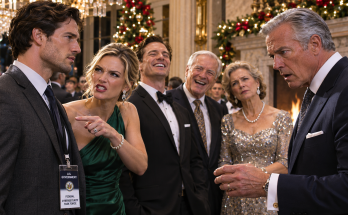
And the moment Sullivan Sterling had looked at my identification card and frozen.
My family had spent years believing that I was unsuccessful because I didn’t live according to their expectations.
They thought my old car meant I had failed.
They thought my quiet personality meant I had nothing to say.
They thought my work was insignificant because I never discussed it.
But they had been wrong.
And the most important lesson wasn’t that I had a prestigious job or that a billionaire respected me.
It was that I had never needed their approval to become someone worth respecting.
I didn’t need to humiliate my brother.
I didn’t need to make my parents feel guilty forever.
I didn’t need to prove anything to Blair.
I simply needed to stop accepting the idea that my value depended on their opinion.
Because the truth was simple.
I was never the family failure.
I was the son who kept working when nobody was watching.
The brother who refused to become cruel, even when people were cruel to him.
The man who could have used his success to take revenge but chose to build a better life instead.
And that Christmas night, when the billionaire CEO recognized me, my family finally saw something they should have noticed years earlier.
I had never been beneath them.
They had simply never bothered to look closely enough.


One Comment on “My Family Called Me a Failure at a Billionaire’s Christmas Gala—Until Her CEO Father Recognized My Badge and Said, “Sir, I Didn’t Expect to See You Here.””