PART 8 — THE PERSON BEHIND MEGAN
For almost a year, I had believed Megan was the most dangerous person who had ever entered my family.
Then Detective Cole placed one handwritten page on my kitchen table and changed everything.
HELEN DOESN’T KNOW WHAT HER FATHER DID.
DO NOT LET HER FIND THOMAS BEFORE WE CONTROL THE CERTIFICATE.
I read the sentence again.
Then I looked at the word above it.
WE.
Not I.
We.
Someone else had been involved.
Someone who knew my father.
Someone who knew Thomas.
Someone who knew about an investment even I had never known existed.
And apparently, someone who had been waiting years for me to discover it.
George stood behind my chair.
“What exactly did Megan know?”
Detective Cole closed the evidence folder.
“More than we realized.”
“How much more?”
“We’re still determining that.”
I hated that answer.
For months, I had lived on phrases like that.
We’re investigating.
We’re checking.
We don’t know yet.
There may be more.
I wanted one morning when there was not more.
Margaret sat across from me.
She looked almost as shaken as I felt.
Until ten days earlier, she had believed my father was hers.
Now DNA suggested that her biological father was probably Thomas Bennett—the older brother my father had never told me existed.
And Thomas’s granddaughter was Megan.
Rebecca Ann Mercer.
My son’s wife.
The woman who had tried to destroy us.
Margaret whispered, “If Thomas was my father, what does that make Megan to me?”
Detective Cole answered carefully.
“If the records are correct, Thomas had at least two children.”
“Daniel and me?”
“Possibly.”
“Then Daniel would have been my half-brother.”
“Yes.”
“And Megan…”
“Would be your half-niece.”
Margaret covered her mouth.
I looked toward the staircase.
Molly and Eli were upstairs.
They were Megan’s children.
Which meant the strange family tree had wrapped itself around all of us.
George rubbed his forehead.
“This is insane.”
“No,” Detective Cole said.
“It’s complicated.”
“That isn’t better.”
“No.”
Cole opened the folder again.
“We searched every digital device recovered from Megan and Linda.”
“Why didn’t you find this before?”
“Because this file wasn’t stored under Megan’s normal account. It was recovered from an encrypted partition after we obtained a new password from one of the financial accounts Brian helped identify.”
Brian.
Even from prison, my son was still pulling threads from the knot he had helped tie.
“What else was there?”
Cole hesitated.
I noticed.
“What?”
“Approximately four hundred files.”
Margaret stared at him.
“Four hundred?”
“Photographs. Property records. Estate documents. Genealogical research. Copies of letters. Corporate filings.”
My heart began pounding.
“About my father?”
“Some.”
“About me?”
“Yes.”
“How long?”
Cole looked at me.
“The earliest file mentioning you was created fourteen years ago.”
I felt George’s hand tighten on my shoulder.
Fourteen years.
Megan had not even known Brian then.
At least, Brian believed she had not.
“How old was she?”
“Twenty-seven.”
“And she was already researching me?”
“Yes.”
“Why?”
“We think the certificate is only part of the answer.”
There was that phrase again.
Part of the answer.
I stood and walked toward the window.
Outside, Eli’s bicycle lay on its side beside the driveway.
A red plastic helmet hung from the handlebar.
Something ordinary.
Something real.
I focused on it.
“Tell me the rest.”
Cole removed three pages.
The first was a corporate record.
The second was a newspaper clipping.
The third was a photograph.
He placed the photograph in front of me.
Three men stood outside a factory.
One was my father.
Samuel.
One was the man we now believed was Thomas.
And the third man was unfamiliar.
All three looked young.
Probably in their twenties.
Behind them was a sign.
MIDWEST PRECISION COMPONENTS
DAYTON, OHIO
1962
“My father worked there.”
Cole nodded.
“He did.”
“He never owned it.”
“Apparently, he did.”
I turned.
“What?”
“Not entirely. The company was started by four investors. Your father was one of them.”
“Four?”
“Yes.”
“Who were the others?”
Cole pointed.
“Thomas Bennett.”
Then the third man.
“Walter Mercer.”
Mercer again.
“And the fourth?”
Cole looked at me.
“That’s where this becomes difficult.”
“Why?”
“Because the fourth investor’s name does not appear on the original public filing.”
“That doesn’t make sense.”
“It does if the investment was held through a private agreement.”
George sat beside me.
“Who was it?”
“We don’t know yet.”
I looked at the photograph.
Samuel.
Thomas.
Walter.
And somewhere outside the frame, a fourth person.
“What happened to the company?”
“It developed a manufacturing process for specialized aerospace components. At the time, it wasn’t particularly valuable. Then a larger company purchased its patents.”
“And Dad kept ownership?”
“Partially.”
“That’s the certificate?”
“Yes.”
“Then why didn’t anyone know?”
“Because the corporate history becomes messy after 1966.”
“What happened in 1966?”
Cole slid the newspaper clipping toward me.
The headline read:
LOCAL BUSINESS PARTNER MISSING AFTER FACTORY FIRE
I stopped.
“Who disappeared?”
Cole did not answer immediately.
He did not need to.
I looked at the photograph again.
Thomas.
“No.”
“Thomas Bennett disappeared three days after the fire.”
“But you said his name was changed when he was eleven.”
“It was.”
“So why was he using Bennett again?”
“We don’t know.”
Margaret leaned forward.
“Did he die in the fire?”
“No body was recovered.”
“Then where did he go?”
“That is exactly what Megan appears to have spent years trying to discover.”
I stared at him.
“Megan didn’t know?”
“Apparently not.”
That changed something.
If Megan had been searching for Thomas, then whoever had guided her did not have every answer either.
George picked up the newspaper clipping.
“What caused the fire?”
“Officially?”
“Yes.”
“Electrical failure.”
“And unofficially?”
Cole looked at him.
“There were allegations that financial records were destroyed.”
“Whose records?”
“The company’s.”
Margaret whispered, “Someone burned the evidence.”
“Possibly.”
I thought about my father.
He had never told me any of this.
Not the company.
Not Thomas.
Not the fire.
Nothing.
“Was my father investigated?”
“Yes.”
The word hurt.
“For what?”
“Insurance fraud initially. No charges were filed.”
“And Thomas?”
“He disappeared before investigators could interview him.”
“Walter Mercer?”
“Interviewed twice. Never charged.”
I looked at the photograph.
“What happened to Walter?”
“He died twenty-three years ago.”
“So everyone who knows what happened is dead.”
Cole did not answer.
I noticed.
“Everyone?”
He looked at me.
“We found one person who might still be alive.”
The room became silent.
“Who?”
“The fourth investor.”
I stared at him.
“You just said you didn’t know who that was.”
“We don’t know the legal name.”
“Then how do you know the person is alive?”
“Because Megan received a message from them eleven months ago.”
Cole removed another page.
It was an email.
No sender name.
No signature.
Only three sentences.
Rebecca,
Stop searching for Thomas.
The Bennett certificate does not belong to Helen.
If she ever discovers it, contact me.
I felt cold.
“When was this sent?”
“Three weeks before Megan and Brian filed the guardianship petition against you.”
George swore.
“So that’s what triggered everything.”
“Possibly.”
I shook my head.
“No.”
Everyone looked at me.
“The guardianship petition was about controlling me.”
“Yes.”
“If they controlled me, they controlled my assets.”
Cole nodded.
“And if the certificate became part of my father’s reopened estate…”
“They could control your claim.”
Exactly.
Suddenly the pieces rearranged themselves.
The house.
The investment accounts.
The guardianship.
They mattered.
But perhaps they had also been camouflage.
Megan needed Brian to control me before the hidden certificate surfaced.
“What is it worth?”
I asked.
Cole glanced toward Evelyn.
She had joined us shortly after he arrived.
She opened a financial report.
“The current estimate is between eleven and fourteen million dollars.”
Nobody spoke.
I laughed.
I could not help it.
Not because it was funny.
Because apparently my family had reached the point where eleven million dollars could enter a conversation and still not be the most shocking part.
George looked at me.
“You okay?”
“No.”
“Fair enough.”
Margaret asked, “If Samuel owned it, wouldn’t Helen inherit it?”
“Normally,” Evelyn said.
“But the original ownership agreement may contain restrictions.”
“What restrictions?”
“We don’t have the full agreement.”
“Because it burned?”
“Possibly.”
Then Detective Cole’s phone rang.
He stepped into the hallway.
A minute later, he returned.
His expression had changed.
“We found the source of the voicemail sent to Margaret.”
My stomach tightened.
“The man who offered her money?”
“Yes.”
“Who is he?”
“The voice was altered, but the call originated through an internet service. Investigators traced the account used to pay for it.”
“And?”
Cole looked toward me.
“It was paid from a trust.”
“What trust?”
“The Samuel Bennett Family Preservation Trust.”
I stared at him.
“My father didn’t have a trust.”
“Apparently, he did.”
“No. Evelyn handled the estate records. There was no trust.”
Evelyn nodded.
“Not one disclosed during probate.”
“Then who created it?”
Cole placed another document on the table.
“Samuel Bennett.”
The signature at the bottom looked like my father’s.
But after everything we had survived, I no longer trusted signatures.
“When?”
“1967.”
One year after the factory fire.
“Who controlled it?”
“The original trustee was an attorney named Charles Weller.”
“Never heard of him.”
“He died in 1989.”
“Then who controls it now?”
“That information is sealed within the trust records.”
I stared at Cole.
“How can someone control a trust using my father’s name without me knowing?”
“That is one of the questions we’re trying to answer.”
The following week became a storm of attorneys, investigators, accountants, and documents.
I learned more about my father in seven days than I had learned during the final twenty years of his life.
Samuel Bennett had not merely worked in manufacturing.
He had helped develop a precision component used in early aviation systems.
He had invested his earnings.
Quietly.
He had formed partnerships.
Quietly.
He had created a trust.
Quietly.
My father, apparently, had been very good at silence.
That realization hurt.
Because silence had nearly destroyed my marriage.
Silence had helped Brian become the man he became.
And now I was discovering that the habit had existed long before any of us.
Then Brian called.
Prison calls were scheduled.
Recorded.
Limited.
I almost did not answer.
But I did.
“Mom?”
“Yes.”
“I heard about Thomas.”
“How?”
“My attorney.”
He paused.
“Is it true?”
“We don’t know all of it yet.”
“Megan knew, didn’t she?”
I remained silent.
“Mom.”
“She researched our family before meeting you.”
Nothing came from the other end.
Then Brian whispered, “How long before?”
“Years.”
I heard him breathe.
“I thought she loved me.”
There are moments when a mother’s instinct becomes almost unbearable.
I wanted to tell him she had.
Maybe she had.
I wanted to soften it.
Explain it.
Give him something less painful to hold.
Then I remembered my father’s letter.
Do not confuse being needed with being loved.
I answered carefully.
“I don’t know what Megan felt.”
Brian began crying.
“I destroyed everything for someone who picked me from a file.”
“You made your choices.”
“I know.”
“But being targeted does matter.”
He became quiet.
“It explains how she found you.”
“Yes.”
“It does not erase what you did afterward.”
“I know.”
This time, when he said it, I believed he understood the difference.
Then his voice changed.
“Mom, there’s something I need to tell Detective Cole.”
My entire body tensed.
“What?”
“Megan used to receive letters.”
“What kind of letters?”
“Actual letters. Paper.”
“From who?”
“I don’t know.”
“How often?”
“Maybe every few months.”
“Where are they?”
“She burned them.”
My heart began pounding.
“All of them?”
“I thought so.”
“Thought?”
“One time she received one while we were at the old house.”
“What old house?”
“Grandpa Samuel’s.”
I stood.
“What were you doing at my father’s house?”
Silence.
“Brian.”
“Megan wanted to see it.”
“When?”
“About four years ago.”
“You never told me.”
“No.”
“What did she do there?”
“She walked through every room.”
“Looking for what?”
“She said she liked old houses.”
I closed my eyes.
Of course.
“Then what?”
“She went into the basement.”
My father’s basement.
I remembered shelves of paint cans.
Tools.
Christmas decorations.
An old workbench.
“She found something behind the workbench.”
“What?”
“A metal tube.”
My hand tightened around the phone.
“What was inside?”
“I don’t know. She wouldn’t show me.”
“Brian.”
“I swear.”
His voice became desperate.
“She opened it. Read something. Then started crying.”
“Crying?”
“Yes.”
“What did she say?”
Brian paused.
“One sentence.”
“What sentence?”
“She said, ‘He knew where Thomas went.’”
I sat down.
“Who knew?”
“I asked her.”
“And?”
“She said your father.”
Samuel knew where Thomas went.
My father had known.
Perhaps all along.
“Did she keep whatever was inside?”
“Yes.”
“Where is it now?”
“I don’t know.”
Then Brian remembered something.
“Wait.”
“What?”
“The envelope.”
“What envelope?”
“The letter she received that day.”
“You said she burned them.”
“She burned that one too.”
“Then how does that help?”
“Because I saw the return address.”
My pulse quickened.
“Where?”
“Indiana.”
“What city?”
“I couldn’t remember until my attorney told me about Thomas.”
“Brian.”
“What city?”
“Richmond.”
I wrote it down.
“Anything else?”
“There were initials.”
“What initials?”
“E.W.”
Detective Cole searched immediately.
E.W.
Richmond, Indiana.
Connected to Samuel Bennett.
Connected to Thomas.
Connected to Midwest Precision Components.
For two days, nothing.
Then he found a name buried in a forty-eight-year-old property transfer.
Edward Weller.
The son of Charles Weller.
The original trustee of my father’s secret trust.
Edward was eighty-two years old.
And alive.
Detective Cole located him in an assisted-living community outside Richmond.
We expected him to refuse to speak.
Instead, when Cole called, Edward said something extraordinary.
“Is Helen finally asking?”
Finally.
That word changed everything.
Two days later, George and I drove to Indiana with Detective Cole.
Margaret came separately.
I almost told her not to.
Then I realized if Thomas truly was her father, she deserved answers too.
Edward Weller lived in a small private apartment overlooking a courtyard.
He was thin.
White-haired.
Sharp-eyed.
A cane rested beside his chair.
When I entered, he studied my face for several seconds.
Then he smiled sadly.
“You look like your mother.”
I stopped.
“You knew her?”
“Very well.”
“Did you know my father?”
“For most of my life.”
“Thomas?”
His smile disappeared.
“Yes.”
Margaret stepped forward.
“My name is Margaret Ellis.”
Edward stared at her.
His face lost all color.
“Oh.”
That single word contained recognition.
Margaret noticed.
“You know who I am.”
Edward closed his eyes.
“I wondered whether this day would come.”
“Was Thomas Bennett my father?”
Edward looked toward Detective Cole.
Then me.
Finally Margaret.
“Yes.”
Margaret began crying.
I reached for her hand without thinking.
She held mine.
Edward continued.
“Thomas loved Rose.”
“Then why did Rose believe Samuel was my father?”
Margaret asked.
Edward frowned.
“She didn’t.”
Margaret froze.
“My mother told me Samuel was my father.”
“No.”
Edward shook his head.
“Rose knew Thomas was your father.”
“Then why would she lie?”
“Because Thomas asked her to.”
“Why?”
Edward looked at me.
“Because someone wanted Thomas dead.”
The room became silent.
“Who?”
I asked.
Edward looked toward the courtyard.
“For sixty years, your family has been asking the wrong question.”
“What question should we be asking?”
“Not why Thomas disappeared.”
He turned back toward me.
“Why Samuel helped him disappear.”
My knees weakened.
Edward pointed toward the sofa.
“Sit down, Helen.”
I did.
Then the old man told us what happened in 1966.
The factory fire had not been an accident.
Thomas discovered that one of the partners had been secretly transferring patent rights into another company.
He confronted the person.
There was a fight.
Three nights later, the factory burned.
Thomas believed the fire was meant to destroy records proving the theft.
Then someone tried to kill him.
“Who?”
Edward shook his head.
“Thomas never knew for certain.”
“What did my father do?”
“He hid him.”
“Where?”
“Initially, Kentucky.”
Margaret leaned forward.
“And my mother?”
“Rose went with him.”
That explained Lake Cumberland.
The photograph.
Samuel.
Rose.
Baby Margaret.
My father had not been Rose’s lover.
He had been helping his brother.
The realization hit me so hard I started crying.
My father had not betrayed my mother.
At least not in the way I had feared.
But another question immediately replaced the relief.
“Why did my mother write that it was the strangest vacation of their marriage?”
Edward smiled faintly.
“Because your mother was part of it.”
I stared at him.
“She knew?”
“Of course she knew.”
Everything shifted again.
My parents.
The lake.
The crying photographs.
The missing journal pages.
“They helped Thomas disappear together?”
“Yes.”
“Why didn’t they tell me?”
“You were sixteen.”
“I wasn’t sixteen forever.”
Edward lowered his eyes.
“No.”
That answer hurt.
“What happened afterward?”
“Thomas eventually created another identity.”
“Mercer?”
“Temporarily.”
“Why that name?”
“Walter Mercer helped arrange documents.”
“And Daniel?”
Edward hesitated.
“Thomas had Daniel before he met Rose.”
Margaret closed her eyes.
So Daniel had been her half-brother.
And Megan truly was Thomas’s granddaughter.
“Did Megan know any of this?”
I asked.
Edward’s expression hardened.
“She knew enough.”
“You sent her letters.”
“Yes.”
George stepped forward.
“Why?”
“Because she contacted me.”
“When?”
“Fifteen years ago.”
Before Brian.
Before everything.
“She had been researching her grandfather.”
“What did you tell her?”
“Very little.”
“Apparently enough to lead her directly to my son.”
Edward looked ashamed.
“I never gave her Brian’s name.”
“Someone did.”
“Yes.”
“Who?”
Edward became quiet.
Detective Cole moved closer.
“Mr. Weller, this is important.”
“I know.”
“Who was the fourth investor?”
Edward stared at him.
Then toward me.
“That is what Rebecca wanted to know.”
“Who?”
He reached for his cane.
His hand trembled.
“The person who started all of it.”
“Give me the name.”
Edward stood slowly.
Then walked toward a cabinet.
He removed a small wooden box.
Inside was an envelope.
My name was written on it.
Again.
HELEN CARTER.
My father’s handwriting.
I stared at Edward.
“How many letters did my father leave me?”
“Only two.”
“Then why did you have this one?”
“Because Samuel instructed me not to give it to you unless someone came looking for the certificate.”
My skin prickled.
“He knew?”
“He suspected.”
“Knew what?”
“That eventually someone would come back for it.”
Edward handed me the envelope.
It had remained sealed for almost sixty years.
I opened it.
Inside was one page.
Helen,
If Edward gives you this letter, then the past has finally found you.
Do not trust the company records.
Do not trust the original ownership agreement.
Thomas did not steal from us.
Walter did not start the fire.
And if someone tells you the fourth partner died in 1966, they are lying.
My hands shook.
Below that was another sentence.
The fourth partner knows exactly what happened to Thomas.
I looked at Edward.
“Who was it?”
Edward’s face became pale.
“Keep reading.”
There was one final line.
A name.
I read it.
Then read it again.
My mother.
Eleanor Bennett.
I stared at Edward.
“No.”
Margaret leaned toward the page.
George whispered, “Helen?”
I could barely hear him.
“My mother was the fourth investor.”
Edward nodded.
“She financed the company.”
“My mother was a homemaker.”
“That was what people believed.”
“She died twenty years ago.”
Edward looked directly into my eyes.
“No, Helen.”
My entire body went cold.
I heard George inhale sharply.
“What did you say?”
Edward gripped his cane.
“Eleanor Bennett did not die twenty years ago.”
I stood.
“I buried my mother.”
“You buried someone.”
The room seemed to disappear.
“That’s impossible.”
“I saw her body.”
“Did you?”
I opened my mouth.
Then stopped.
Closed casket.
My mother had supposedly died after a terrible highway accident while visiting a friend in Pennsylvania.
The funeral director had advised us not to view her because of her injuries.
My father had identified her.
I had never seen her face.
Edward continued.
“Samuel helped Eleanor disappear too.”
“Why?”
“Because by then she knew who had ordered the factory fire.”
I could barely breathe.
“Where is she?”
Edward looked toward Detective Cole.
Then back at me.
“I don’t know.”
“You expect me to believe my mother has been alive for twenty years and no one told me?”
“No.”
His eyes filled with sadness.
“I expect you to be furious.”
I was.
But beneath the fury was something else.
Hope.
Terrible, dangerous hope.
“How old would she be?”
“Ninety-one.”
“Is she alive?”
“The last time I heard from her was eighteen months ago.”
My knees nearly gave out.
George caught me.
Eighteen months.
Not twenty years.
Not decades.
Eighteen months.
“What did she say?”
Edward returned to the wooden box.
He removed a postcard.
No return address.
No signature.
Only six handwritten words.
THE CHILDREN MUST NEVER PAY FOR US.
I recognized the handwriting.
My mother’s.
I had seen it on birthday cards.
Recipes.
School notes.
Christmas labels.
I pressed the postcard against my chest.
Detective Cole asked, “Where was it mailed?”
Edward turned it over.
The postmark was blurred.
But one word remained visible.
FLORIDA.
George and I looked at each other.
Florida.
Key West.
The cottage.
The trip that had started everything.
I whispered, “No.”
Edward frowned.
“What?”
I grabbed my phone.
My hands shook so badly I nearly dropped it.
I opened the photographs from our Key West trip.
The beach.
The cottage.
The restaurant.
George in his ridiculous floral shirt.
Me in the cream dress.
Then I found the photograph.
A picture George had taken of me sitting outside a small café.
Behind me were tourists.
Waiters.
Bicycles.
And one elderly woman sitting alone at a table across the street.
White hair.
Large sunglasses.
A straw hat.
She was looking directly at me.
I enlarged the photograph.
My heart stopped.
I knew that mouth.
I knew the curve of that chin.
I had seen both every morning of my childhood.
George whispered, “Helen…”
I could not answer.
Because eighteen months after my supposedly dead mother mailed Edward Weller a postcard from Florida, I had traveled to Key West.
And without knowing it, I may have sat less than thirty feet away from her.
Detective Cole took my phone.
He studied the image.
Then he asked the question I was too frightened to ask myself.
“If that is Eleanor Bennett, how did she know you would be in Key West?”
Nobody answered.
Then Edward whispered from behind us.
“Because Helen wasn’t the only person being watched.”
I turned.
“What does that mean?”
Edward’s face tightened.
“Rebecca was searching for Eleanor.”
“Megan?”
“Yes.”
“Why?”
“Because Eleanor is the only surviving person who knows who actually owns the certificate.”
I looked at my mother’s face on the screen.
Alive.
Maybe.
Watching me.
And suddenly I understood.
The certificate was not the secret.
The money was not the secret.
Even Thomas was not the secret.
My mother was.
And if Megan had spent fifteen years searching for her, then putting Megan in prison had not ended the danger.
It may have forced whoever was still helping her to finish the search themselves.
That evening, Detective Cole received an urgent call from Ohio.
Investigators had reexamined Megan’s encrypted files.
They had found a folder overlooked during the first recovery.
Its name was simple.
ELEANOR.
Inside were hundreds of photographs of elderly women across Florida.
Bus stations.
Restaurants.
Hospitals.
Churches.
Retirement communities.
And at the very bottom was a photograph taken only six weeks earlier.
The woman from the café.
My mother.
This time there were no sunglasses.
No hat.
Her face was clearly visible.
She stood outside a small white house.
Detective Cole enlarged the address number beside the door.
Then he checked the property records.
The house belonged to a ninety-one-year-old woman named Nora Wells.
But the photograph was not what frightened him.
Something had been written beneath it.
FOUND HER.
WAITING FOR INSTRUCTIONS.
And below that:
HELEN MUST NOT REACH HER FIRST.
I looked at Detective Cole.
“Where is the house?”
He did not answer immediately.
“Cole.”
“Outside Key West.”
“When was the photograph taken?”
“Six weeks ago.”
“Then we go.”
“Helen—”
“If that woman is my mother, I am going.”
George stepped beside me.
“So am I.”
Margaret stood too.
Detective Cole looked at all three of us.
Then his phone rang again.
He answered.
His expression changed almost immediately.
“What?”
I demanded.
He lowered the phone.
“Local police just checked the address.”
My heart began pounding.
“And?”
“The house is empty.”
“Where is she?”
“They don’t know.”
“Was there a struggle?”
“No.”
“Then maybe she left.”
Cole remained silent.
“What aren’t you telling me?”
“They found something on the kitchen table.”
“What?”
“A photograph.”
“Of whom?”
“You.”
My breath stopped.
“The photograph from Key West?”
“No.”
Cole looked directly at me.
“It was taken yesterday.”
My skin went cold.
Yesterday I had taken Molly and Eli to the park.
We bought ice cream.
We fed ducks.
We walked home.
Someone had been watching us.
“What was written on it?”
Cole hesitated.
Then answered.
Three words.
BRING HELEN HOME.
For the first time since Megan had gone to prison, I understood something terrifying.
Whoever was still controlling this game did not simply know my family’s history.
They knew where I was.
They knew where my grandchildren were.
And somewhere between Ohio and Florida, my ninety-one-year-old mother—the woman I had mourned for twenty years—might still be alive.
But now someone else had found her first…..
TO BE CONTINUED IN PART 9 — BRING HELEN HOME
PART 9– At 68, my son ordered me to cancel our anniversary trip. My refusal changed everything.
PART 9 — BRING HELEN HOME
I did not sleep that night.
Neither did George.
Every light downstairs remained on.
The security system was armed.
The cameras were checked twice.
Then three times.
Detective Cole arranged for a patrol car to pass our house throughout the night.
Molly and Eli knew something was wrong.
Children always know.
They may not understand the danger, but they understand the way adults suddenly whisper in kitchens.
They understand locked doors.
They understand when grandparents smile too quickly.
At 1:13 in the morning, Molly came downstairs holding her blanket.
“Grandma?”
I looked up from the kitchen table.
“Yes, sweetheart?”
“Are bad people coming back?”
My heart broke.
George started to answer.
I stopped him gently.
I had promised myself I would never lie to these children simply because the truth frightened me.
“We don’t know.”
Molly stood still.
“But we’re safe?”
“Yes.”
That answer I could give honestly.
“We have people helping us. Detective Cole knows what’s happening. The doors are locked. And nobody is taking you anywhere.”
She came closer.
“Or Eli?”
“Or Eli.”
“Or you?”
I hesitated.
Then I opened my arms.
“Or me.”
She climbed into my lap.
At seven years old, she was becoming too big for it.
I did not care.
For several minutes, we sat without speaking.
Then she whispered, “Daddy used to say everything was okay when it wasn’t.”
I closed my eyes.
“I know.”
“That made it worse.”
“Yes.”
“So if something isn’t okay, you can tell me.”
I kissed her hair.
“I will.”
She thought about that.
Then asked the question I had been avoiding all night.
“Is this about Mommy?”
George looked toward me.
Part of me still hated hearing Megan called Mommy.
Not because Megan had not loved them.
I believed she had, in whatever damaged way she knew how.
But because those children deserved a mother who had not turned their lives into leverage.
“Yes,” I said.
“Partly.”
Molly’s eyes lowered.
“Did she do something again?”
“No.”
“Then who did?”
“We’re trying to find out.”
She accepted that.
Children sometimes accept uncertainty better than adults.
By two in the morning she was asleep again.
I was not.
At 6:40, Detective Cole returned.
He carried coffee.
That told me the news was bad.
People bring pastries when they are visiting.
They bring coffee when nobody has slept.
“What do we know?” I asked.
Cole sat at the kitchen table.
“The photograph found in Eleanor’s house was printed locally.”
“Where?”
“A pharmacy approximately fifteen miles north.”
“Security cameras?”
“Already requested.”
“When?”
“Yesterday afternoon.”
“Before or after the picture was taken?”
“After.”
George leaned against the counter.
“So whoever took the photograph followed Helen home, traveled to Florida, printed it, then left it inside Eleanor’s house?”
Cole shook his head.
“No.”
I stared at him.
“The timing doesn’t work.”
“Then how did it get there?”
“The image file was transmitted electronically.”
“To whom?”
“We don’t know yet.”
My skin went cold.
“So there are at least two people.”
“Possibly.”
One near me.
One near my mother.
If Eleanor was really my mother.
I was still afraid to say it as fact.
Hope had become dangerous.
“What about the words?”
I asked.
BRING HELEN HOME.
“Handwritten?”
“Yes.”
“By Eleanor?”
“We’re comparing it to the postcard.”
“And?”
“Preliminarily, no.”
I exhaled.
I had not realized how much I feared the possibility that my mother had written it.
George asked, “Fingerprints?”
“Partial prints. None immediately identified.”
“What about the house?”
Cole opened his notebook.
“No signs of forced entry.”
“So she knew whoever came inside.”
“Or they had a key.”
“Was anything missing?”
“We don’t know.”
I stood.
“We need to go there.”
Cole looked at me.
“No.”
The word landed hard.
I stared at him.
“Excuse me?”
“You are currently the subject of surveillance by an unknown person connected to an interstate fraud network and potentially to a sixty-year-old unresolved conspiracy.”
“Which is exactly why I need answers.”
“And exactly why you are not getting on a plane this morning.”
My anger rose immediately.
A year earlier, Brian had ordered me not to board a plane.
Now Detective Cole was doing it.
Apparently he saw the thought cross my face.
“This is not the same thing.”
“It sounds remarkably similar.”
“No.”
He leaned forward.
“Your son told you to cancel your anniversary because he wanted control.”
“Yes.”
“I am telling you not to travel today because someone photographed you with your grandchildren and sent that image across state lines to an empty house belonging to a woman tied to an active investigation.”
I hated that he was right.
It did not make me less angry.
George sat beside me.
“We can wait twenty-four hours.”
I looked at him.
He added carefully, “Not forever.”
That mattered.
Not surrender.
Strategy.
I sat.
“Twenty-four.”
Cole nodded.
“Thank you.”
“Don’t thank me. I’m still furious.”
“I can live with that.”
By noon, the pharmacy footage arrived.
Detective Cole watched it in our living room.
So did I.
A woman entered the store at 4:06 p.m.
Baseball cap.
Sunglasses.
Loose gray sweatshirt.
She used a self-service photo kiosk.
Paid cash.
Left.
The camera angle was poor.
But as she turned toward the exit, I saw her profile.
Margaret gasped.
She had arrived thirty minutes earlier after Cole asked her to come.
“That’s not Eleanor.”
“No,” I said.
The woman was too young.
Maybe fifty.
Maybe sixty.
“Do you recognize her?” Cole asked.
Margaret shook her head.
George did too.
I watched the clip again.
Something bothered me.
“Pause.”
Cole paused it.
“Back up.”
He did.
“Stop there.”
The woman was reaching toward the kiosk.
Her sleeve had moved slightly.
A bracelet was visible.
Silver.
Three flat rectangular charms.
My stomach tightened.
“I’ve seen that bracelet.”
Cole looked at me.
“Where?”
I searched my memory.
Not recently.
Years ago.
Christmas.
A restaurant.
Someone laughing.
Then I remembered.
“Linda.”
George turned.
“Linda Hayes?”
“Yes.”
“Linda’s in prison.”
“I know.”
“But she had one like that?”
“No.”
I leaned closer.
“She gave one like that to someone.”
“Who?”
I closed my eyes.
Then it came back.
A Christmas dinner six years earlier.
Brian had brought Megan.
Linda had joined us.
Another woman had come too.
Linda introduced her as her sister.
What was her name?
Marianne.
No.
Marie.
Then George whispered, “Diane.”
I looked at him.
“Yes.”
Diane Hayes.
Linda’s older sister.
I had not thought about her in years.
Detective Cole immediately began typing.
“Full name?”
“Diane Hayes.”
“Married name?”
“I don’t know.”
George thought.
“Linda called her Diane Keller once.”
Cole searched.
Then stopped.
“Diane Elaine Keller.”
The age matched.
Fifty-nine.
Last known address?
Tampa, Florida.
The room became silent.
Florida.
Of course.
“What do we know about her?”
I asked.
Cole read.
“Former property title researcher.”
Margaret looked confused.
“What does that mean?”
“She worked with deeds, ownership records, estates.”
My stomach sank.
Exactly the kind of person who could locate hidden property.
Old trusts.
Quiet heirs.
People with assets.
“Any criminal record?”
“No convictions.”
“Connection to Megan?”
“Unknown.”
“Linda?”
“Obviously.”
Sisters.
Cole stood.
“I need to make some calls.”
He left the room.
Margaret stared at the frozen security image.
“Do you think she has Eleanor?”
“I don’t know.”
“What if Eleanor left voluntarily?”
I looked at her.
“Then why leave my photograph?”
Margaret had no answer.
At 2:18 p.m., Cole returned with another revelation.
Diane Keller had visited Megan in prison.
Twice.
The visits were logged under family.
“What relation?”
George asked.
“Aunt.”
I frowned.
“She wasn’t Megan’s aunt.”
“No.”
“At least not that we know.”
Cole looked at Margaret.
“If Thomas was Megan’s grandfather through Daniel, and if Linda or Diane were connected to the Mercer side farther back, there may be a relationship we haven’t documented.”
“Or she lied.”
“Also possible.”
“What did they discuss?”
“Visitation rooms are monitored, but not all conversations are recorded clearly. We requested the available audio.”
“When?”
“Immediately.”
Again.
That word.
Immediately.
A word that still did not mean fast enough.
Then my phone rang.
Unknown number.
Everyone froze.
Cole held out his hand.
“Don’t answer.”
It rang again.
Then stopped.
A voicemail notification appeared.
Cole took the phone.
“Speaker?”
I nodded.
He played it.
An elderly woman’s voice filled my kitchen.
“Helen.”
My entire body went numb.
I knew that voice.
Older.
Weaker.
But I knew it.
My mother.
The same voice that had once called me downstairs for breakfast.
The same voice that had whispered during my wedding ceremony that my veil was crooked.
The same voice I had not heard in twenty years.
“Helen, if you hear this, please do not come looking for me.”
I covered my mouth.
George reached for my hand.
The message continued.
“You have Molly and Eli now. Keep them safe. George will understand more than you think.”
I turned toward him.
His face went white.
“What does that mean?”
He shook his head.
The voicemail continued.
“I made choices a mother should never ask her child to understand. Samuel made them with me. Thomas paid for them. Rose paid for them. And now Rebecca has made sure your family is paying too.”
Megan.
Rebecca.
My mother knew her.
My mother knew everything.
Then the voice broke.
“I am sorry.”
I started crying.
“Mom…”
As if she could hear me.
As if the message were a conversation.
“I should have come back. I wanted to. More times than you will ever know.”
A pause.
Then:
“But there is one thing you must never do.”
Cole leaned closer to the phone.
“Do not reopen the Bennett trust.”
I looked at Evelyn.
Her eyes widened.
The message continued.
“If the trust is reopened before the original agreement is found, everything passes to the wrong person.”
Wrong person.
My heart began pounding.
“Who?”
I whispered.
My mother’s voice continued.
“The certificate was never Samuel’s alone.”
Then static.
The recording distorted.
For several seconds, nothing.
Then one last sentence.
“Ask George what he found in 1989.”
The message ended.
Every person in the kitchen looked at my husband.
George had gone completely pale.
I withdrew my hand from his.
“What did you find in 1989?”
He stared at the phone.
“George.”
“I don’t know.”
“Do not do that.”
“Helen—”
“My supposedly dead mother just told me to ask you what you found in 1989.”
“I heard her.”
“Then answer me.”
He stood.
“I need a minute.”
“No.”
The word came from somewhere deeper than anger.
“I spent thirty-two years giving everyone a minute to decide which part of the truth I deserved.”
George stopped.
“You don’t get one.”
His face collapsed.
Then I knew.
He remembered.
“Oh my God.”
“What?”
“I didn’t understand what it was.”
“What did you find?”
He walked toward the yellow library.
I followed.
So did Cole.
George knelt beside the bottom shelf.
He removed several books.
Then pressed his fingers against the wood backing.
A small panel shifted.
I stared at him.
“You knew that was there?”
“Yes.”
“Since when?”
“1989.”
My legs weakened.
He reached inside.
There was nothing.
His hand moved around the cavity.
Then he looked back.
“It’s gone.”
“What was there?”
George stood slowly.
“A document.”
“What document?”
“I don’t know exactly.”
“You hid a document in our house for thirty-seven years and you don’t know what it was?”
“I didn’t hide it.”
“Then who did?”
“Your father.”
Silence.
“My father?”
George nodded.
“In 1989, Samuel asked me to help repair the basement stairs at his house. You were visiting your mother.”
“My mother was alive then.”
“Yes.”
“He gave me a sealed envelope.”
“Why?”
“He told me that if anything happened to him, I should keep it somewhere safe.”
“Why not give it to me?”
“He said you could never know about it unless Eleanor told you.”
My chest tightened.
“And you agreed?”
“I thought it was about their finances.”
“So you put it in our wall?”
“Yes.”
“How long was it there?”
“Until after your father died.”
“You checked?”
“Once.”
“When?”
“After the funeral.”
“Was it still there?”
“Yes.”
“Then what?”
George’s voice became quieter.
“Your mother came to our house.”
I stared at him.
“When?”
“Two weeks after Samuel’s funeral.”
“She was still alive then.”
“Yes.”
“What did she want?”
“The envelope.”
“Did you give it to her?”
“No.”
“Why?”
“She told me Samuel had changed his mind.”
“And?”
“I didn’t believe her.”
For a second, despite everything, I almost smiled.
George, who had spent his life avoiding conflict, had once refused my mother.
“What happened?”
“She became furious.”
“What did she say?”
“That the document could destroy the family.”
“What did you say?”
“I told her Samuel had given it to me.”
“And then?”
“She left.”
“Did you tell me?”
“No.”
I closed my eyes.
Another secret.
Another silence.
“But the envelope remained here?”
“As far as I knew.”
“Until now.”
George stared at the empty cavity.
“Yes.”
Detective Cole crouched beside it.
“No damage.”
“Meaning?”
“Whoever removed it knew how to open the panel.”
I looked at George.
“How many people knew?”
“Samuel.”
“My mother.”
“Me.”
“That’s it?”
George hesitated.
My anger returned immediately.
“Who else?”
“Brian saw me open it once.”
Of course.
“When?”
“He was maybe sixteen.”
“Did you explain what was inside?”
“No.”
“Did he ever ask?”
“Yes.”
“And?”
“I told him it was old insurance paperwork.”
I laughed bitterly.
“In this family, insurance paperwork apparently means a criminal conspiracy.”
Nobody laughed.
Cole asked, “Could Brian have taken it?”
“Possibly.”
I thought about his confession regarding my grandfather’s box.
The bonds.
The letter.
The way he had been stealing from us long before Megan arrived.
“Call him.”
The prison arranged an emergency attorney call.
Brian came on the line twenty minutes later.
His voice sounded worried.
“Mom?”
“Did you ever take an envelope from the hidden panel in Dad’s study?”
Silence.
That was enough.
“Brian.”
“I didn’t know what it was.”
My stomach dropped.
“When?”
“Years ago.”
“How many?”
“About twelve.”
Before Megan?
No.
Around the time Megan entered his life.
“What did you do with it?”
“I gave it to Megan.”
George sank into a chair.
“Why?”
“She asked about the panel.”
“How did she know?”
“I thought I told her.”
“You thought?”
“I don’t remember.”
“Brian, focus.”
“I showed her the room once. She noticed the shelf looked wrong.”
That sounded like Megan.
Always watching.
Always measuring.
“What was in the envelope?”
“I don’t know.”
“You didn’t open it?”
“No.”
That surprised me.
“Why not?”
“Because it had Grandma Eleanor’s name on it.”
I stopped.
“What exactly did it say?”
Brian thought.
“Something like Eleanor Bennett—Original Agreement.”
Evelyn inhaled sharply.
The original agreement.
The document my mother had just said we needed before reopening the trust.
My voice shook.
“You gave it to Megan.”
“Yes.”
“What did she do?”
“She opened it.”
“And?”
“She got really quiet.”
“Did you read it?”
“No.”
“Did she keep it?”
“Yes.”
“Where?”
“I don’t know.”
Then he added, “But she made a copy.”
Cole immediately leaned toward the phone.
“How do you know?”
“She used our scanner.”
“Where was the computer?”
“Our old apartment.”
“Do you still have it?”
“No.”
“What happened to it?”
“Megan gave it to Linda.”
Again.
Always Linda.
Cole left the room to call investigators.
I stayed on the line.
“Brian.”
“I’m sorry.”
“I know.”
“I keep finding new ways I hurt you.”
“That’s because you’re finally looking backward without excuses.”
He cried quietly.
Then whispered, “Mom, there’s something else.”
My entire body tensed.
Of course there was.
“What?”
“The agreement had names on the first page.”
“You saw them?”
“Briefly.”
“Which names?”
“Samuel Bennett.”
“Yes.”
“Thomas Bennett.”
“Yes.”
“Walter Mercer.”
“Yes.”
“And Eleanor Bennett.”
“The four investors.”
“No.”
I froze.
“What?”
“There were five names.”
Every person in the room became still.
“Who was the fifth?”
“I don’t remember.”
“You have to.”
“I’m trying.”
“Was it Weller?”
“No.”
“Rose?”
“No.”
“Linda?”
“No.”
“Mercer?”
“I don’t think so.”
“What do you remember?”
Brian became silent.
Then he said:
“The last name was Carter.”
I stopped breathing.
Carter.
My married name.
George’s family name.
I slowly turned toward my husband.
He looked as stunned as I felt.
“First name?”
Brian asked himself aloud.
“I saw it once.”
“Think.”
“I am.”
Then:
“Arthur.”
George stood so quickly the chair fell backward.
“No.”
I looked at him.
“Who is Arthur Carter?”
He stared at me.
“My grandfather.”
Silence swallowed the room.
George’s grandfather.
Arthur Carter.
The man George had rarely discussed.
A man who supposedly died when George was a boy.
“Your grandfather knew my parents?”
George shook his head.
“Not that I knew.”
“Apparently he did.”
Brian continued through the speaker.
“There was something written beside his name.”
“What?”
“Beneficiary.”
Evelyn moved closer.
“Primary beneficiary?”
“I think so.”
The trust.
The certificate.
The original agreement.
Suddenly the phrase from my mother’s message made terrifying sense.
Everything passes to the wrong person.
I looked at George.
“If Arthur Carter was named beneficiary, then this isn’t only my family.”
“No.”
His voice was barely audible.
“It’s ours.”
Detective Cole returned.
“What happened?”
Evelyn explained.
For the first time since I had known him, Cole looked genuinely stunned.
“Arthur Carter?”
George nodded.
Cole started searching.
Then stopped.
“What year was your grandfather born?”
“1909.”
“Death?”
“1968.”
Cole frowned.
“Are you sure?”
“Yes.”
“My father attended the funeral.”
Cole turned his laptop.
“I’m looking at a federal tax record for an Arthur James Carter filed in 1974.”
George stared at the screen.
“That’s impossible.”
“Maybe a different man.”
Then Cole opened another record.
Same Social Security number.
Same date of birth.
Same previous address.
Arthur Carter had not died in 1968.
At least not legally.
My mother had faked her death.
Thomas had disappeared.
Now George’s grandfather appeared to have done the same.
“What was happening in that generation?”
I whispered.
Nobody answered.
Then Cole found one more record.
A property transfer from 1977.
Arthur Carter purchased a small parcel under a holding company.
Location:
Monroe County, Florida.
George stared at me.
“Key West.”
Not quite.
But close enough.
My phone rang again.
Unknown number.
This time Cole answered.
“Detective Cole.”
Silence.
Then a woman spoke.
Not my mother.
Younger.
Firm.
“You should not have involved police.”
Cole activated the trace.
“Who is this?”
“You know exactly who this is about.”
“Where is Eleanor Bennett?”
“She is safe.”
My heart lurched.
Alive.
If the caller was telling the truth.
“Let me speak to her.”
The woman laughed softly.
“No.”
“Then what do you want?”
“Helen.”
George immediately grabbed my arm.
Cole remained calm.
“For what?”
“She has something that belongs to us.”
I stepped forward.
“I don’t have anything.”
The woman became silent.
Then:
“Helen?”
Cole looked at me.
I nodded.
“Yes.”
A breath.
Almost satisfaction.
“Your mother was right about one thing.”
“What?”
“You never knew your father.”
My anger sharpened.
“And you apparently don’t know me.”
The woman laughed again.
“Actually, I’ve known you for years.”
My skin went cold.
“Who are you?”
“Ask your husband.”
George shook his head.
He did not recognize the voice.
“She knows nothing,” the woman continued.
“Samuel made sure of that.”
“What do you want?”
“The original agreement.”
“We don’t have it.”
“Rebecca had it.”
“Megan?”
“She lost it.”
“How?”
“She became careless.”
“Where is my mother?”
“Bring the agreement to Florida.”
“I told you—”
“Then find it.”
The line went quiet.
Before disconnecting, she added:
“And Helen?”
“Yes?”
“Do not bring Margaret.”
I looked at her.
Margaret had gone completely pale.
“Why?”
This time the caller did not laugh.
“Because Thomas never knew she survived.”
The call ended.
Margaret stared at me.
“What does that mean?”
I had no answer.
Then her phone buzzed.
She looked at the screen.
A photograph had arrived from an unknown number.
Margaret opened it.
Her knees nearly gave out.
I caught her.
“What?”
She turned the phone toward me.
The photograph showed an elderly man sitting in a wheelchair beside a window.
Thin.
White-haired.
Very old.
But alive.
On his lap was a newspaper dated three days earlier.
Across the bottom of the image someone had written:
THOMAS BENNETT.
Margaret began sobbing.
“My father.”
I stared at the photograph.
Thomas.
The missing brother.
The man everyone believed had vanished sixty years ago.
Alive.
Maybe.
Then a second message appeared.
HE HAS BEEN WAITING FOR YOU.
And a third.
COME ALONE.
Detective Cole immediately took the phone.
Nobody spoke.
Because in less than one hour, the dead had begun returning from every corner of our family tree.
My mother.
George’s grandfather.
Thomas.
And somewhere in Florida, someone was gathering all of them around a document that had been hidden inside my own house for decades.
I looked at George.
Then Margaret.
Then Detective Cole.
“I’m going to Florida.”
Cole started to object.
I raised my hand.
“No.”
He stopped.
“I’m not walking into a trap alone. I’m not hiding anything from you. I’m not pretending I can fix this myself.”
I looked at George.
“But I am done allowing dead people and criminals to decide which pieces of my family history I’m allowed to know.”
George nodded.
“So we do it properly.”
“Yes.”
“With police.”
“Yes.”
“With lawyers.”
“Yes.”
“With protection.”
“Yes.”
Margaret wiped her face.
“And me?”
I looked at the photograph of Thomas.
“They told you to come alone.”
Her face fell.
I continued.
“That means you absolutely do not.”
For the first time that morning, Detective Cole smiled.
“Now you’re thinking like me.”
“Don’t get used to it.”
By evening, federal investigators were involved.
The Florida property was identified.
The photograph of Thomas had been taken inside a private residence in the Lower Keys.
The owner of the residence was hidden behind three shell companies.
But the final company had a registered agent.
A name none of us expected.
Diane Keller.
Linda’s sister.
The woman from the pharmacy.
Cole looked at me.
“She owns the house.”
“Then arrest her.”
“We need more.”
“She photographed me.”
“Likely.”
“She contacted Margaret.”
“Likely.”
“She may be holding my mother and Thomas.”
“Possibly.”
I hated every careful word.
Then Evelyn arrived with another discovery.
She had been examining the old Bennett trust documents.
She placed a photocopy in front of us.
“I found the termination clause.”
“What does it say?”
“The trust was designed to remain dormant until only one original beneficiary line remained.”
I frowned.
“Meaning?”
“The Bennett line.”
“Me.”
“The Mercer line.”
“Megan.”
“The Carter line.”
George.
“And possibly Thomas’s independent descendants.”
Margaret.
Evelyn nodded.
“Whoever controls the original agreement could potentially determine which family line receives the underlying ownership.”
“How much are we talking about now?”
George asked.
Evelyn hesitated.
“The certificate itself may be worth fourteen million.”
“And the trust?”
She looked at me.
“We don’t know.”
“How much?”
“The accountants found references to additional patent royalties, land, and investment accounts accumulated over decades.”
“Evelyn.”
Her voice lowered.
“Possibly more than eighty million dollars.”
I laughed.
Again.
I could not help it.
Margaret stared at me as though I had lost my mind.
“Why are you laughing?”
“Because this entire nightmare began when my son ordered me to cancel a vacation.”
George started laughing too.
Within seconds, both of us were sitting at the kitchen table laughing like fools.
Not because eighty million dollars was funny.
Because greed had chased our family across three generations.
And somehow the only thing I had wanted at the beginning was a cottage near the ocean and dinner with my husband.
When the laughter finally stopped, I wiped my eyes.
“I don’t want eighty million dollars.”
Evelyn looked at me.
“That may not matter.”
“What do you mean?”
“If your mother is alive, she may still legally control part of the trust.”
“Then let her.”
“It isn’t that simple.”
Nothing ever was.
“What else?”
Evelyn turned the page.
“There is a handwritten amendment.”
“By whom?”
“Samuel.”
“What does it say?”
She read:
If Eleanor survives me, she alone determines final distribution unless she is found legally incapable, missing for seven years, or deceased.
I stared at her.
“My mother was declared dead.”
“Yes.”
“Twenty years ago.”
“Yes.”
“So legally?”
“The trust may have treated her as deceased.”
“And control passed where?”
“That is what we need the original agreement to determine.”
My stomach tightened.
Then Cole’s phone rang.
Florida investigators.
He listened.
His expression changed.
“When?”
Silence.
“Was anyone inside?”
Another pause.
“Send me everything.”
He hung up.
“What happened?”
“The house Diane Keller owns.”
“What about it?”
“Police went there.”
“And?”
“It was empty.”
Again.
Of course.
“Thomas?”
“Gone.”
“My mother?”
“Gone.”
“Diane?”
“Gone.”
Margaret covered her face.
Then Cole added:
“But they found a room in the basement.”
My skin prickled.
“What kind of room?”
“Archive storage.”
“Documents?”
“Hundreds.”
“About what?”
“Our families.”
Bennett.
Mercer.
Carter.
Hayes.
Six decades of records.
Photographs.
Letters.
Bank statements.
Property filings.
Birth certificates.
Death certificates.
And one wall covered entirely with family trees.
Then Cole showed me a photograph sent by the Florida investigators.
I stared at it.
My name sat in the center.
HELEN BENNETT CARTER.
Lines stretched outward.
Samuel.
Eleanor.
Thomas.
Margaret.
George.
Arthur.
Brian.
Megan.
Molly.
Eli.
Some names were circled.
Some crossed out.
Three had red marks beside them.
Samuel.
Arthur.
Walter.
All supposedly dead.
At the bottom of the wall, a handwritten note had been taped beneath my name.
THE LAST ONE WHO DOESN’T KNOW.
I felt sick.
Then I noticed something.
“Zoom in.”
Cole enlarged the photograph.
Near my mother’s name was another line.
It connected Eleanor to someone whose name had been covered by a black strip of tape.
“Can they remove that?”
“They’ll process it first.”
Two hours later, a forensic technician carefully lifted the tape.
A name appeared underneath.
Not Diane.
Not Linda.
Not Thomas.
Not Walter.
A woman.
RUTH CARTER.
George stared.
“No.”
I looked at him.
“Who is Ruth Carter?”
His face lost all color.
“My mother.”
I stared at him.
“Your mother died before we met.”
“That’s what I was told.”
I almost laughed again.
Instead, I whispered:
“Of course she did.”
Cole scrolled farther down.
Next to Ruth’s name was a note.
ALIVE — CONFIRMED 2024.
George sat down hard.
His mother.
My mother.
Thomas.
Possibly Arthur.
All people our generation had mourned.
All possibly alive long after their funerals.
Then another photograph from the basement arrived.
A recent one.
Four elderly people seated around a dining table.
The image was grainy.
But George recognized one face.
His hand began shaking.
“That’s my mother.”
I recognized another.
Mine.
Eleanor.
Margaret pointed to the third.
“Thomas.”
The fourth person was a man.
Older than all of them.
Very thin.
But George stared at him for a long time.
Then whispered:
“Grandpa Arthur.”
Nobody breathed.
Four people.
Four supposedly dead people.
Together.
And the photograph was dated eight months ago.
Before our anniversary trip.
Before Brian’s ultimatum.
Before the guardianship case.
Before any of us knew the first secret existed.
On the back of the photograph someone had written:
THE ORIGINAL FAMILIES.
MEETING 67.
I stared at those words.
Meeting sixty-seven.
Not first.
Not second.
Sixty-seven.
They had been meeting for years.
Maybe decades.
And they had left their children believing they were dead while they continued gathering in secret.
Then Cole received one final image.
This one had been found pinned beside the family tree.
A photograph of me and George boarding the plane to Key West.
The morning Brian told me not to go.
Someone had taken it from across the terminal.
Beneath it were five handwritten words.
HELEN FINALLY MADE THE RIGHT CHOICE.
I felt the room tilt.
The trip had not started the story.
Someone had already been watching.
Someone had known about Brian.
Known about Megan.
Known what was happening to us.
And instead of warning me, they had waited to see whether I would finally say no.
I looked at my mother’s face in the old group photograph.
Then at Ruth.
Thomas.
Arthur.
Four ghosts who had apparently been alive while their children and grandchildren tore each other apart.
My grief hardened into anger.
“If they are alive,” I said, “I’m finding them.”
George looked at his mother’s photograph.
“So am I.”
Margaret clutched the picture of Thomas.
“Me too.”
Detective Cole looked at all of us.
“This is bigger than a family reunion.”
“I know.”
“No, Helen. I mean much bigger.”
He pointed to the archive photograph.
“Some of these documents reference federal investigations, corporate fraud, false deaths, hidden identities, and assets moved across state lines for decades.”
I looked back at him.
“Then maybe it’s time everyone stopped protecting the dead.”
Cole nodded.
And that was how, two days later, George and I boarded another plane to Florida.
But this time there was no cream anniversary dress in my suitcase.
No cottage reservation.
No argument about whether we should turn around.
Detective Cole sat three rows behind us.
Two federal investigators sat near the front.
Margaret was on another flight under protection.
Molly and Eli remained safely with Nancy.
Before takeoff, my phone vibrated.
Unknown number.
One message.
WELCOME BACK, HELEN.
Then another.
YOUR MOTHER IS READY TO TELL YOU WHY SHE DIED.
I stared at the screen.
George read over my shoulder.
Neither of us spoke.
The airplane began moving toward the runway.
One year earlier, getting on a plane had been the first time I chose myself over fear.
Now I understood that someone had been waiting for that choice.
And somewhere in Florida, four people our families had buried were waiting to explain why they had abandoned all of us to protect a secret worth far more than eighty million dollars…
TO BE CONTINUED IN PART Part
PART Last Part – At 68, my son ordered me to cancel our anniversary trip. My refusal changed everything.
FINAL PART — THE FAMILY THAT CAME BACK FROM THE DEAD
The message remained on my phone until we landed in Florida.
YOUR MOTHER IS READY TO TELL YOU WHY SHE DIED.
I read it so many times that the words stopped looking real.
George sat beside me without speaking.
He had his own ghost waiting somewhere in Florida.
His mother.
Ruth Carter.
A woman he had mourned before we ever met.
A woman who, according to the photograph recovered from Diane Keller’s basement, had been alive eight months earlier.
My mother.
His mother.
Thomas.
Arthur.
Four people our families had buried.
Four people who had apparently been meeting in secret for decades.
And somewhere behind all of it was a trust worth potentially more than eighty million dollars.
But by the time the plane touched down, I no longer cared about the money.
I wanted one answer.
Why?
Why would a mother allow her daughter to grieve her for twenty years?
Why would a father let his son believe his grandfather was dead?
Why would people disappear while their children struggled, married, raised families, made mistakes, and nearly destroyed one another?
Detective Cole met us at the gate.
Two federal investigators were already waiting.
“You received another message?” he asked.
I showed him.
He read it.
“Trace?”
“Nothing useful.”
Of course.
“What about the address?”
“We have one.”
My heart jumped.
“Where?”
“An old property on Big Pine Key.”
“Owned by Diane?”
“No.”
“Who?”
Cole looked at George.
“Arthur Carter.”
George stopped walking.
“My grandfather?”
“Through a shell company created in 1979.”
I almost laughed.
Apparently even our dead relatives owned real estate.
Cole continued.
“We’ve had surveillance on the property for six hours.”
“Who’s inside?”
“We believe at least five people.”
“Five?”
“Yes.”
“Eleanor?”
“Likely.”
“Ruth?”
“Likely.”
“Thomas?”
“Likely.”
“Arthur?”
“Possibly.”
“And the fifth?”
Cole looked at me.
“We don’t know.”
That answer followed us all the way south.
The property stood at the end of a narrow road hidden behind palms and mangroves.
It was not a mansion.
That surprised me.
After eighty million dollars, secret companies, false deaths, hidden trusts, and sixty years of lies, I expected gates.
Security.
Luxury.
Instead, we found an old white house with a metal roof.
Wind chimes moved beneath the porch.
A blue bicycle leaned against a tree.
Someone had planted tomatoes beside the steps.
It looked like the home of ordinary retirees.
Maybe that was the point.
Federal agents surrounded the property quietly.
Cole turned toward me.
“You stay behind me.”
“Fine.”
That was progress.
A year earlier I would have argued simply because someone told me what to do.
Now I understood the difference between control and protection.
We walked toward the porch.
George held my hand.
His grip tightened with every step.
The front door opened before we knocked.
An elderly woman stood there.
Small.
White hair.
Thin shoulders.
Blue blouse.
No sunglasses.
No hat.
I knew her instantly.
Twenty years disappeared.
I saw her standing at my wedding.
At my high school graduation.
In our kitchen rolling dough.
Beside my hospital bed after Brian was born.
My mother.
Eleanor.
Alive.
She looked at me.
Then whispered:
“Helen.”
My knees nearly gave out.
I had imagined this moment hundreds of times since seeing the photograph from Key West.
In some versions, I ran into her arms.
In others, I screamed.
In others, I demanded answers.
Instead I stood completely still.
She began crying.
“My girl.”
That broke something inside me.
“No.”
My voice came out harder than I expected.
She stopped.
“You don’t get to say that yet.”
Her face collapsed.
Behind me, George squeezed my hand.
My mother nodded slowly.
“You’re right.”
That answer surprised me.
No argument.
No excuse.
No demand that I understand.
She stepped aside.
“Come in.”
The living room was cool and simple.
Books.
Old furniture.
Photographs everywhere.
Then George stopped breathing.
Another elderly woman rose from a chair.
She was taller than my mother.
Her face was deeply lined.
Her hands trembled.
“Georgie?”
I felt his fingers slip from mine.
George had told me once that nobody called him Georgie after his mother died.
Not even his father.
He stared at her.
“Mom?”
Ruth covered her mouth.
George walked toward her.
Then stopped six feet away.
Just as I had.
She opened her arms.
He did not move.
“Forty-eight years,” he whispered.
Ruth began crying.
“I know.”
“You were alive.”
“Yes.”
“My father died believing you were dead.”
Ruth closed her eyes.
“No.”
George stared.
“What?”
“Your father knew.”
That answer hurt him more.
I watched it happen.
His shoulders dropped.
His face changed.
“All of you knew except us.”
Nobody answered.
Then a man spoke from the far side of the room.
“That was the mistake.”
Margaret entered behind Detective Cole at that exact moment.
When she heard the voice, she froze.
The elderly man near the window turned.
Thomas.
He was frail.
Much thinner than in the photograph.
But his eyes moved directly to Margaret.
For sixty years, she had existed believing Samuel Bennett was her father.
Then for several days she had known Thomas probably was.
Now he stood twenty feet away.
Alive.
Margaret whispered:
“Are you Thomas?”
His chin trembled.
“Yes.”
“Are you my father?”
Thomas closed his eyes.
“Yes.”
Margaret did not run to him.
She did not cry immediately.
Instead she asked:
“Did you know about me?”
“Yes.”
That was the cruelest possible answer.
Her face twisted.
“You knew?”
“I knew Rose was pregnant.”
“You never came back.”
“I couldn’t.”
“You could.”
Her voice cracked.
“You chose not to.”
Thomas began crying.
And I understood Margaret completely.
Because sometimes the difference between couldn’t and wouldn’t is where an entire lifetime of pain lives.
Then another voice came from the hallway.
“Let them be angry.”
We all turned.
The man who entered was extraordinarily old.
Maybe late nineties.
Thin.
Straight-backed despite a cane.
George stared.
Ruth lowered her head.
The man looked directly at George.
“My boy.”
George whispered:
“Grandpa Arthur?”
Arthur Carter nodded.
Four ghosts.
Alive.
No miracle.
No resurrection.
Just decades of deception.
Detective Cole stepped forward.
“Arthur Carter?”
“Yes.”
“You understand federal investigators need to speak with everyone here.”
“I do.”
“You also understand there may be criminal exposure related to false identities, false death records, trusts, and asset transfers.”
Arthur smiled faintly.
“At ninety-seven, Detective, I’m not terribly frightened of prison.”
Cole did not smile.
“You may be more concerned about who else goes with you.”
Arthur’s expression changed.
Good.
For once, someone else could be uncomfortable.
I looked around.
“There were five people.”
My mother stiffened.
“The fifth person in the house,” I said. “Who is it?”
No one answered.
Then I heard footsteps.
A woman entered from the kitchen.
My blood went cold.
Diane Keller.
The woman from the pharmacy.
Linda’s sister.
The woman whose house contained our family tree.
Detective Cole immediately moved forward.
Diane raised both hands.
“I’m not armed.”
“That doesn’t make you innocent.”
“I know.”
“Where’s your phone?”
“Kitchen counter.”
“Why did you photograph Helen?”
“I didn’t.”
Cole stopped.
“What?”
Diane looked at me.
“I printed it.”
“Who took it?”
“My sister.”
Linda.
From prison?
Impossible.
Diane saw our confusion.
“Not recently.”
“What does that mean?”
She looked at Eleanor.
My mother sat down.
Diane continued.
“Linda had people outside.”
“Who?”
“Former clients. People who owed her favors. People connected to Rebecca.”
Megan.
Even after prison, her network had survived.
Cole asked:
“Did you send BRING HELEN HOME?”
“Yes.”
My anger snapped.
“You photographed my grandchildren.”
“No.”
“You used a photograph of them.”
“Yes.”
“You frightened us.”
“I know.”
“Why?”
Diane looked toward my mother.
“Because Eleanor refused to contact you.”
I turned.
My mother looked ashamed.
“I was afraid.”
“Of me?”
“Of what would happen after.”
“What could possibly be worse than allowing your daughter to think you were dead for twenty years?”
Her eyes filled with tears.
“The truth.”
I laughed bitterly.
“That sentence has destroyed this family more times than I can count.”
Arthur nodded.
“She’s right.”
I turned toward him.
“Then perhaps everyone should stop saying it.”
Silence.
I stood in the middle of that little Florida house and looked at all of them.
Eleanor.
Ruth.
Thomas.
Arthur.
Diane.
People who had controlled the truth for decades.
“No more pieces.”
My mother lowered her eyes.
“No more letters after someone dies.”
Thomas wiped his face.
“No more secret panels.”
George looked at his mother.
“No more deciding what we can handle.”
Arthur nodded slowly.
“You deserve everything.”
“Yes.”
I sat.
“Start in 1962.”
Arthur began.
Midwest Precision Components had been founded by five people.
Not four.
Samuel Bennett.
Thomas Bennett.
Walter Mercer.
Eleanor Bennett.
Arthur Carter.
My mother had provided much of the original money.
Arthur provided contracts.
Samuel handled engineering.
Thomas handled production.
Walter handled sales.
The company developed a component that later became valuable in aerospace manufacturing.
At first, nobody understood how valuable.
Then defense contractors became interested.
Patent rights became worth millions.
Someone wanted control.
Not Walter.
Not Thomas.
Not Samuel.
A sixth person entered the story.
An attorney.
Charles Weller.
The original trustee.
I stared.
“Edward’s father?”
“Yes,” Arthur said.
Charles Weller had been hired to protect the company.
Instead, he created side agreements that moved patent rights into shell companies he secretly controlled.
Thomas discovered it.
He confronted Charles.
Charles threatened him.
Thomas copied the records.
Three nights later, the factory burned.
“Charles started the fire?” I asked.
Arthur nodded.
“He hired someone.”
“Who?”
Diane answered.
“My father.”
I stared at her.
Linda and Diane’s father.
Of course.
Their family had been connected from the beginning.
“He didn’t know people might be inside,” Diane said.
“That doesn’t make it better.”
“No.”
She accepted it.
“My father spent the rest of his life trying to cover it.”
“And Linda?”
“She found his records after he died.”
“And instead of exposing them?”
“She monetized them.”
There it was.
The difference between inheriting guilt and inheriting greed.
Linda used the records to identify families with old property, trusts, disputed estates, and vulnerable relatives.
She found Megan.
Rebecca Mercer.
Thomas’s granddaughter.
Rebecca wanted to know why her grandfather had disappeared.
Linda gave her pieces of the story.
Then she showed her the money.
“And Megan chose Brian,” I said.
Diane nodded.
“She found him through you.”
“Because I was Samuel’s daughter.”
“Yes.”
My stomach turned.
Brian had not been random.
Neither had our house.
Neither had the guardianship.
“What did Megan believe?”
“That Samuel had betrayed Thomas and stolen the company.”
I looked at Thomas.
He shook his head.
“He saved me.”
My father had hidden his brother after the fire.
Eleanor helped.
Arthur helped.
Walter helped.
Thomas became Thomas Mercer temporarily.
Rose joined him.
Margaret was born.
But Charles Weller kept searching.
So Thomas disappeared again.
“Why didn’t you take Rose and Margaret?”
Margaret asked.
Thomas began crying.
“Because Charles had already threatened them.”
“And abandoning us protected us?”
“At the time, I believed so.”
Margaret’s face hardened.
“You were wrong.”
“Yes.”
No defense.
Just yes.
Maybe that was the first useful thing any of that generation had learned.
Then I looked at my mother.
“Your turn.”
Eleanor folded her hands.
“After Samuel died, I learned Linda had found Charles Weller’s old archive.”
“You knew Linda?”
“Yes.”
“How?”
“She approached me.”
“When?”
“Two months before my accident.”
My “accident.”
The one that supposedly killed her.
“Linda wanted the original agreement.”
“Why?”
“Because the agreement determines who actually owns the patent rights.”
“And who does?”
My mother looked around the room.
“No one person.”
Evelyn, who had joined us through a secure video call, leaned toward the screen.
“Explain.”
“The agreement divides ownership equally between five family lines.”
Bennett through Samuel.
Bennett through Thomas.
Mercer through Walter.
Carter through Arthur.
And Eleanor’s independent share.
I frowned.
“You and Dad had separate shares?”
“Yes.”
“Why?”
“I invested my inheritance.”
My mother, the homemaker.
Quiet Eleanor Bennett.
She had been a founding investor in an aerospace company.
“What happens now?”
Evelyn asked.
Eleanor continued.
“Samuel’s share passes to Helen.”
I swallowed.
“Thomas’s share?”
“To Margaret and Daniel’s descendants.”
Which included Megan’s children.
Molly and Eli.
“Walter’s?”
“His heirs.”
“Arthur’s?”
“George’s family.”
“And yours?”
My mother looked directly at me.
“Mine goes where I choose.”
That was the power everyone wanted.
Not the certificate.
Her deciding share.
With Eleanor’s portion, one family branch could gain effective control.
“Linda wanted you declared dead.”
“Yes.”
“But everyone thought you were dead already.”
“Not legally everywhere.”
The false death had been constructed to remove my mother publicly while preserving a hidden legal identity controlling the trust.
Charles Weller had built the structure decades earlier.
Edward had inherited fragments of it.
Nobody understood the whole thing except Eleanor and Arthur.
“So you disappeared,” I said.
“Yes.”
“Without telling me.”
“Yes.”
“To protect money.”
“No.”
My mother’s answer came sharply.
“To protect you.”
I stood.
“No.”
She flinched.
“You don’t get to call abandonment protection.”
“Helen—”
“I buried you.”
Tears filled my eyes.
“I stood beside Dad’s grave twice because the second time I thought I was burying you next to him.”
My mother cried.
“I know.”
“You missed Brian’s wedding.”
“I know.”
“You missed the births of Molly and Eli.”
“I know.”
“You missed thirty-two anniversaries with me and George.”
“I know.”
“You watched from Key West.”
Her face collapsed.
“Yes.”
That one hurt most.
“You were thirty feet away.”
“I wanted to cross the street.”
“But you didn’t.”
“No.”
“Why?”
“Because Rebecca had found me.”
The room became still.
“Megan was there?”
“Not physically. But I knew she was tracking me.”
“So you watched me and left.”
“Yes.”
I sat again because my legs could not hold me.
My mother whispered:
“I believed distance kept you safe.”
I looked at Thomas.
Then Ruth.
Then Arthur.
Every one of them had believed distance was protection.
Every one had left someone behind.
“And look what happened.”
No one answered.
“Brian grew up surrounded by secrets.”
I looked at George.
“We hid things from each other because our parents taught us silence was love.”
George’s eyes filled.
“Megan found the cracks.”
Diane lowered her head.
“Linda widened them.”
My mother cried quietly.
“And Molly and Eli almost inherited all of it.”
That was the moment everything changed.
Not when I learned the value of the trust.
Not when my mother returned from the dead.
Not when George saw Ruth.
When I looked at Molly and Eli’s names on the family tree in my mind.
Children should not inherit secrets as if they were heirlooms.
“What happens if we dissolve everything?”
Arthur stared at me.
“The trust?”
“Yes.”
Evelyn spoke through the screen.
“It can potentially be terminated if all valid beneficiary lines agree.”
“How much money would remain?”
“Still substantial.”
“I didn’t ask that.”
Everyone looked at me.
“What happens to the control?”
Evelyn understood.
“It disappears.”
“Good.”
Arthur frowned.
“Helen, this structure protected the patents for sixty years.”
“And destroyed the family for sixty years.”
“That wasn’t the trust’s fault.”
“No.”
I looked around the room.
“It was ours.”
Nobody argued.
I continued.
“I don’t want a structure that gives one branch power over another.”
My mother watched me carefully.
“What do you want?”
I thought about my father’s first letter.
Do something unnecessary with it.
Travel somewhere.
Sit beside the ocean.
Use some of it to enjoy the days when nothing goes wrong.
Then I thought about the earlier families Megan and Linda had financially destroyed.
The elderly couple who died blaming themselves.
The children who had watched parents lose homes.
The people whose trust had been weaponized.
“I want every legitimate heir to receive whatever the law says is theirs.”
Evelyn nodded.
“And the disputed funds?”
“Create something useful.”
“What?”
“A foundation.”
George looked at me.
“For what?”
“Elder financial exploitation.”
Silence.
“Legal support. Emergency housing. Fraud recovery. Education for families.”
Margaret’s face softened.
I continued.
“And support for children whose parents are incarcerated for financial crimes.”
Molly and Eli.
Brian.
Megan.
No child should carry the punishment of an adult’s choices.
My mother began crying again.
Arthur smiled.
“You really are Samuel’s daughter.”
I looked at him.
“No.”
Then I smiled faintly.
“I’m Helen.”
That mattered more.
We signed nothing that day.
Real life is rarely that neat.
Investigations continued.
Lawyers argued.
Accountants reconstructed sixty years of money.
Federal prosecutors examined false identities and old records.
Diane cooperated fully.
She eventually pleaded guilty to several offenses connected to helping Linda conceal assets and intimidate witnesses.
Her cooperation reduced her sentence.
Edward Weller turned over every remaining document his father had kept.
He admitted that he had spent decades protecting the reputation of a man who did not deserve protection.
Linda’s additional crimes increased her sentence.
Megan’s did too.
When confronted with evidence that she had targeted Brian years before meeting him, Megan finally admitted it.
But she said something investigators did not expect.
“At first, yes.”
She had chosen Brian because of the Bennett connection.
She had researched him.
Approached him deliberately.
Used him.
But somewhere along the way, she claimed she had genuinely loved him.
When Brian heard that, he wrote me.
Mom,
I used to think knowing whether Megan loved me would change something.
It doesn’t.
She may have loved me.
She also used me.
Both can be true.
I loved you.
I also used you.
That can be true too.
I’m finally learning that love is not proven by what you feel.
It is proven by what you refuse to do to someone.
I read that sentence three times.
Then I placed the letter inside the drawer with my father’s.
Not because Brian was forgiven.
Because he was finally becoming someone who understood what forgiveness could never substitute for.
Responsibility.
Six months later, Brian was transferred to a lower-security facility after continued cooperation and good behavior.
Molly chose to write him.
Eli did not.
Brian accepted both decisions.
That mattered.
Megan lost all parental claims.
The children received counseling.
Nobody forced them to hate her.
Nobody forced them to forgive her.
We let them have their own feelings.
Something our family had rarely allowed anyone.
Margaret visited Thomas regularly.
Their relationship was not magical.
There was no instant father-daughter reunion.
Some visits ended in tears.
Some in anger.
Some after twenty minutes.
But she kept returning when she chose to.
Thomas stopped asking for forgiveness.
Instead he answered questions.
That was better.
George struggled more with Ruth.
Forty-eight years is a long absence.
One afternoon, he asked her:
“Why didn’t you ever call me?”
Ruth answered:
“Because every year I waited made the next year harder.”
George nodded.
“That is the saddest excuse I’ve ever heard.”
“I know.”
“But I understand it.”
She looked hopeful.
He finished:
“Understanding is not the same as excusing.”
I smiled when he told me.
My husband had finally learned boundaries too.
Arthur died eleven months after we found him.
This time, actually died.
We attended the funeral.
Open casket.
George insisted.
So did I.
Before he died, Arthur testified about everything.
The company.
The fire.
Charles Weller.
The false death network.
The trust.
He also recorded hours of testimony for our grandchildren.
Not secrets.
History.
There is a difference.
Thomas died the following year.
Margaret was beside him.
His last words to her were not “forgive me.”
They were:
“I should have come back.”
Margaret told me those words gave her more peace than an apology.
Because they did not ask anything from her.
Ruth lived another four years.
George saw her often.
Their relationship became something new.
Not mother and little boy.
Two adults trying to build a bridge across nearly half a century.
My mother lived three years after we found her.
The first year was difficult.
I was angry more often than loving.
Then guilty for being angry.
Then angry about feeling guilty.
Our counselor eventually told me something that helped:
“You are not required to turn reunion into restoration.”
So I stopped trying.
I simply spent time with her.
Coffee.
Walks.
Photographs.
Questions.
Sometimes we talked about the past.
Sometimes we refused to.
One afternoon, she asked:
“Do you wish I had stayed dead?”
I stared at her.
“No.”
She began crying.
“But I wish you had never left.”
She nodded.
“So do I.”
That was enough.
Before she died, genuinely this time, Mom gave me one envelope.
I almost laughed when I saw it.
“Our family needs to stop communicating through envelopes.”
She laughed too.
“I agree.”
“What’s inside?”
“A recipe.”
I stared at her.
“That’s it?”
“Apple pie.”
“No secret companies?”
“No.”
“No hidden siblings?”
“No.”
“No eighty-million-dollar trust?”
“No.”
“Then I’ll take it.”
She smiled.
It became my favorite thing she ever left me.
The trust was eventually dissolved.
After taxes, legal obligations, recovered claims, and distributions, George and I received more money than we would ever need.
So did Margaret.
Molly and Eli’s lawful share was placed into independently administered trusts that neither parent could touch.
Walter Mercer’s descendants received theirs.
Then we created the foundation.
We named it:
THE OPEN DOOR FOUNDATION.
George suggested it.
“Why open door?” I asked.
“Because your lesson was locking one.”
I looked at him.
“That seems contradictory.”
He smiled.
“No. You learned which doors to lock.”
Then he took my hand.
“Now we can help people find the ones that should open.”
The foundation helped its first family three months later.
A seventy-six-year-old woman whose grandson had manipulated her into signing over her home.
She reminded me of myself.
Not because she was weak.
Because she loved him.
When she cried and said,
“But he’s my grandson,”
I held her hand.
“I know.”
“What if taking him to court destroys him?”
I thought about Brian.
Then I answered:
“Sometimes consequences are the first honest help we give someone.”
She went to court.
She kept her home.
Her grandson entered treatment for gambling addiction.
There was no guaranteed happy ending.
But there was truth.
That was enough to begin.
Five years passed.
Molly turned twelve.
Eli turned ten.
Brian came home.
Not to our house.
That boundary remained.
He moved into a small apartment.
Found work.
Attended counseling.
Paid restitution every month.
He met the children through supervised visits.
Molly hugged him the first time.
Eli did not.
Brian did not force it.
Six months later, Eli sat beside him.
A year later, he allowed Brian to attend his school concert.
Trust returned in teaspoons.
That was how it should be.
One evening, Brian came to our house for dinner.
The same kitchen.
The same table.
Different family.
Afterward, he stood beside the front door.
“Mom?”
“Yes?”
“Thank you.”
“For dinner?”
“For finally saying no.”
I stared at him.
He smiled sadly.
“If you had canceled that trip, I would have taken the house.”
The truth still hurt.
“I know.”
“I would have kept going.”
“I know.”
“I hated you for getting on that plane.”
“I know.”
He looked at the floor.
“That plane probably saved my life.”
Tears filled my eyes.
I touched his cheek.
“I didn’t get on it to save you.”
He nodded.
“I know.”
For the first time, that was okay too.
Ten years after the anniversary trip that started everything, George asked me a question.
“Key West?”
I laughed.
“Again?”
“Again.”
We booked the same cottage.
White shutters.
Narrow porch.
The swing.
Molly was seventeen.
Eli fifteen.
They stayed with Brian for part of the week and Nancy for the rest.
That alone felt miraculous.
I packed another cream dress.
Not the original.
That one had finally worn out.
On our first evening, George and I walked to the water.
The sunset looked almost exactly as it had ten years earlier.
Orange fading into pink.
Tourists photographing everything.
Children chasing waves.
Older couples walking slowly.
We sat on the sand.
George took my hand.
“You ever think about what would have happened if we canceled that first trip?”
“Yes.”
“Still?”
“Sometimes.”
“What do you think?”
I looked toward the ocean.
“I think Brian would have taken the house.”
George nodded.
“Megan would have found the certificate.”
“Probably.”
“My mother might never have contacted me.”
“Probably.”
“Your mother might have died without seeing you.”
He squeezed my hand.
“Probably.”
“Margaret might never have found Thomas.”
“Probably.”
“The trust would have stayed hidden.”
“Yes.”
I smiled.
“And we would have spent our anniversary at home solving someone else’s emergency.”
George laughed.
“That part is definitely true.”
We became quiet.
Then my phone vibrated.
I looked at it.
Brian.
For one second, ten years disappeared.
I remembered his first message.
If you get on that plane, don’t ever call us again.
George looked at me.
“You going to answer?”
I opened the message.
A photograph.
Brian, Molly, and Eli standing in our kitchen.
A badly shaped pie sat on the counter.
Underneath, Brian had written:
Grandma Eleanor’s apple pie recipe.
We may have misunderstood the instructions.
Molly says it’s Dad’s fault.
Eli says fire extinguishers are nearby.
Enjoy your anniversary.
Love you.
I laughed so loudly a woman walking nearby turned toward me.
George read it.
“Definitely Brian’s fault.”
“Obviously.”
I put the phone away.
No emergency.
No demand.
No threat.
Just life.
The world could wait.
We watched the last edge of sunlight disappear.
Then George said:
“You know something?”
“What?”
“We spent half our lives thinking family meant holding on.”
I rested my head against his shoulder.
“And?”
“Maybe sometimes family means knowing when to let go.”
I thought about my mother.
My father.
Thomas.
Margaret.
Ruth.
Arthur.
Brian.
Megan.
Molly.
Eli.
All those people connected by blood, marriage, money, betrayal, secrecy, love, and choices.
For generations, our family had treated love like a debt.
Parents owed children.
Children owed parents.
Spouses owed silence.
Grandparents owed protection.
Everyone owed everyone something.
And whenever someone tried to collect, another person disappeared.
It took me sixty-eight years to understand that love is not a debt.
It is not proof of ownership.
It is not permission.
It is not an inheritance someone can seize.
Love is a choice made again and again.
Sometimes that choice is staying.
Sometimes it is leaving.
Sometimes it is forgiving.
Sometimes it is refusing.
Sometimes it is opening the door.
And sometimes it is finally learning that closing one does not make you cruel.
It simply means you understand what belongs inside your life.
George squeezed my hand.
“Ready to go back?”
I looked toward the cottage.
“Yes.”
We stood.
Then I turned once more toward the ocean.
Ten years earlier, I had boarded a plane believing I might lose my son because I refused to cancel one anniversary trip.
Instead, that refusal uncovered forged documents.
A stolen house.
A criminal wife.
A hidden brother.
A secret company.
A family trust.
A mother who was not dead.
A grandmother who had disappeared.
And sixty years of people mistaking secrecy for protection.
But none of those things became the greatest thing I found.
I found something simpler.
My own life.
For years, everyone had known exactly how to control me.
All they had to do was make me believe saying no meant I did not love them.
Then one morning, at sixty-eight years old, I got on the plane anyway.
That was all.
One no.
One seat.
One airplane leaving the ground.
And somehow, from that single decision, every lie began falling apart.
I thought refusing my son would break my family.
Instead, it broke the pattern that had been breaking us for generations.
George and I walked back toward the cottage.
Halfway there, he stopped.
“What?”
He pointed toward the porch.
Someone had left something on the swing.
An envelope.
I stared at it.
“Oh, absolutely not.”
George burst out laughing.
I did too.
We approached cautiously.
My name was written across the front.
HELEN.
I opened it.
Inside was a single sheet of paper.
Molly’s handwriting.
Grandma,
Dad told us this is where everything changed.
So Eli and I wanted you to have something here.
We know our family has a lot of stories about money, houses, secrets, courts, and people disappearing.
But when we tell our children about you someday, that is not the story we are going to tell.
We are going to tell them our grandma taught us that loving someone does not mean letting them hurt you.
We are going to tell them she kept us safe without teaching us to hate our parents.
We are going to tell them she showed Dad how to become better by refusing to save him from becoming better.
And we are going to tell them that one day, when everyone expected her to turn around, she kept going.
Love,
Molly and Eli
P.S. Dad really did ruin the pie.
I could not see the page anymore.
George put his arm around me.
For a long time, I cried against his shoulder.
Not because I was sad.
Because after everything our family had passed down—
secrets,
fear,
guilt,
silence,
money,
lies—
Molly and Eli had inherited something different.
A boundary.
A truth.
A choice.
Maybe that was how families finally changed.
Not by repairing every mistake behind them.
But by refusing to hand the same mistake to the generation ahead.
I folded the letter.
We sat together on the porch swing.
The ocean moved somewhere beyond the houses.
My phone stayed silent.
Nobody needed rescuing.
Nobody was demanding money.
Nobody was telling me where I was allowed to go.
And for once, every person I loved was living with the consequences and freedoms of their own choices.
I was too.
At sixty-eight, I thought getting on that plane might cost me my family.
At seventy-eight, I finally understood the truth.
That plane did not take me away from my family.
It brought me back to the only place I had been missing for most of my life.
Myself.
And when George asked whether I was ready to go inside, I looked once more at the empty road, the quiet ocean, and the envelope resting safely in my lap.
Then I smiled.
“Yes.”
This time, nobody was waiting for my permission to live.
And neither was I.
END!!!!!
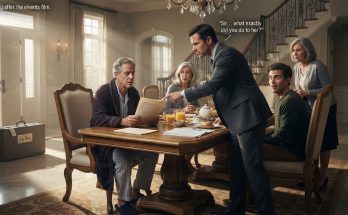

One Comment on “PART 8 – At 68, my son ordered me to cancel our anniversary trip. My refusal changed everything.”