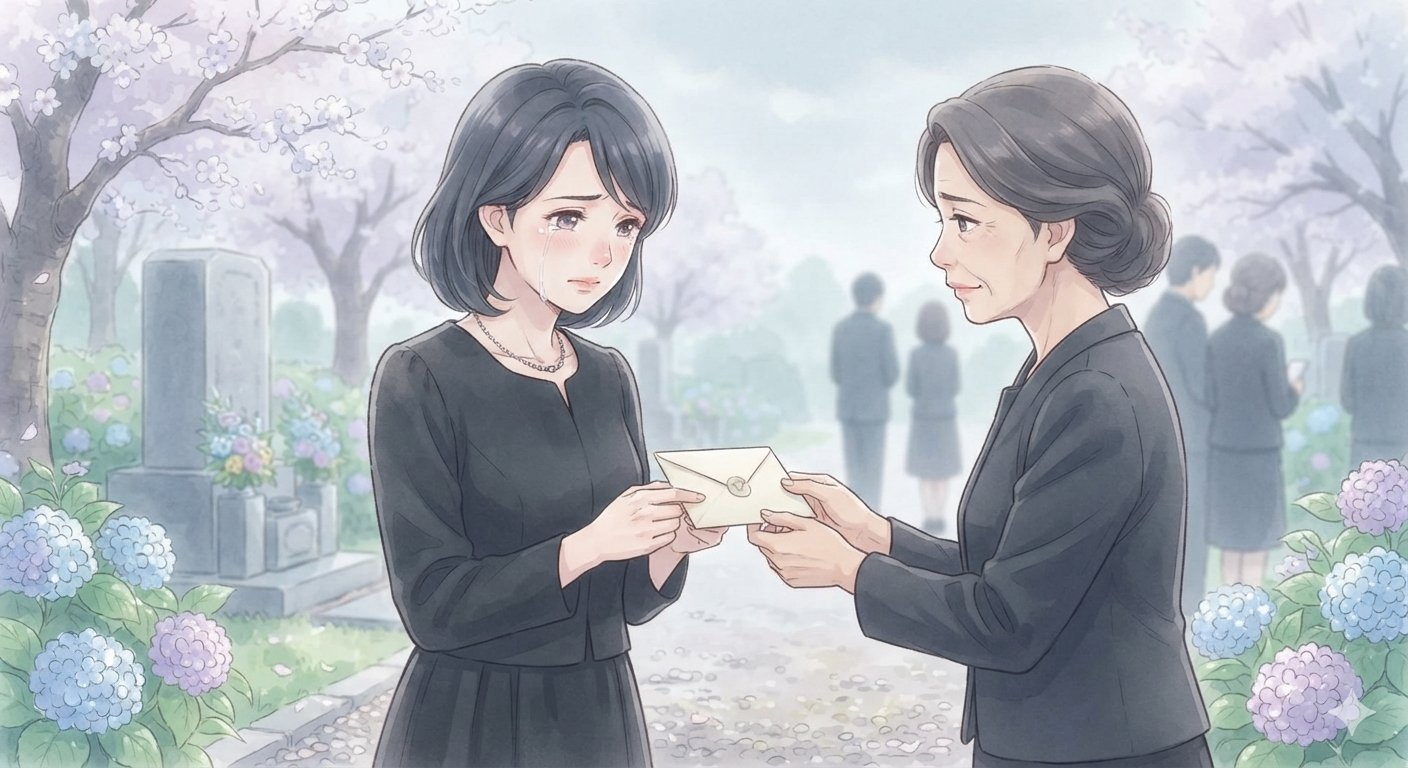
My husband’s voice came through the speaker.
Weak.
Tired.
But unmistakably his.
“If you’re hearing this, then I’m gone.”
I closed my eyes.
For twenty-four years, I had imagined what his final thoughts might have been.
Now I knew.
“I don’t know how much time I have left,” he said.
“But I know there are things I should have told you.”
He explained the entire story.
The promise.
Maya’s mother.
The trust.
Richard.
The documents.
Everything.
Then his voice became softer.
“But none of that is the most important thing.”
There was a pause.
“The most important thing is my wife.”
I began crying.
“I want you to know I loved you.”
The room disappeared.
There was only his voice.
“I loved you every day. Even when I was afraid. Even when I couldn’t tell you what was happening.”
He said he had hidden the diagnosis for a short time because he wanted to spend ordinary days with me.
He knew I would turn every moment into a hospital visit if I knew how serious things were.
“I didn’t want our last memories to be medical appointments.”
I cried harder.
He continued.
“I wanted you to remember me laughing in the kitchen.”
That was exactly where I remembered him.
Burning toast.
Dancing badly.
Complaining about coffee.
Living.
Not dying.
Then he mentioned Caleb.
“Our son is the greatest thing we ever created.”
My chest tightened.
“He will be okay.”
My husband had been wrong about one thing.
Caleb hadn’t been okay.
But he had been extraordinary.
The recording continued.
“If Caleb ever learns the truth about Maya, I hope he understands why I kept it secret.”
Then came the part no one expected.
My husband had left instructions that if Caleb ever became terminally ill, he should never feel obligated to help Maya.
He had explicitly written:
Her life must never become a debt.
Caleb had chosen on his own.
That mattered.
My husband didn’t ask my son to sacrifice.
My son simply made the same choice his father had made years earlier.
To help someone without expecting anything in return.
The recording ended with my husband’s final words.
“Take care of Caleb.”
I broke down.
Because I had.
I had tried.
And now Caleb was gone.
But his heart was beating inside Maya.
Maya walked over and held my hand.
“I’ll take care of him too,” she whispered.
I smiled.
“You already are.”
Then Maya asked:
“Can I show you something?”
She opened her phone.
It was a video.
Caleb was lying in his hospital bed.
He looked weak.
But he was smiling.
I pressed play.
“Mom,” he said.
My heart stopped.
“I know you’re going to cry when you see this.”
I laughed through tears.
“Don’t.”
He smiled.
“I just want you to know I’m not scared.”
He said he was afraid of leaving me alone.
But he believed I would find people who loved me.
Then he said:
“And if Maya gets my heart, please don’t think you lost me.”
He touched his chest.
“Think of it as me taking a different road.”
I covered my mouth.
He smiled.
“Promise me something.”
I leaned toward the screen.
“Don’t spend the rest of your life standing at my grave.”
Then he laughed softly.
“Go live.”
The video ended.
No one spoke.
Outside, evening had begun.
I looked at Maya.
Then at Elena.
Then at Richard.
The people connected by my husband’s secret were now connected by Caleb’s final act.
And suddenly, I knew what I had to do.
I had spent years trying to hold onto the past.
Now my son was asking me to let it go.
PART 10 — THE END
Three months later, Maya came to my house.
She stood at the door holding a small package.
“I brought you something.”
I smiled.
“What is it?”
She handed me a framed photograph.
It was Caleb.
But not the photograph I had seen before.
This one showed him laughing.
His head was tilted back.
His eyes were closed.
He looked completely alive.
Maya said:
“I found it in the hospital.”
I touched the frame.
“Thank you.”
She hesitated.
“Can I ask you something?”
“Of course.”
“Would it be strange if I called you sometimes?”
I smiled.
“No.”
Then I corrected myself.
“It would be strange if you didn’t.”
She hugged me.
For a long time, neither of us spoke.
I could hear her heartbeat.
Strong.
Steady.
Alive.
I no longer heard it as a reminder of death.
I heard it as proof that Caleb’s final wish had come true.
He wanted someone else to live.
She was living.
And I was learning how to do the same.
Elena eventually apologized.
Not once.
Many times.
I forgave her.
Not because what she did didn’t matter.
But because Caleb had asked me not to let anger become his legacy.
Richard also changed.
He returned every document he had taken.
He admitted what he had done.
He never received the money he had wanted.
Instead, the trust remained dedicated to Maya’s care.
Years later, he told me something I would never forget.
“Your son was the first person who made me ashamed of being afraid.”
I told him Caleb wouldn’t have wanted him ashamed.
“He would have wanted you better.”
Richard cried.
And I realized something.
My son had changed more lives in death than most people manage to change in decades.
But there was one final thing I did.
I created a small foundation.
Not in Caleb’s name because I wanted people to remember his death.
I created it because I wanted them to remember his choice.
The foundation helped families facing catastrophic medical expenses.
No complicated requirements.
No humiliating applications.
Just help.
When the first family received assistance, I received a letter from the mother.
She wrote:
“I don’t know who Caleb was, but I know what his family did for mine.”
I cried when I read it.
Then I placed the letter beside his photograph.
Years passed.
Maya grew older.
She went to college.
She traveled.
She laughed.
She built a life.
And every year on Caleb’s birthday, she came to my house.
We would make his favorite meal.
We would tell stories.
We would laugh about the ridiculous things he had done.
Sometimes we cried.
But we never stopped living.
One afternoon, Maya asked me something.
“Do you ever wish things had happened differently?”
I looked at her.
“Yes.”
She lowered her eyes.
“I do too.”
Then I touched her hand.
“But I don’t wish I had never met you.”
She smiled.
“Neither do I.”
We sat quietly.
Then she placed my hand over her heart.
The same heart.
The heart that had once belonged to my son.
I closed my eyes.
For the first time, I didn’t feel grief.
I felt gratitude.
Caleb had not been able to stay.
But he had left something behind.
Not just a heart.
A lesson.
Love isn’t always about keeping someone.
Sometimes love means letting the good they carried continue through someone else.
That evening, I went home and opened the last letter Caleb had written.
I had read it hundreds of times.
But there was one sentence I finally understood.
“Mom, don’t spend the rest of your life asking why I had to leave. Ask what we can do with the love I left behind.”
I folded the letter.
I placed it beside his photograph.
Then I looked around my quiet house.
For years, silence had terrified me.
Now it didn’t.
Because silence wasn’t proof that I was alone.
It was simply the space where memories lived.
I opened the window.
The evening air came inside.
Somewhere far away, Maya was probably laughing with her friends.
A young woman who should have died.
A young woman who was alive because my son had made one final choice.
I looked toward the sky.
“Thank you, Caleb.”
And for just a moment, I imagined hearing his voice.
Go live, Mom.
So I did.
And that became the greatest gift my son ever gave me.
THE END


One Comment on “PART 9 — “I WANT YOU TO KNOW I LOVED YOU””