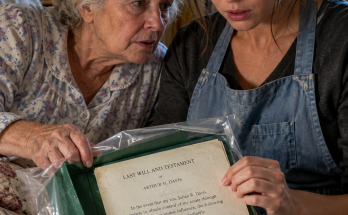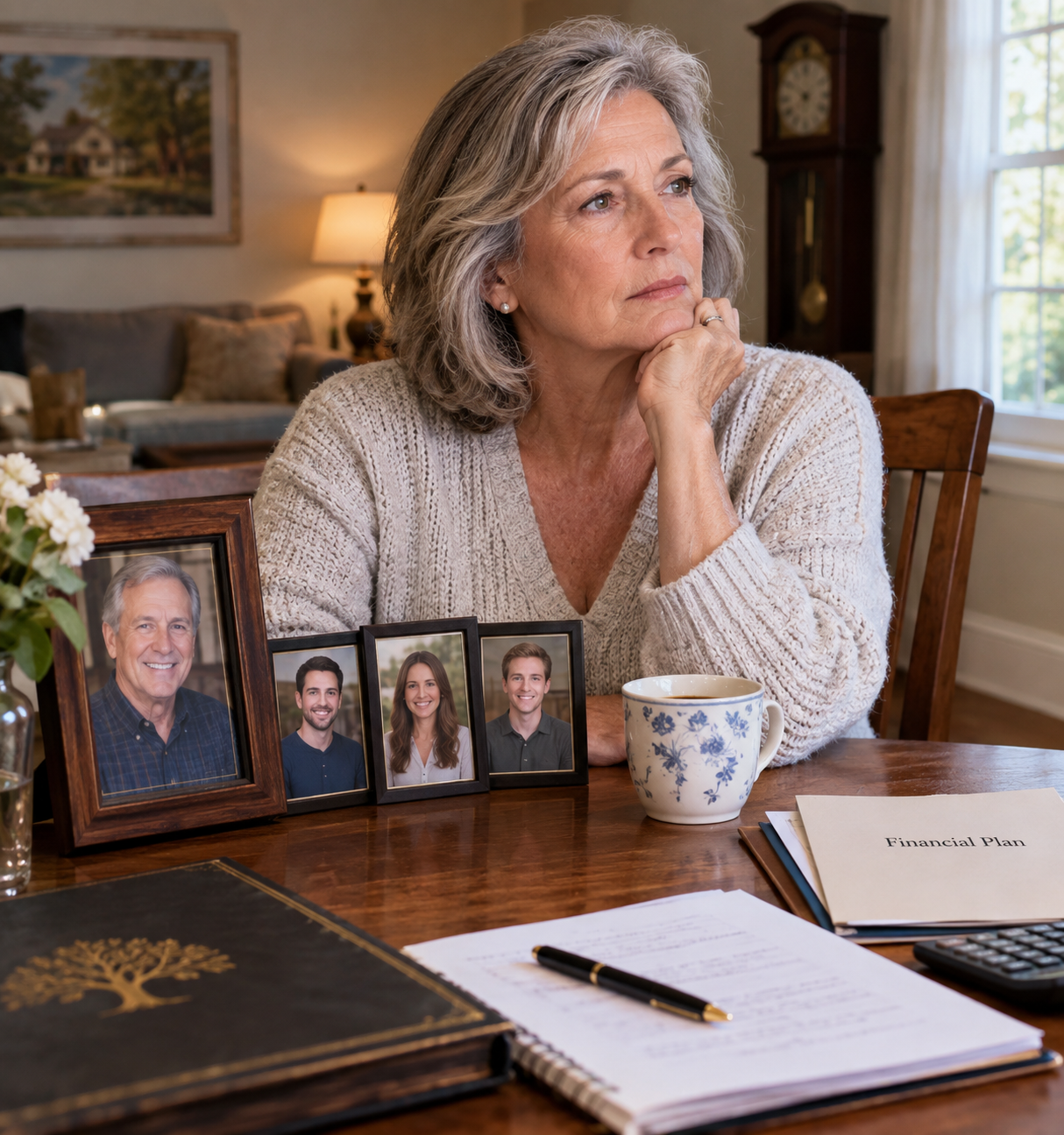
The document lay in the center of the table.
Carter stared at it.
Fiona looked from the paper to me.
Julian leaned closer.
And Alyssa…
Alyssa was the only one who didn’t look confused.
She looked terrified.
That was when I knew.
Whatever was written on that page, she already knew about it.
I folded my hands together.
“Go ahead,” I said.
Carter swallowed.
“What is this?”
“You tell me.”
He picked up the document.
His eyes moved slowly across the page.
Then his face changed.
“What the hell is this?”
Fiona reached for it.
Carter pulled it away.
“Mom, where did you get this?”
“I asked you a question first.”
Nobody answered.
So I did.
“I got it from someone who thought I should know what my children were saying about me when I wasn’t around.”
Julian’s face went pale.
“That isn’t what you think.”
“Then tell me what it is.”
He looked at Carter.
Carter looked at Alyssa.
And Alyssa suddenly stood up.
“I need to leave.”
I laughed softly.
“No.”
She froze.
“You’re going to sit down.”
She slowly lowered herself back into the chair.
I had never spoken to Alyssa that way before.
Apparently, neither had anyone else.
For years, I had been the mother who apologized for saying no.
The grandmother who sent birthday checks.
The widow who bought Christmas presents even when nobody invited her.
The woman who quietly paid bills so her children could tell themselves they were independent.
But that woman was gone.
I pointed at the document.
“Read it.”
Carter finally did.
The paper contained a transcript of a conversation.
A conversation between Carter, Fiona, Julian, and Alyssa.
They had been discussing my house.
They had been discussing my finances.
And they had been discussing what would happen after I died.
At first, Carter tried to interrupt.
“This was taken out of context.”
“Then explain the context.”
He couldn’t.
Fiona started crying.
“Mom, we didn’t mean it like that.”
“Like what?”
“We were just frustrated.”
“Frustrated because I stopped paying your bills?”
She looked down.
Nobody answered.
I leaned back.
“Do you know what hurts the most?”
Julian finally spoke.
“Mom…”
“No.”
I held up my hand.
“You’ve had years to speak. Tonight I’m speaking.”
The room became completely silent.
“I spent years believing that when you came to me for money, you were coming because you trusted me.”
I looked at Carter.
“I thought you were embarrassed when you asked for help.”
Then Fiona.
“I thought you were grateful.”
Then Julian.
“I thought you were struggling.”
I looked at all three of them.
“But apparently, I wasn’t your mother.”
Their faces tightened.
“I was your safety net.”
Nobody denied it.
“And my house?”
I tapped the document.
“You had already divided it in your heads.”
Carter finally found his voice.
“Mom, that’s not fair.”
I almost smiled.
“Fair?”
I stood.
“You want to talk about fair?”
I walked to the kitchen counter and picked up a folder.
Inside were years of bank statements.
I placed them on the table.
“Here’s fair.”
I opened the first page.
“Carter. Mortgage assistance.”
Another.
“Business loan.”
Another.
“Payroll emergency.”
Another.
“Credit line.”
I turned toward Fiona.
“Braces.”
Another page.
“Private school tuition.”
Another.
“Kitchen renovation.”
Then Julian.
“Credit cards.”
“Vehicle repair.”
“Certification expenses.”
“Rent.”
I looked at the total.
“Nearly two hundred eighty thousand dollars.”
Fiona whispered:
“We didn’t ask you to keep doing it.”
I stared at her.
“Yes, you did.”
She shook her head.
“You offered.”
I felt something inside me break.
Because that sentence explained everything.
They had learned that if they simply described a problem, I would solve it.
I had trained them.
Not intentionally.
But I had.
I sat back down.
“Do you know why your father was better at saying no than I was?”
Nobody answered.
“Because Arthur understood something I didn’t.”
I looked at his photograph on the mantel.
“He knew that rescuing someone from every consequence eventually prevents them from learning how to stand on their own.”
Carter rubbed his forehead.
“So what now?”
I looked directly at him.
“Now you become adults.”
“We are adults.”
“No.”
My voice was calm.
“You’re people in adult bodies who expected your mother to finance your lives.”
Carter stood abruptly.
“This is ridiculous.”
He grabbed his coat.
“Carter.”
He stopped.
“You asked me what happens now.”
He turned.
“The house is not going to any of you.”
Nobody moved.
Fiona’s mouth fell open.
Julian stared at the phone screen.
Alyssa looked like someone had pulled the floor out from underneath her.
Carter laughed.
“You can’t be serious.”
“I’ve never been more serious.”
“You’re going to disinherit your own children?”
“No.”
I shook my head.
“I’m going to stop pretending that an inheritance is something you are entitled to.”
Carter stared at me.
“That house belongs to you,” I continued. “Not to Carter. Not to Fiona. Not to Julian. And certainly not to their spouses.”
Alyssa’s eyes filled with tears.
Then she whispered:
“But the house was always supposed to stay in the family.”
I looked at her.
“Who told you that?”
She didn’t answer.
“Who told you my house was yours?”
Silence.
That was my answer.
I stood and collected the documents.
“Dinner is over.”
Fiona began crying.
“Mom, please.”
I stopped.
She looked genuinely broken.
And for one dangerous second, the old Helen almost returned.
The woman who would hug her.
The woman who would write another check.
The woman who would say, It’s okay.
But I remembered Thanksgiving.
The empty chair.
Christmas.
The unopened silence.
The grandchildren’s birthday invitations that never came.
And Alyssa’s voice in the grocery store.
“She’ll die eventually.”
I walked toward the door.
Then Carter said something that stopped me.
“You’re making a huge mistake.”
I turned around.
“No, Carter.”
I looked at my three children.
“For the first time in my life, I’m making a decision that isn’t designed to make your lives easier.”
Nobody spoke.
I opened the door.
They left.
All four of them.
I watched their cars disappear down the street.
Then I closed the door.
And for the first time since Arthur died…
I didn’t feel lonely.
I felt free.
But the next morning, my attorney called.
His voice was unusually serious.
“Helen, there’s something else you need to know.”
“What?”
“The document you showed me last night?”
“Yes.”
“We need to discuss where it came from.”
My stomach tightened.
“Why?”
“Because whoever gave it to you didn’t just give you a transcript.”
He paused.
“They gave you evidence.”
“Evidence of what?”
Another pause.
“That’s what I want to find out.”
Then he said the words that changed everything again.
“Helen, I think someone in your family has been accessing information they had no legal right to see.”
I sat down.
“Who?”
“I don’t know yet.”
“But I have a strong suspicion.”
“Who?”
My attorney lowered his voice.
“Someone who knew exactly how much your house was worth.”
Someone who knew my financial situation.
Someone who knew my estate plans.
Someone who knew where Arthur kept his documents.
Someone who had been waiting for me to die.
And suddenly…
I realized the inheritance wasn’t the only thing they wanted.
They had been planning something much bigger.
And my attorney was about to tell me exactly what it was.
PART 4 — WHAT MY ATTORNEY DISCOVERED
The morning after my children left, I sat alone at the kitchen table with Arthur’s old coffee mug in front of me.
I hadn’t put coffee in it.
I hadn’t even turned on the coffee maker.
I simply needed something familiar sitting within reach.
My attorney, Michael Bennett, arrived at nine thirty.
He had represented Arthur and me for almost twenty years.
He was the kind of man who never raised his voice.
He never rushed his words.
And whenever he looked concerned, I had learned to pay attention.
He placed a thick folder on the table.
“Helen,” he said, “before I tell you what I found, I want you to understand something.”
“What?”
“You are not imagining what happened.”
I stared at him.
“What do you mean?”
“You’ve spent years questioning yourself.”
He opened the folder.
“You’ve wondered whether you were too generous.”
“You’ve wondered whether you were too strict when you finally said no.”
“You’ve wondered whether your children actually love you.”
He paused.
“But there are things here that have nothing to do with feelings.”
“They are facts.”
My hands tightened around the edge of the table.
“What facts?”
Michael removed several pages.
“The first issue is the property.”
“I know the house belongs to me.”
“Yes.”
He looked directly at me.
“But someone has been making inquiries about selling it.”
I already knew that.
“Carter.”
Michael nodded.
“Carter was one person.”
My stomach dropped.
“One person?”
“There were others.”
I stared at him.
“Who?”
He slid another page toward me.
“An individual contacted a real-estate brokerage several months ago asking about the property.”
“Who?”
“The inquiry was made under a slightly different name.”
I looked at the document.
The name wasn’t Carter.
It wasn’t Fiona.
It wasn’t Julian.
But I recognized the last name.
It was Carter’s wife’s maiden name.
“Alyssa,” I whispered.
Michael nodded.
“That’s what I thought.”
I sat back.
“But why would she contact a real-estate agent?”
“We don’t know yet.”
“Maybe she was just asking.”
“Maybe.”
Michael turned another page.
“But the questions she asked weren’t casual.”
“What did she ask?”
“She wanted to know whether the property had any liens.”
I stared at him.
“Why?”
“She also asked whether there was an existing trust.”
My heart began pounding.
“What else?”
“She asked whether the owner was considering downsizing.”
I laughed once.
It wasn’t a happy laugh.
“I’m sixty-seven.”
“That doesn’t make you incapable of living independently.”
“She wanted to know if I was moving?”
“Yes.”
I looked toward the window.
The oak tree Arthur and I had planted decades earlier stood in the yard.
Its branches were bare from winter.
But it was still standing.
Just like I was.
Michael continued.
“She also asked whether the property could be sold without the consent of other family members.”
I looked at him.
“And what did you tell them?”
“That I couldn’t discuss a client’s affairs.”
I exhaled.
“Good.”
He closed that folder.
“But that’s not the most serious part.”
I looked at him.
“What is?”
Michael reached for another folder.
“This.”
He placed a printed email on the table.
I read it once.
Then again.
It was an exchange between two people discussing my estate.
The language was casual.
Almost businesslike.
My name appeared several times.
So did the words house, inheritance, valuation, and timing.
Then I saw something that made my blood run cold.
They weren’t discussing whether I might eventually leave the house to my children.
They were discussing what would happen before I died.
I looked up.
“Michael.”
“Yes?”
“What am I looking at?”
“I believe someone has been attempting to determine how much control your children could exert over your finances and property while you’re still alive.”
My mouth went dry.
“Why?”
“We don’t know.”
He paused.
“But we’re going to find out.”