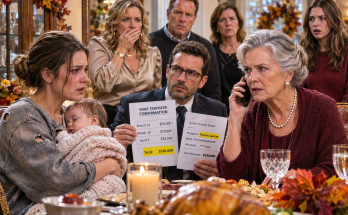
I GAVE MY FAMILY $2,500 EVERY MONTH FOR FOUR YEARS. THEY CALLED ME A FREELOADER AND THREW ME OUT. THEN MY ATTORNEY DISCOVERED MY MOTHER HAD BEEN HIDING SOMETHING FAR WORSE THAN MY BROTHER’S $43,000 DEBT.
When Rebecca told me there was another property involved, I thought she’d made a mistake.
My mother had spent four years telling me she was struggling financially.
She complained about prescription costs.
She worried about property taxes.
She asked me to help whenever the heating bill increased.
And every single month, I sent $2,500 without hesitation.
Now my attorney was telling me that nearly $27,000 had been transferred from our household account into an account connected to my mother.
And somehow, those payments were tied to another house.
“Rebecca,” I said slowly, “are you telling me my mother owns another property?”
“I’m telling you we found evidence of payments associated with a property you weren’t told about.”
I sat motionless.
“Where?”
“About forty minutes outside the city. A small house near Lake Briar.”
I knew Lake Briar.
My father used to take us fishing there when Ethan and I were children.
He always said he wanted to retire somewhere near the water.
But he never had enough money.
“Is the house in Mom’s name?”
“Not exactly.”
“What does that mean?”
Rebecca hesitated.
“The title records show a family trust.”
I frowned.
“What trust?”
“The Margaret Carter Family Trust.”
Margaret Carter.
My mother.
I stared at the phone.
“Since when does my mother have a trust?”
“That’s what we’re going to find out.”
The next morning, I arrived at Rebecca’s office twenty minutes early.
I hadn’t slept.
Every time I closed my eyes, I saw my mother standing in the doorway asking whether I’d still send her money after moving out.
Not even for me?
Those words had sounded heartbreaking at the time.
Now they sounded different.
Rebecca met me in the conference room.
A thick stack of documents was waiting on the table.
“Before we start,” she said, “I want you to understand something. We don’t yet know whether any laws were broken. We need to distinguish between money you contributed for household expenses, money Ethan moved without authorization, and money your mother may have received legitimately.”
I nodded.
“I understand.”
But inside, I was shaking.
Rebecca opened the first folder.
“Your mother established the trust eighteen months ago.”
“Eighteen months?”
“Yes.”
I did the math.
Eighteen months earlier, Mom had called me crying because the property taxes were due.
I’d sent an extra $4,000.
She had thanked me and said she didn’t know what she’d do without me.
“What property does the trust own?”
Rebecca slid a photograph across the table.
It showed a small, beautiful cottage with blue shutters, a stone walkway, and a wraparound porch.
There were trees behind it.
A lake was visible in the distance.
It looked peaceful.
Comfortable.
Exactly the kind of place my father had dreamed of owning.
“Estimated value?” I asked.
“Approximately $285,000, subject to appraisal.”
I stared at the photograph.
“Did Mom buy it?”
“The records indicate the trust acquired it about sixteen months ago. There was a substantial down payment.”
“How much?”
“Seventy-five thousand dollars.”
I looked up sharply.
“Seventy-five thousand?”
Rebecca nodded.
“Some of that money came from an account connected to your mother’s personal savings. We’re still tracing the rest.”
I leaned back.
For years, my mother had told me she had no savings.
Not a little.
None.
She had said Dad’s final medical bills had wiped everything out.
And I’d believed her.
“There’s more,” Rebecca said.
Of course there was.
There always seemed to be more.
She pointed to a series of transactions.
“Your brother transferred money from the household account into an account controlled by your mother. Several transfers were marked as reimbursements.”
“For what?”
“We don’t know yet.”
I examined the dates.
March.
May.
August.
October.
Each transfer was between $2,000 and $5,000.
“Did Ethan know about the cottage?”
Rebecca folded her hands.
“We need to ask him.”
I stared at the photograph again.
The blue shutters.
The porch.
The quiet lake.
Then I noticed something in the corner.
A wooden bench.
My father had built a bench almost identical to it for our backyard.
For some reason, that detail hurt more than the money.
I called Ethan from the parking lot.
He answered on the fourth ring.
“What?”
“We need to talk.”
He sighed.
“Daniel, I already told you about the business money. I’m trying to get the records together.”
“This isn’t about your business.”
A pause.
“Then what?”
“Lake Briar.”
Silence.
I could hear traffic behind him.
Then he said, “What about it?”
“Does Mom own a cottage there?”
Another silence.
Too long.
“Ethan.”
He exhaled.
“Look, man—”
My stomach dropped.
“You knew?”
“It’s complicated.”
I closed my eyes.
That phrase.
I was beginning to hate that phrase.
“Did you know she bought a house?”
“She didn’t buy it exactly.”
“Stop.”
“What?”
“Stop talking around the question.”
He said nothing.
“Did you know about the property?”
Finally, he answered.
“Yes.”
One word.
One small word.
But it changed the way I saw my brother.
“You knew Mom had another house while I was paying the bills?”
“Daniel, you don’t understand.”
“Then explain it.”
He lowered his voice.
“Mom wanted something of her own.”
I laughed bitterly.
“She already had twenty-two percent of the house I saved.”
“That wasn’t the same.”
“Why not?”
“Because you owned most of it.”
I stared through the windshield.
“So she wanted a house that wasn’t connected to me?”
He didn’t answer.
“And you helped her?”
“Mom asked me not to tell you.”
I felt something inside me go very still.
“Why?”
“Because she thought you’d stop helping.”
There it was.
The truth.
Simple.
Ugly.
Unavoidable.
My mother hadn’t hidden the property because she was embarrassed.
She’d hidden it because she knew the truth might change my willingness to keep sending money.
“Ethan,” I said quietly, “do you understand what you’ve just told me?”
“Daniel—”
“You let me believe Mom was struggling to survive while she was putting money into another house.”
“She’s our mother!”
“And I’m your brother.”
He went silent.
I waited.
Then I asked:
“Who lives there?”
He hesitated.
“Nobody permanently.”
“What does that mean?”
“She rents it sometimes.”
I sat upright.
“Rents it?”
“Short-term rentals. Weekends. Summer bookings.”
My hand tightened around the phone.
“So the house generates income?”
“Sometimes.”
“How much?”
“I don’t know.”
I didn’t believe him.
Not anymore.
“Send me everything you have about the property.”
“I can’t.”
“Why?”
“Because Mom will be furious.”
I looked out at the parking lot.
“Ethan, she called me a freeloader while hiding an investment property.”
He whispered, “Please don’t do anything crazy.”
I ended the call.
That evening, I drove to my new house.
I’d bought it eight months earlier after years of saving.
It wasn’t a mansion.
It was a comfortable four-bedroom home with a modest garden, a bright kitchen, and a small office overlooking the backyard.
For the first time, every room belonged to me.
No one could demand my bedroom.
No one could decide I was taking up too much space.
No one could call me a burden for existing under my own roof.
But the peace I’d expected to feel wasn’t there.
Instead, I sat at my kitchen table looking at the photograph of the cottage.
Then my phone rang.
Mom.
I almost ignored it.
But I answered.
“Daniel?”
Her voice sounded tired.
“Hi, Mom.”
“Ethan says you’ve been asking questions.”
I closed my eyes.
“About Lake Briar?”
“Yes.”
I waited.
She sighed.
“I was going to tell you.”
“When?”
“Eventually.”
“Before or after I paid another $30,000?”
She gasped.
“That’s cruel.”
I looked at the ceiling.
“Cruel?”
“I didn’t raise you to speak to me like that.”
I swallowed.
“No. You raised me to believe family should tell each other the truth.”
She started crying.
I could hear it.
The familiar shaky breathing.
The little pauses.
The sound that had always made me apologize, even when I hadn’t done anything wrong.
But this time, I didn’t.
“Mom, why didn’t you tell me?”
She sniffed.
“Because I knew you’d judge me.”
“For owning property?”
“For wanting security!”
I stared at the wall.
“Security?”
“Yes! I’m getting older, Daniel. I wanted something that was mine.”
“You already had a home.”
“A home where you owned sixty-eight percent!”
Her voice rose.
“And you could always remind me of that!”
I felt a sharp pain in my chest.
“Mom, I never reminded you. Not once. Until you told me to leave.”
She went quiet.
I continued.
“I saved that house because I didn’t want you to lose it.”
“I know.”
“I paid the bills because I thought you needed help.”
“I did need help.”
“Then explain how you managed a seventy-five-thousand-dollar down payment on another property.”
She didn’t answer.
“Mom?”
Finally, she whispered:
“Your father left me money.”
I froze.
“What money?”
She hesitated.
“An insurance policy.”
I stood up.
“Dad had another life insurance policy?”
“Yes.”
“How much?”
“Daniel, please—”
“How much?”
Her voice was barely audible.
“One hundred and eighty thousand.”
I sat down again.
For several seconds, I couldn’t breathe.
One hundred and eighty thousand dollars.
My father had died believing his family would take care of one another.
And my mother had received a substantial insurance payment that she’d never mentioned.
Meanwhile, I’d drained my savings to save the family house.
I’d transferred $2,500 every month.
I’d paid for her supplemental insurance.
I’d worked overtime.
I’d postponed vacations.
I’d told myself that sacrifices were necessary because Mom had nothing.
But she hadn’t had nothing.
She’d had $180,000.
And she’d kept it secret.
“Mom,” I whispered, “when did you receive that money?”
She didn’t answer.
“When?”
“About six months after your father died.”
I closed my eyes.
Six months.
The foreclosure crisis had happened later.
She’d had the insurance proceeds before I put $160,000 into the house.
“Did you still have that money when the bank threatened foreclosure?”
Silence.
“Mom?”
“Yes.”
The room seemed to tilt.
I gripped the edge of the table.
“You watched me use my savings to rescue the house while you had that money?”
“I was afraid!”
“Of what?”
“Of being left with nothing!”
I couldn’t believe what I was hearing.
“So you let me risk everything instead?”
“Daniel, you’re young. You have a good job. You can earn it back.”
Those words hit harder than any insult Ethan had thrown at me.
You can earn it back.
As though my years didn’t matter.
As though my sacrifices didn’t count.
As though my future was an endless resource she could spend.
I stared at the photograph of the cottage.
“Mom, did Dad know about that policy?”
“Of course.”
“Did he want you to keep it secret?”
She hesitated.
“He wanted me to be safe.”
“And what did he want for his children?”
She began crying again.
I waited.
Then I said something I’d never said to my mother before.
“I need some time away from you.”
“Daniel, don’t say that.”
“I mean it.”
“You’re abandoning me?”
“No. I’m setting a boundary.”
She started to protest.
But I ended the call.
The next morning, Rebecca called with another discovery.
“Daniel, we found rental listings for the Lake Briar cottage.”
I sat up.
“It’s definitely being rented?”
“Yes. The property has been advertised for weekend stays for more than a year.”
“How much income?”
“We have public pricing information, but we need actual booking records to know the total.”
I nodded.
Then Rebecca continued.
“There’s something else.”
My stomach tightened.
“What?”
“The cottage isn’t the only asset in the trust.”
I closed my eyes.
“What else?”
“A brokerage account.”
I stood up.
“How much?”
“We don’t have a verified balance yet.”
“Then why are you telling me?”
“Because the trust paperwork references an initial funding amount of $90,000.”
I stared out the window.
The numbers were becoming impossible to ignore.
One hundred and eighty thousand dollars in insurance proceeds.
A seventy-five-thousand-dollar property down payment.
An investment account.
Rental income.
And nearly $27,000 in transfers from the household account.
My mother had been building financial security.
While telling me she couldn’t survive without my help.
I sat down slowly.
“What do we do now?”
Rebecca answered carefully.
“We document everything. We request the relevant accounting. We don’t accuse anyone of theft without evidence. And we determine whether any household funds were misused.”
I nodded.
“Okay.”
Then she said something that made my blood run cold.
“Daniel, I also reviewed the original refinancing agreement.”
“What about it?”
“There was a provision concerning additional debt secured against the property.”
I frowned.
“I remember.”
“Your brother appears to have approached a lender about using his interest in the family home as collateral.”
I stared at the phone.
“He only owns ten percent.”
“Correct.”
“Could he do that?”
“Not in the way the documents appear to propose. But he submitted preliminary paperwork.”
I stood.
“What paperwork?”
Rebecca hesitated.
“Daniel, the application includes an ownership statement.”
“And?”
“It lists Ethan as the controlling owner.”
I stopped breathing.
“That isn’t true.”
“I know.”
Then she added:
“And the supporting document appears to contain your signature.”
I gripped the phone.
“My signature?”
“Yes.”
I hadn’t signed anything.
Not for Ethan.
Not for a loan.
Not for a mortgage.
Not for any property transaction.
I looked at my desk.
At the folders.
At the photograph of the cottage.
Then I whispered:
“Rebecca, send me that document.”
A minute later, an email arrived.
I opened the attachment.
There it was.
My name.
My signature.
On a document I had never seen before.
And underneath it was a date.
The exact day my family told me I had thirty days to move out.
I stared at the screen.
My brother hadn’t simply wanted my bedroom.
He had been planning something much bigger.
And now I finally understood why Melissa had been so desperate to get me out of the house.
TO BE CONTINUED IN PART 4…
PART 4 — THE SIGNATURE I NEVER WROTE
MY BROTHER CALLED ME A FREELOADER WHILE SECRETLY TRYING TO USE MY HOUSE TO SAVE HIS FAILING BUSINESS. BUT WHEN I FOUND A DOCUMENT WITH MY FORGED SIGNATURE, I REALIZED HIS WIFE HAD BEEN PLANNING MY DEPARTURE FOR MONTHS.
I stared at the document on my laptop.
My full name was printed at the bottom.
Daniel James Carter.
Below it was a signature that looked remarkably similar to mine.
The slant was right.
The first letter was almost perfect.
Even the long stroke at the end looked familiar.
But I knew immediately it wasn’t mine.
Because I’d spent the entire morning of that date working from my bedroom.
And that afternoon, my family had told me to leave.
I hadn’t met with a lender.
I hadn’t signed any documents.
And I certainly hadn’t authorized my brother to represent himself as the controlling owner of our family home.
I called Rebecca.
“This is forged.”
“I suspected you would say that.”
“What happens now?”
“We contact the lender immediately, dispute the document, and preserve the evidence.”
I looked at the signature again.
“Could Ethan actually have gotten a loan?”
“Not legitimately based on the ownership information he submitted. The lender’s review appears to have flagged inconsistencies.”
I exhaled.
“So no money was released?”
“Not from this application, according to what we know.”
I leaned back.
For the first time since moving out, I felt genuine fear.
Not for myself.
For what my brother might do next.
Rebecca arranged a meeting with the lender’s fraud department.
Two days later, I sat across from a woman named Patricia Wells.
She was professional, direct, and clearly accustomed to difficult conversations.
“Mr. Carter,” she began, “we need to confirm that you did not authorize this application.”
“I didn’t.”
“Did you give your brother permission to sign on your behalf?”
“No.”
“Have you ever signed a power of attorney granting him authority over your ownership interest?”
“No.”
She nodded and made a note.
Then she turned her laptop toward me.
“Do you recognize this email address?”
I leaned forward.
It was an unfamiliar address containing the words Carter Property Management.
“No.”
She clicked another screen.
“The application was submitted from that email address.”
“Who owns it?”
“We’re still reviewing the information.”
Then she showed me a copy of the message that accompanied the application.
It read:
My brother Daniel has agreed to restructure the property financing so I can access capital for business expansion. Attached are the required ownership documents.
Business expansion.
I nearly laughed.
Ethan’s company was barely surviving.
There was no expansion.
He was trying to keep it from collapsing.
“Did the application specify an amount?” I asked.
Patricia nodded.
“Two hundred and twenty thousand dollars.”
I stared at her.
“Two hundred and twenty thousand?”
“Yes.”
My brother had attempted to secure $220,000 against a property he didn’t control.
Using a signature I hadn’t written.
And he’d done it while calling me a freeloader.
I pressed my palms against the table.
“Why wasn’t I contacted?”
Patricia looked uncomfortable.
“The application was paused when our review identified discrepancies. We were in the process of verifying the documents.”
Rebecca leaned forward.
“We’ll be submitting a formal dispute and requesting preservation of the application records.”
Patricia nodded.
“Of course.”
Then she said something unexpected.
“There is one more thing.”
My stomach tightened.
“What?”
“The application included a letter stating that you intended to vacate the property permanently.”
I stared at her.
“Vacate?”
“Yes. It represented that you were moving out voluntarily and relinquishing involvement in the household’s management.”
I looked at Rebecca.
She was already taking notes.
Then Patricia showed us the letter.
At the bottom were two names.
Ethan Carter.
Melissa Carter.
Both signatures appeared genuine.
And suddenly, the argument over my bedroom looked very different.
That evening, I drove past the old house.
I didn’t stop.
I just slowed down enough to see the porch light glowing through the trees.
For thirty-four years, that place had been home.
I’d learned to ride a bicycle on the driveway.
I’d helped Dad paint the garage.
I’d celebrated birthdays in the backyard.
I’d sat beside Mom after Dad’s funeral while she cried into my shoulder.
Now the house felt like a crime scene.
Not because of broken windows or police tape.
Because of broken trust.
My phone rang.
Melissa.
I almost ignored it.
Then I answered.
“Daniel?”
Her voice was unusually sweet.
“Hi, Melissa.”
“How are you settling into the new place?”
I stared at the road.
“Fine.”
“That’s wonderful.”
A pause.
“Listen, Ethan’s been under a lot of stress.”
“I know.”
“And I think maybe everyone said things they didn’t mean.”
I said nothing.
She continued.
“Maybe we could all have dinner sometime. Clear the air.”
I almost admired the timing.
“Melissa, did you know Ethan applied for a loan using the family house?”
Silence.
Then she laughed nervously.
“What loan?”
“The $220,000 application.”
Another silence.
“Daniel, I don’t know what you’re talking about.”
“Your signature is on the supporting letter.”
She inhaled sharply.
Then said:
“Ethan told me it was just preliminary paperwork.”
I closed my eyes.
“So you did know.”
“He said you had already agreed!”
“Did you ask me?”
“No, but—”
“Did you ever ask me?”
She began crying.
I listened.
Then she whispered:
“We were desperate.”
There it was again.
Desperation.
The excuse that seemed to justify everything in my family.
“How desperate?” I asked.
She hesitated.
“Ethan owes money.”
“I know about the business.”
“No, Daniel.”
Her voice dropped.
“You don’t understand.”
I pulled into an empty parking lot.
“Then explain.”
She took a shaky breath.
“The business owes almost three hundred thousand dollars.”
I stared through the windshield.
“Three hundred thousand?”
“Yes.”
“To whom?”
“Suppliers. A bank. A private lender.”
My stomach tightened.
“What private lender?”
She hesitated.
“Someone Ethan borrowed from when the bank wouldn’t extend his credit.”
I gripped the steering wheel.
“Did he use the house as collateral?”
“No. He couldn’t.”
“Then why did he need the $220,000 loan?”
“To pay the private lender before the debt came due.”
I stared at the dashboard.
“And you thought getting me out of the house would make that easier?”
She began crying harder.
“Ethan said you were the only obstacle.”
I closed my eyes.
The only obstacle.
Not the man who’d rescued the property.
Not the brother who’d helped pay the bills.
An obstacle.
“Melissa,” I said quietly, “who suggested turning my bedroom into a wellness room?”
She didn’t answer.
I waited.
Finally, she whispered:
“Ethan.”
I sat motionless.
“He told you to say that?”
“He said if you got angry enough, you’d leave.”
I felt my chest tighten.
“And Mom?”
“She didn’t know about the loan.”
“Did she know you were trying to force me out?”
Melissa hesitated.
“Yes.”
I stared at the dark windshield.
My family hadn’t simply grown tired of me.
They had deliberately pushed me away.
Because they thought my departure would make it easier to take control of the property.
I ended the call without saying goodbye.
The next morning, Rebecca helped me submit the formal fraud dispute.
She also recommended that I preserve every message, email, bank statement, and document connected to the loan application.
I followed her instructions.
For years, I’d been the person who quietly fixed problems.
Now I was the person documenting them.
And the difference was enormous.
By Friday, Ethan called.
His voice was furious.
“Did you report the loan application?”
“Yes.”
“Daniel, what the hell is wrong with you?”
I stared at my computer screen.
“You used a signature that wasn’t mine.”
“It was just paperwork!”
“You applied for $220,000.”
“I was trying to save my business!”
“With my property?”
“Our family property!”
I closed my eyes.
“Ethan, you own ten percent.”
He shouted:
“Because you took everything when Dad died!”
I froze.
“What?”
“You heard me!”
I leaned forward.
“Dad died. The house nearly went into foreclosure. I paid $160,000 to save it. Everyone signed the agreement.”
“You knew we were desperate!”
“Yes.”
“And you used that to take control!”
I sat silently.
For years, Ethan had thanked me for saving the house.
Now he was accusing me of exploiting him.
I realized something painful.
He didn’t remember the rescue as a gift.
He remembered it as a humiliation.
And he’d been punishing me for it ever since.
“Ethan,” I said, “did you forge my signature?”
Silence.
“Answer me.”
He breathed heavily.
Then said:
“I didn’t think you’d actually lose anything.”
My stomach dropped.
That wasn’t a denial.
“Did you sign my name?”
He whispered:
“I thought I could pay the loan back before you ever found out.”
I closed my eyes.
“Ethan.”
“Daniel, please.”
“You need a lawyer.”
He started crying.
My brother.
The man who’d laughed while calling me a joy thief.
The man who’d told me to do something with my life.
Now he was crying into the phone.
“I don’t want to go to prison.”
I felt a sharp pain in my chest.
“I don’t want that either.”
“Then help me.”
I swallowed.
“I won’t lie for you.”
He went silent.
“And I won’t pretend this didn’t happen.”
He whispered:
“Please don’t destroy my family.”
I stared at the wall.
“You should have thought about your family before risking their home.”
Then I ended the call.
That weekend, I received a message from my mother.
Daniel, please come for dinner Sunday. Just you and me. I have something important to tell you.
I didn’t want to go.
But Rebecca had told me that if Mom was willing to explain the trust and insurance proceeds, I should listen carefully and avoid making accusations.
So I agreed to meet her.
Not at the old house.
At a small diner near my office.
Sunday afternoon, Mom arrived wearing the blue sweater Dad had bought her years ago.
She looked smaller than I remembered.
Older.
Tired.
For a moment, I wanted to hug her.
But I waited.
She sat across from me.
“Thank you for coming.”
I nodded.
A waitress brought coffee.
Mom stirred hers for a long time without drinking it.
Then she said:
“Your father left instructions.”
I frowned.
“What instructions?”
She reached into her purse.
And pulled out a yellowed envelope.
My father’s handwriting was on the front.
FOR DANIEL AND ETHAN — WHEN THE TIME IS RIGHT.
I stared at it.
My heart began pounding.
“Mom… what is that?”
She looked down.
“A letter your father wrote before he died.”
I reached for it.
But she pulled it back.
“There’s something you need to understand first.”
I froze.
“What?”
Her eyes filled with tears.
“Your father knew about the insurance money. He also knew about something else.”
I stared at her.
“What else?”
She swallowed.
“Daniel, the house wasn’t supposed to be divided the way it was.”
My stomach tightened.
“What do you mean?”
She pushed the envelope toward me.
“Read it.”
I opened it carefully.
Inside were three handwritten pages.
The first began:
My boys, if you’re reading this, then I wasn’t able to fix the mistake I made before I left you.
I stopped breathing.
A mistake?
What mistake?
I looked up.
Mom was crying silently.
Then I continued reading.
And halfway down the second page, I saw a name I hadn’t heard in twenty years.
Thomas Whitaker.
My father’s former business partner.
The man who’d disappeared after their construction company collapsed.
And beneath his name was a sentence that made my hands tremble.
“If Thomas ever comes back asking about the property, do not trust him.”
I stared at my mother.
“Why would Dad write this?”
She covered her face.
“Because Thomas came back three months ago.”
My blood ran cold.
“Where?”
Mom whispered:
“He’s the private lender Ethan owes money to.”
I couldn’t move.
The man my father had warned us about was now lending money to my brother.
And somehow, he’d become involved in the house I’d spent years protecting.
Then Mom said something even worse.
“Daniel, Thomas didn’t lend Ethan money because he believed in his business.”
I stared at her.
“Then why?”
She looked me directly in the eyes.
“Because he wants our family home.”
TO BE CONTINUED IN PART 5…