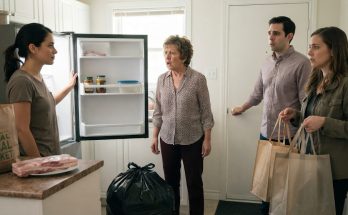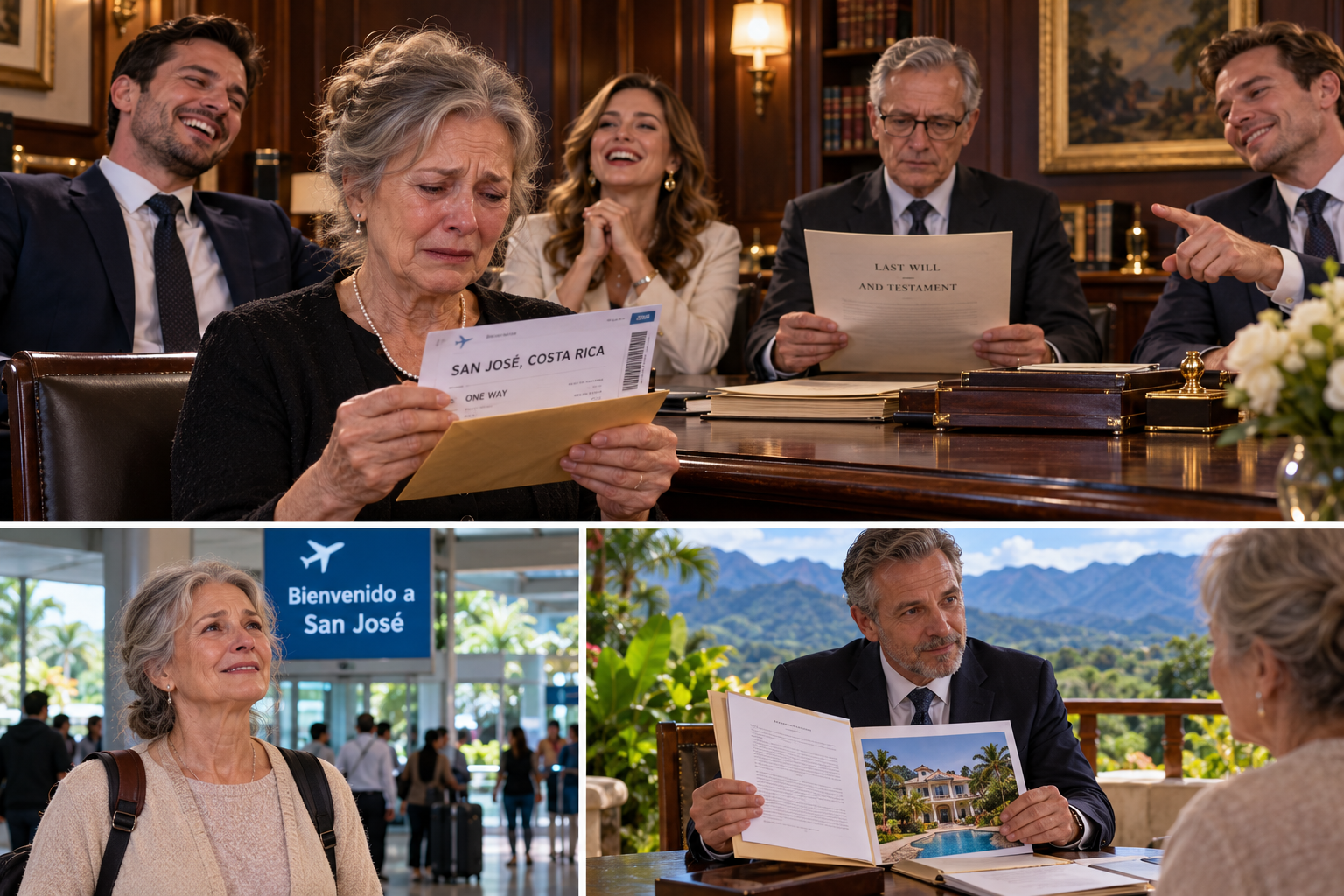
My children did not cry when their father’s will was read.
They smiled.
That was the first thing I noticed.
Not the polished walnut table in the notary’s office. Not the leather chairs. Not the untouched coffee cooling beside three neat folders. Not even the sealed envelopes arranged in front of us like little white coffins containing forty-six years of marriage.
Their smiles.
My daughter Vanessa sat across from me in a black dress that probably cost more than my first car. Every seam was perfect. Every strand of her dark hair was smooth. She looked less like a grieving daughter than a woman attending a meeting she had been preparing for.
My son Oscar sat beside her, checking his phone beneath the table.
His wife, Marina, held a cream-colored designer purse against her lap and kept glancing at the folders.
I sat at the far end of the table with my rosary wrapped around my fingers.
My name is Elena Marquez.
I was seventy-two years old.
And eight days earlier, I had buried the man whose body I had cared for with my own hands for nearly a decade.
For eight years, illness had taken Arturo from me piece by piece.
First his strength.
Then his balance.
Then the easy dignity with which he had once buttoned his own shirts, shaved his own face, and carried two bags of groceries in one hand because he refused to make two trips.
Toward the end, there were mornings when he could barely lift his head from the pillow.
I crushed pills into applesauce.
I changed sheets before sunrise.
I learned how to lift him from bed without hurting his hips.
I fed him soup with a spoon when his fingers shook too violently to hold one.
I washed him.
Shaved him.
Argued with insurance companies.
Sat beside hospital beds.
Slept in chairs.
Woke at the smallest change in his breathing.
And during those eight years, I called my children more times than I could count.
“Can one of you stay with your father Saturday? I need groceries.”
“Next weekend, Mom.”
“Could you take him to the specialist Thursday?”
“I have meetings.”
“I haven’t slept properly in four nights.”
“You should hire someone.”
“With what money?”
A pause.
Then Vanessa’s favorite answer.
“We’ll figure something out.”
We rarely did.
Oscar lived only thirty-five minutes away.
Vanessa lived twenty-two minutes away.
Sometimes months passed without either of them sitting alone with their father for even an hour.
But they always knew when Arturo sold a piece of property.
They knew when an account matured.
They knew when taxes were due.
And somehow, they always found time for dinners when Arturo mentioned investments.
Still, I never allowed myself to hate them.
A mother becomes skilled at making excuses for the people she raised.
They were busy.
They had careers.
They had families.
Life was expensive.
Life was complicated.
Arturo and I had chosen to have children, I told myself. Children did not owe their parents repayment.
But there was a difference between owing someone your life and giving them one Saturday afternoon.
I did not understand that difference fully until the will was read.
The notary, Mr. Alvarez, adjusted his glasses.
“To Vanessa Marquez Bennett,” he began, “the property located in Key Biscayne, commonly referred to as the beach house.”
Vanessa’s shoulders relaxed.
It was subtle.
But I saw it.
The beach house was worth almost two million dollars.
Arturo and I had once taken the children there when they were little. Oscar had learned to swim in the shallow water behind it. Vanessa had spent one entire summer collecting shells and arranging them along the windowsills.
Neither of them had visited the house with Arturo in more than six years.
Mr. Alvarez continued.
“To Oscar Marquez, the condominium located in Miami’s Brickell district.”
Oscar stopped looking at his phone.
That apartment was worth even more.
Then came the cars.
Two restored classics to Oscar.
The commercial building in Coral Gables to Vanessa.
Investment accounts divided between them.
Municipal bonds.
A brokerage account.
Another property.
Another account.
Numbers large enough to make Marina’s breathing change.
By the time Mr. Alvarez reached the final pages, my children had inherited houses, cars, investments, and several million dollars between them.
I had received nothing.
I told myself not to care.
I had never married Arturo for money.
When we met, he owned three shirts, one good jacket, and a Chevrolet that stalled every time it rained.
I had two suitcases, a sewing machine, and $3,400 I had saved by repairing clothes in the back room of a laundromat.
We married in a little church with twenty-seven guests and ate roasted chicken in my aunt’s backyard afterward.
There had been no beach houses.
No investment accounts.
No vintage cars.
Just rent.
Bills.
Two babies.
Night shifts.
A secondhand crib.
And the reckless faith young couples have when they are too tired to understand how poor they are.
But forty-six years was forty-six years.
Eight years of caregiving was eight years.
I thought there would be something.
A letter.
A small account.
A piece of jewelry.
The wedding photograph he kept beside his bed.
A sentence.
Just one sentence saying:
Elena stayed.
Mr. Alvarez turned the final page.
Then he picked up a small folded envelope.
“For Mrs. Elena Marquez.”
My heart lifted before I could stop it.
Vanessa reached across the table before I did.
“I’ll give it to her.”
She took the envelope.
Mr. Alvarez frowned slightly.
Vanessa was already opening it.
Inside was a single airline ticket.
She unfolded it and blinked.
Oscar leaned closer.
“What is it?”
Vanessa’s eyebrows rose.
“A flight.”
“To where?” Marina asked.
“Costa Rica.”
She turned the ticket so Oscar could see it.
Miami to San José.
One way.
For several seconds nobody spoke.
Then Oscar laughed.
Not loudly.
Just a short, amused breath.
“Well,” he said, leaning back, “Costa Rica is peaceful.”
He looked directly at me.
“Perfect for a woman your age.”
Marina pressed her fingers against her lips, but the smirk escaped anyway.
Vanessa examined the ticket again.
“Maybe Dad wanted you to rest somewhere quiet.”
Somewhere quiet.
I knew what she meant.
Somewhere far away.
Somewhere they would not need to visit.
Somewhere I could become a distant obligation instead of an inconvenient mother living thirty minutes away.
I looked at the one-way ticket.
For one terrible moment, I believed Arturo had humiliated me from the grave.
The man I had fed with a spoon.
The man whose diapers I had changed when disease finally stripped him of the last privacy he had fought so hard to keep.
The man whose hand I had held at 3:17 in the morning while his breathing slowed and stopped.
My children inherited lives.
I inherited an exit.
I stood.
“Elena,” Mr. Alvarez said quietly.
“I’m fine.”
My voice did not sound like mine.
Vanessa slid the ticket toward me.
“You should actually go. It might be healthy.”
I placed it in my purse.
Oscar was already asking Mr. Alvarez something about the Brickell property.
No one asked if I needed a ride home.
No one followed me into the hallway.
And when the elevator doors closed, I finally let my face collapse.
I cried all the way down.
That night, I sat alone at the kitchen table.
The same table where I had organized Arturo’s medication.
The same table where I had paid bills while he slept.
The same table where, three winters earlier, I had repaired fourteen bridesmaid dresses for a neighborhood tailor because Arturo needed a medication our insurance refused to cover.
Vanessa had promised to help.
Oscar had promised too.
Neither remembered.
The plane ticket lay beneath the yellow kitchen light.
Costa Rica.
I turned it over.
Nothing.
No handwriting.
No explanation.
I had been with Arturo for forty-six years, and Costa Rica had never been part of our life.
It was not where we honeymooned.
It was not where we vacationed.
It was not where his parents came from.
At least, not that he had ever told me.
I nearly tore the ticket in half.
My fingers were already gripping both ends when I remembered something.
Three nights before Arturo died, he had been barely conscious.
His breathing had become shallow.
The hospice nurse told me it might be hours.
I sat beside him with one hand against his chest.
At around midnight, his eyes opened.
“Elena.”
“I’m here.”
His voice was almost air.
“Don’t throw away what looks small.”
I bent closer.
“What?”
“The smallest door…”
He struggled for breath.
I touched his cheek.
“Don’t speak. Rest.”
His fingers closed surprisingly hard around mine.
“The smallest door may lead you out.”
Then his eyes closed.
At the time, I believed fever and morphine were twisting his words.
Now, staring at that ticket, I was not sure.
Arturo had many faults.
He was stubborn.
Proud.
Secretive.
He could remain silent so long during an argument that I sometimes wanted to throw a plate at the wall just to make a sound.
But in forty-six years, Arturo had never enjoyed humiliating me.
Not once.
I rose from the table.
Grief makes widows search drawers because part of us believes the dead may have left themselves behind among receipts and socks.
I went to our bedroom and opened Arturo’s nightstand.
Inside were prescription bottles.
Handkerchiefs.
An old watch.
A prayer card.
Beneath them was a photograph I had never seen.
My breath stopped.
Arturo was young in the picture.
Maybe thirty.
His hair was black and thick.
His shoulders were broad.
Beside him stood another man.
At first I thought I was seeing some strange photographic reflection.
The same mouth.
The same nose.
The same heavy eyebrows.
The same slight tilt of the head.
Identical.
Behind them rose green hills.
A wooden house sat in the distance.
I turned the photograph over.
Five words were written in Arturo’s unmistakable handwriting.
Arturo and Tomás. Costa Rica. 1979.
I sat on the bed.
“Tomás?”
I said the name aloud.
Forty-six years.
Forty-six anniversaries.
Two children.
Four addresses.
Funerals.
Birthdays.
Debts.
Arguments.
Illness.
Thousands upon thousands of breakfasts.
And I had never heard my husband say that name.
I placed the photograph beside the ticket.
For the first time since the will reading, my grief shifted.
Not disappeared.
Changed.
A thin thread of curiosity wound itself through the pain.
Perhaps Arturo had not sent me away.
Perhaps he had sent me toward something.
The next morning, I packed one suitcase.
Three dresses.
A sweater.
Comfortable shoes.
My rosary.
Medication.
Our wedding photograph.
And the picture of Arturo with the mysterious man named Tomás.
When I called Vanessa to tell her I was going, she was silent for several seconds.
“You’re actually using the ticket?”
“Yes.”
“Mom, you don’t know anyone there.”
“Apparently your father did.”
Another silence.
“What does that mean?”
“I’ll call you when I arrive.”
“Why don’t I come with you?”
That surprised me more than anything.
“You have work.”
“I can rearrange things.”
“No.”
“Elena—”
She almost never called me Elena.
Only when she was irritated.
“I said no.”
I ended the call.
Less than two minutes later, Oscar called.
“Vanessa says you’re flying to Costa Rica.”
“Yes.”
“Why?”
“Because your father bought the ticket.”
“That doesn’t mean you have to use it.”
“You seemed to like the idea yesterday.”
“I was joking.”
“You laughed.”
“Mom, come on.”
“I have to finish packing.”
“Send me your hotel information.”
“I don’t have a hotel.”
“What?”
But I had already hung up.
Their sudden concern followed me all the way to the airport.
The flight felt endless.
Around me, vacationers discussed beaches and volcano tours.
A young couple across the aisle shared earbuds and slept with their heads together.
I stared at the clouds and remembered Arturo when we were twenty-seven.
He had kissed me for the first time behind a grocery store where we both worked.
“You’re staring at me,” I had accused.
“I’m considering something.”
“What?”
“Whether you’ll slap me.”
“Why would I slap you?”
Then he kissed me.
I did not slap him.
I married him eleven months later.
How could a man live beside someone for almost half a century and still contain an entire country she knew nothing about?
By the time the plane landed in San José, my stomach was tight.
I entered the arrivals hall pulling my little suitcase.
Drivers held signs.
Families embraced.
Children shouted.
I had taken perhaps twenty steps when I heard my name.
“Mrs. Elena Marquez?”
I stopped.
A man in a charcoal suit stood near a column.
He looked about fifty.
His hair was dark with gray beginning at the temples.
He held a brown leather folder.
“Mrs. Marquez?”
“Yes.”
Relief crossed his face.
Not surprise.
Relief.
He stepped toward me.
“My name is Gabriel Calderón.”
He spoke English with a gentle accent.
“I’m an attorney.”
I tightened my hand around my purse.
“For whom?”
He looked at me for a moment.
Then he said something that made every hair on my arms rise.
“Your husband asked me to wait for you.”
I stared at him.
“My husband is dead.”
“I know.”
“How long have you been waiting?”
Gabriel’s expression changed.
“Seven years.”
The sounds of the airport seemed to move farther away.
“That is impossible.”
“I understand why you would think so.”
He opened the leather folder.
Inside was a photocopy of Arturo’s passport.
Then a letter bearing Arturo’s signature.
I recognized it immediately.
Gabriel pointed to a paragraph.
“If Elena Marquez arrives in Costa Rica alone and voluntarily after my death, you may begin.”
I looked up.
“Begin what?”
“The part of your husband’s estate your children know nothing about.”
My knees weakened.
Gabriel reached toward my suitcase.
“May I?”
“No.”
He smiled faintly.
“Your husband told me you would say that.”
For the first time in eight days, something almost like laughter touched my chest.
Almost.
Then Gabriel’s face became serious again.
“Mrs. Marquez, before we leave this airport, I need to ask one question.”
“What?”
“Did either of your children accompany you?”
“No.”
“Did they ask to?”
“Yes.”
His jaw tightened.
“Then Arturo was right.”
“Right about what?”
Gabriel closed the folder.
“That they would become interested the moment you used the ticket.”
We drove into the hills north of San José.
I watched crowded streets turn into narrower roads.
Concrete gave way to trees.
The air changed.
Green slopes rose around us.
Coffee plants covered hillsides in ordered rows.
After nearly an hour, Gabriel turned through an iron gate.
Beyond it stood a long wooden house.
My breath caught.
I reached into my purse.
The photograph.
Same roof.
Same porch.
Same hills.
The house from 1979.
A man stood beneath the porch roof.
He was old.
Thin.
White-haired.
But even from thirty feet away, I knew.
My hand covered my mouth.
Gabriel stopped the car.
The man descended one step.
Then another.
He moved slowly, using a cane.
When I opened the door, he began to cry.
I did not.
I could not.
His face was Arturo’s face aged differently.
The same eyes.
The same mouth.
The same line between the eyebrows.
“Elena,” he whispered.
I stepped backward.
“You’re Tomás.”
He nodded.
“I am Arturo’s brother.”
“Twin.”
“Yes.”
I looked at Gabriel.
Then back at him.
“You’re alive.”
Tomás gave a sad little smile.
“Most days.”
Anger came before reason.
I walked toward him.
“You knew about me?”
“Yes.”
“For how long?”
“Since before you married him.”
The words struck like a slap.
“You knew about my children?”
“Yes.”
“My grandchildren?”
“Yes.”
“My husband was sick for eight years.”
Tomás lowered his eyes.
“Yes.”
“And you never called?”
“Elena—”
“Forty-six years!”
My voice broke.
“You knew I existed for forty-six years, and I did not know your name.”
Tomás absorbed the words without defending himself.
“You have every right to hate me.”
“I don’t know you well enough to hate you.”
That hurt him.
I was glad.
Then ashamed that I was glad.
Gabriel remained several yards away.
Tomás gestured toward the house.
“There are things Arturo should have told you himself.”
“Then why didn’t he?”
“Pride.”
“That is not an answer.”
“No.”
Tomás looked at me.
“It is simply the truth.”
I almost turned around.
I nearly asked Gabriel to take me back to San José.
But then I remembered the deathbed words.
The smallest door.
I climbed the porch steps.
“Start talking.”

Inside, the house smelled faintly of coffee and old wood.
Tomás led me into a room lined with photographs.
Arturo appeared in many of them.
Young Arturo.
Twenty-something Arturo.
Thirty-year-old Arturo.
Then there were none.
After 1980, he disappeared from the walls.
Tomás noticed where I was looking.
“We stopped speaking in 1981.”
“Why?”
“Our father died.”
He lowered himself into a chair.
“He left this land to both of us. Arturo wanted to sell his share. I refused.”
“So he left.”
“Yes.”
“That explains a disagreement. It does not explain forty-six years of secrecy.”
Tomás nodded.
“You are right.”
He looked toward the window.
“Our fight became ugly. We said things brothers cannot unsay easily. Arturo accused me of trapping him here. I accused him of abandoning our mother before she died.”
“Did he?”
“No.”
Tomás’s voice softened.
“But I wanted to hurt him.”
I knew that kind of argument.
The words you choose not because they are true, but because you know exactly where the other person is weakest.
“He went to Miami,” Tomás continued. “I remained here. For years we communicated only through lawyers.”
“Then how did you know about me?”
A shadow of a smile crossed his face.
“Because before the fight, Arturo would not stop talking about you.”
I looked away.
“He sent me one photograph of your wedding before we stopped speaking.”
Tomás rose slowly and opened a cabinet.
From it he removed an envelope.
Inside was a faded photograph.
Arturo and me outside the church.
I was twenty-six.
My dress had cost forty dollars.
Arturo had written something on the back.
I turned it over.
I married the woman who will either save my life or ruin it. Probably both.
Despite myself, I laughed.
Then cried immediately afterward.
Tomás looked away to give me privacy.
“When did you speak again?” I asked.
“Seven years ago.”
One year after Arturo became ill.
“What happened?”
“He called me.”
“Why?”
“He believed he was going to die.”
“He lived seven more years.”
“Yes.”
“Why didn’t you come see him?”
“He would not allow it.”
I stared at him.
“That sounds like Arturo.”
“He said if I arrived at your house, he would have to explain forty years of cowardice while you were already caring for him.”
I wiped my eyes.
“So instead he chose another seven years of cowardice?”
Tomás looked almost amused.
“That is more or less what I told him.”
I liked him slightly more for that.
Gabriel entered carrying three folders.
“Perhaps we should show Mrs. Marquez why Arturo resumed contact.”
Tomás nodded.
Gabriel placed the first folder before me.
On the cover was a name.
DOS HERMANOS EXPORTACIONES.
Inside were incorporation papers.
Land records.
Shareholder registers.
Financial statements.
I understood almost none of it.
“What am I looking at?”
Gabriel sat across from me.
“A company founded by Arturo and Tomás in 1980.”
“I thought Arturo left.”
“He did. But before leaving, he and Tomás created an export partnership using this property and cash capital.”
“What cash?”
Gabriel looked at Tomás.
Tomás looked at me.
My stomach tightened.
“How much?”
“Three thousand four hundred dollars,” Tomás said.
I stopped breathing.
That number.
I knew that number.
It was the exact amount I had saved before marrying Arturo.
The exact amount I had given him six months into our marriage when he said he had an opportunity to buy into a small import business.
“You told me that money failed.”
Tomás shook his head.
“No.”
I felt cold.
“Arturo told me the investment collapsed.”
“It nearly did,” Tomás said. “For two years, we earned almost nothing.”
“But it didn’t fail.”
“No.”
Gabriel opened another document.
“Mrs. Marquez, do you remember signing partnership papers in Miami in March 1980?”
I laughed once.
“I signed a thousand things in those years.”
He slid a page toward me.
My signature sat at the bottom.
Elena R. Marquez.
I remembered the kitchen.
Arturo bringing papers home.
Me holding Oscar as a baby while trying to sign with one hand.
“What is this?”
“An original shareholder agreement.”
“I wasn’t a shareholder.”
Gabriel looked directly into my eyes.
“Yes, Mrs. Marquez. You were.”
I stared at him.
“No.”
“You contributed the cash capital. Arturo contributed his claim on the Costa Rican land. Tomás contributed the operating labor. The original ownership was thirty-four percent to you, thirty-three percent to Arturo, and thirty-three percent to Tomás.”
I pushed the document away.
“No.”
“It is registered.”
“No.”
“For forty-six years.”
I stood so quickly the chair scraped backward.
“Arturo told me I lost that money.”
Tomás rose too.
“He told me he had informed you.”
“He lied.”
Neither man spoke.
“He lied to me.”
“Yes,” Tomás said quietly.
My eyes filled.
I had spent years thinking about that $3,400.
It had been my safety.
My independence.
Money earned hemming trousers, repairing uniforms, stitching curtains.
After Arturo said the investment failed, I went back to sewing nights while caring for two children.
“How much is thirty-four percent worth?”
Gabriel did not answer immediately.
That frightened me more than any number could have.
“How much?”
He turned a financial statement around.
At the bottom was a valuation.
I read it once.
Then again.
I could not make sense of the zeros.
Gabriel spoke gently.
“The company no longer exports only coffee. It owns logistics facilities, agricultural land, warehouse interests, commercial leases, and a regional transportation subsidiary.”
“How much?”
“Your original thirty-four-percent share is currently valued at approximately thirty-one million dollars.”
I laughed.
Not because anything was funny.
Because my mind rejected the sentence.
“Thirty-one million?”
“Yes.”
“I don’t have thirty-one million dollars.”
“You do.”
“I have four thousand six hundred dollars in my checking account.”
“Both things are true.”
I sat.
My hands were trembling.
“Where were the profits?”
“Reinvested for many years. Later held through trusts and company reserves.”
“Without telling me?”
“Arturo had voting authority under the old partnership agreement. But he did not have the right to sell your shares.”
I closed my eyes.
For eight years, I had worried about medicine.
Groceries.
Property taxes.
A roof repair.
Once I had waited three weeks to replace a broken tooth because I did not want to touch the emergency savings.
All while an asset worth millions existed under my own name.
Anger rose so quickly I could taste metal.
“Why?”
Tomás spoke.
“Because Arturo was ashamed.”
“Of being rich?”
“Of lying the first time.”
I looked at him.
“He told you the investment failed because he thought you would demand the money back when the company was struggling. He believed if we reinvested it, he could repay you later with more.”
“That is theft dressed as ambition.”
“Yes.”
Tomás did not flinch.
“He intended to tell you when the company became stable. Then our fight happened. Then years passed. The company grew. The lie became larger.”
“And he just continued?”
“For too long.”
I turned away.
Grief had already made Arturo unreachable.
Now anger made that unbearable.
I wanted to go home and scream at a dead man.
Then Gabriel opened the third folder.
“There is more.”
“Of course there is.”
“Arturo’s thirty-three percent.”
I looked at him.
“What about it?”
“He transferred it six years ago.”
“To my children?”
“No.”
“To Tomás?”
“No.”
Gabriel slid a deed of transfer across the table.
The beneficiary name was typed clearly.
ELENA R. MARQUEZ.
My throat closed.
“His entire share?”
“Yes.”
“What does that make my ownership?”
“Sixty-seven percent.”
I stared at him.
Gabriel continued.
“Based on the most recent independent valuation, your combined interest is worth a little over sixty-one million dollars.”
The room tilted.
I gripped the table.
Tomás poured water.
I did not touch it.
“Why would he do that?”
“Because,” Gabriel said, “by then your husband knew something else.”
His tone changed.
Everything in me became alert.
“What?”
Gabriel opened a thinner folder.
Inside were printed emails.
Bank statements.
Photographs of handwritten notes.
Copies of messages.
The first message was from Oscar.
Dad, you need to stop letting Mom handle expenses. She doesn’t understand the investments.
Another from Vanessa.
After Dad is gone, we should probably move Mom somewhere manageable. That house is too much for her.
Oscar replied:
Agreed. Sell it while the market is still good.
Vanessa:
She’ll fight us emotionally. We just need to stay united.
My chest tightened.
“Where did these come from?”
“Arturo’s tablet.”
I remembered that tablet.
Oscar had set it up for him.
Family messages, email, photographs—all synchronized.
Gabriel pointed to another page.
Oscar had written:
If he leaves her too much liquid money, she’ll give it away or get scammed.
Vanessa answered:
Then we manage it for her.
Oscar:
Exactly.
There were more.
Discussions about my house.
My jewelry.
Whether I should stop driving.
Whether a retirement community would be “simpler.”
They spoke about me as if I were a cabinet that would need to be emptied after Arturo died.
My hands went numb.
“They wrote this while I was caring for him?”
Gabriel nodded.
“Most of it during his final three years.”
I kept reading.
One message was dated on my seventieth birthday.
That day Vanessa had brought me flowers.
She had hugged me.
She had told me I deserved to relax more.
That same evening, she messaged Oscar:
Mom is getting sentimental about the house. We need to deal with that carefully.
Something inside me hardened.
Gabriel closed the folder.
“Your husband saw those messages.”
“When?”
“About two years ago.”
“Why didn’t he tell me?”
“Because he believed you would forgive them.”
I almost protested.
Then stopped.
He was right.
I would have.
I would have invented reasons.
Stress.
Fear.
Misunderstanding.
I would have said, They’re still our children.
Arturo knew me.
Perhaps better than I knew myself.
“What did he do?”
“He changed his estate plan.”
“The will?”
“Yes and no.”
Gabriel folded his hands.
“The will read in Miami covered Arturo’s personally titled American assets.”
“The things the children inherited.”
“Yes.”
“Those are real?”
“Completely.”
“So they still received millions.”
“Yes.”
“Why reward them?”
Tomás answered.
“Because Arturo said he did not want vengeance.”
I looked at him.
“He could have fooled me.”
“He wanted them to receive exactly what they spent years chasing.”
“Houses and money.”
“Yes.”
“And me?”
Tomás’s eyes softened.
“He wanted you to receive what you built.”
The sentence broke something open in me.
For years I had thought of myself as the woman behind Arturo.
The wife who packed lunches.
The mother who stretched groceries.
The seamstress.
The caregiver.
The one who stayed home when someone had a fever.
The one who remembered birthdays.
The one who kept the machinery of family life running while everyone else called the machinery ordinary.
Now a legal document nearly half a century old was telling me something no one had ever said.
I had not merely supported Arturo’s success. I had financed the first brick of it.
And the brick had become an empire.
That evening, Tomás showed me the property.
Coffee plants climbed the hillside.
Workers moved between rows.
Beyond the main house stood newer buildings, offices, storage structures, and a small processing facility.
“I still don’t understand why the ticket was one-way,” I said.
Tomás smiled.
“That was Arturo.”
“What does that mean?”
“He told Gabriel you would interpret a return ticket as an obligation.”
“To return home?”
“Yes.”
“He wanted you to decide.”
I stopped walking.
“Decide what?”
“Whether home is still where everyone assumes it is.”
I looked across the green hills.
The air smelled of wet leaves.
For the first time in years, no medicine alarm was about to ring.
No one needed lifting.
No one was waiting for me to cook.
No child was calling because they needed something signed, collected, watched, delivered, or forgiven.
My life had become frighteningly quiet.
And for the first time, the quiet belonged to me.
That night, I slept in a guest room overlooking the valley.
At 2:13 a.m., my phone rang.
Vanessa.
I let it ring.
Then again.
Then Oscar.
Again.
Finally, I answered.
“What?”
Oscar spoke first.
“Where are you?”
“In bed.”
“In Costa Rica?”
“Yes.”
“What happened there?”
“Why?”
“Because Vanessa called Alvarez.”
I sat up.
“Why would she do that?”
“She was asking about Dad’s records.”
“So?”
“Mom, stop playing games.”
I almost smiled.
The child who once hid behind my skirt at school registration was now telling me to stop playing games.
“What do you want, Oscar?”
“Did Dad own property there?”
“Yes.”
Silence.
“How much?”
There it was.
Not Are you safe?
Not Who did you meet?
Not Did Dad have family?
How much?
“I’m tired.”
“Mom.”
“Good night.”
“Wait.”
I ended the call.
They called twelve more times.
I turned off the phone.
The following morning, Gabriel took me to the company’s offices in San José.
I expected something modest.
Instead, we entered a glass-and-stone building with the words DOS HERMANOS HOLDINGS displayed discreetly near reception.
People stood when Tomás entered.
Then they looked at me.
Some knew my name.
That unsettled me.
“How?”
I whispered.
“Arturo sent photographs,” Tomás said.
“He sent photographs of me here?”
“For years.”
“You said you weren’t speaking.”
“We reconciled seven years ago.”
I stopped.
A framed photograph sat on a shelf in Tomás’s office.
Arturo in his wheelchair.
Me beside him, holding a birthday cake.
It had been taken three years earlier.
Vanessa had taken that picture.
“He sent you this?”
“Yes.”
I sank into a chair.
There was something almost unbearable about discovering that an invisible version of my marriage had been running beside the visible one.
Letters.
Documents.
Photographs.
Plans.
Regrets.
Arturo had carried an entire hidden room inside himself.
Tomás unlocked a drawer.
“Your husband left something for you.”
He placed a small flash drive on the desk.
My pulse quickened.
“A recording?”
“Yes.”
“When?”
“Four months before he died.”
I hesitated.
“I’m not ready.”
Tomás nodded.
“You decide when.”
I put the drive in my purse.
For two days, I did not watch it.
Instead, Gabriel explained trusts.
Voting rights.
Tax obligations.
Board seats.
I understood perhaps sixty percent.
But each hour, I understood more.
The company had been conservatively managed.
No extravagant yachts.
No private planes.
No ridiculous gambling investments.
Warehouses.
Agricultural exports.
Land.
Transportation.
Long-term leases.
Boring things, Gabriel said, had made it valuable.
“Arturo always liked boring money,” I murmured.
Tomás laughed.
“That sounds like him.”
By the third day, I sat in a board meeting.
Nine people waited for me to speak.
Me.
A woman who had once been told by Oscar that online banking was “probably too complicated.”
I had reviewed the papers the night before.
One proposal involved converting farmland to luxury development.
The numbers were impressive.
But the workers’ housing would disappear.
“What happens to the families living there?” I asked.
A director cleared his throat.
“Relocation assistance is included.”
“How much?”
He gave the figure.
It was insulting.
“No.”
The room went quiet.
Tomás watched me.
The director tried again.
“The financial return—”
“No.”
I looked around the table.
“We can make money without pretending the people who helped create it are disposable.”
No one argued after that.
Outside the meeting, Tomás smiled.
“What?”
“You sound like Arturo.”
I shook my head.
“No.”
Then I surprised both of us.
“Arturo sounded like me.”
On the fourth night, I watched the recording.
Arturo appeared on my laptop screen wearing the blue cardigan I had bought him.
He looked tired.
Thin.
But his eyes were sharp.
For several seconds, he simply stared toward the camera.
Then he sighed.
“Elena.”
I covered my mouth.
“I have spent most of my life believing I could postpone difficult truths until I found a better time.”
He smiled sadly.
“There is no better time. There is only time, and then there isn’t.”
Tears filled my eyes.
“I lied to you about Costa Rica. I lied about Tomás. I lied about the money you gave me when we were young.”
His voice cracked.
“You deserved the truth when it was three thousand four hundred dollars. I was ashamed when it became thirty thousand. More ashamed when it became three hundred thousand. By the time it became millions, I had built a prison from my own cowardice.”
I whispered at the screen.
“You idiot.”
Arturo continued.
“I told myself I was protecting you from business problems. That was partly true. Mostly, I was protecting myself from the look I knew you would give me.”
I laughed through tears.
He knew that look.
“I cannot repair forty-six years of silence with documents. But I can stop the silence from stealing the rest of your life.”
He leaned closer.
“The children will be angry when they learn what I did.”
My tears stopped.
“They will say I manipulated them. Perhaps I did.”
He took a breath.
“I left them wealth. Real wealth. Enough that neither of them needs anything from you. Remember that.”
His voice hardened.
“They do not need your money.”
I sat very still.
“If they ask for your Costa Rican shares, they are not asking because they are afraid. They are asking because what they already have is not enough for them.”
My heart pounded.
“I saw their messages, Elena.”
He looked down.
“That hurt more than I expected.”
For the first time, Arturo’s voice trembled.
“I kept hoping they would come sit beside me without asking about papers.”
He swallowed.
“Sometimes I delayed telling them I was having a good day because I wanted to see whether they would visit when there was nothing to discuss.”
My face crumpled.
“They rarely did.”
I paused the recording.
I cried so hard I had to put my head on the desk.
Not for money.
Not for betrayal.
For Arturo.
For the old man waiting in a bedroom for children who always had somewhere else to be.
Eventually, I pressed play.
“Elena, you will want to protect them from the consequences of who they have become.”
A faint smile.
“That is one of the things I love about you.”
Then his face became serious.
“It is also the reason I could not leave the decision in your kitchen with both of them standing over you.”
I understood.
The one-way ticket.
Distance.
A lawyer.
Tomás.
A country between me and their pressure.
“I sent you where they could not control the first conversation.”
He lifted one shaking finger.
“And if you are angry at me for that, good. Anger means you are still yourself.”
I laughed again.
Then he said:
“The company is yours because it was always yours. My shares are repayment too small and too late.”
His eyes filled.
“The house in Miami is also yours. I transferred my interest five years ago. The deed is in the trust Gabriel will show you.”
I froze.
Vanessa and Oscar had discussed selling my house.
It was not theirs.
It had never been theirs.
Arturo seemed to know what I was thinking.
“Do not let anyone move you from your own life.”
Then he reached toward the camera.
For one moment, the screen shook.
His final words were quiet.
“The ticket is not your inheritance, Elena. It is the door.”
The video ended.
I sat in darkness for a long time.
The next morning, I turned my phone back on.
Forty-seven missed calls.
Nine voicemails.
Twelve messages from Vanessa.
Seven from Oscar.
And one from Marina.
Please call me privately. Vanessa doesn’t know I’m contacting you.
I stared at it.
Then called.
Marina answered immediately.
“Mrs. Marquez?”
“What happened?”
Her voice was low.
“I need to tell you something.”
“Tell me.”
“It’s about the will reading.”
My skin prickled.
“What about it?”
“When Vanessa opened your envelope…”
Marina stopped.
“Yes?”
“There was something else inside.”
I stood.
“What?”
“A small folded card.”
The room disappeared around me.
“No.”
“Yes.”
“I saw only the ticket.”
“Because Vanessa palmed the card.”
My hand tightened around the phone.
“Why?”
“I don’t know what she was thinking.”
“Yes, you do.”
Silence.
Then Marina whispered.
“She read it.”
My voice became very quiet.
“What did it say?”
“I only saw part.”
“Tell me.”
“It said the ticket wasn’t the inheritance.”
My knees nearly gave way.
Arturo’s recording.
The exact words.
“Anything else?”
“She folded it into her purse.”
“Why didn’t you say something?”
Marina began crying.
“I should have.”
“Yes.”
“I was afraid Oscar would be furious.”
“You laughed with them.”
“I know.”
“You smirked.”
“I know.”
Her crying grew harder.
“I’m sorry.”
I did not comfort her.
For most of my life, I had rushed to relieve other people of the discomfort caused by their own behavior.
I was finished doing that.
“Does Vanessa still have the card?”
“I think so.”
“Why are you telling me now?”
Another silence.
Then Marina said, “Because they’ve been fighting.”
“About what?”
“You.”
I almost laughed.
“Of course.”
“They found out about a company. Oscar thinks Vanessa knew more than he did. Vanessa thinks Oscar was hiding documents from her. Yesterday Vanessa said if you control the company, they need to get you home before people there influence you.”
Influence me.
As if I were a confused child.
“And what do you think?” I asked.
Marina breathed shakily.
“I think they’re scared.”
“Of losing me?”
She did not answer.
That was answer enough.
Before hanging up, I said, “Marina?”
“Yes?”
“If you want to be a better person than you were in that office, do something better before it becomes convenient.”
Then I ended the call.
Gabriel did not seem surprised when I told him about the hidden card.
“Arturo anticipated interference.”
“What does that mean?”
He reached into a file.
“There were instructions.”
He handed me a copy of Arturo’s letter to him.
One paragraph was underlined.
If Elena arrives without the enclosed written explanation, assume someone removed it. Do not delay disclosure. Her presence alone is consent to proceed.
I stared at the page.
“He knew?”
“He suspected.”
“Vanessa would take it?”
“Not specifically.”
I thought of my daughter reaching across the table before me.
I remembered how fast she opened the envelope.
Then her face when she saw the ticket.
Had I mistaken surprise for something else?
Perhaps she had read the card in the same instant.
Perhaps she knew before I left that the ticket was not a rejection.
And she let me believe it anyway.
That hurt more than the inheritance.
Money could reveal greed.
Cruelty required a choice.
I stayed in Costa Rica for three weeks.
During that time, my children changed strategies repeatedly.
First concern.
Then anger.
Then affection.
Vanessa sent photographs of the grandchildren.
Oscar left a voicemail saying, “We’re family. We should make decisions together.”
I did not answer.
Then came the documents.
Vanessa emailed me a proposal prepared by an attorney.
A “family management structure.”
Under it, my voting rights would be placed in a committee.
Committee members:
Vanessa.
Oscar.
Me.
Any decision required two votes.
I laughed for almost five minutes.
Then I forwarded it to Gabriel.
His response contained only four words.
Your husband predicted this.
I called him.
“He predicted this exact document?”
“Not the document.”
“What then?”
“That once they learned you controlled something, they would call control ‘help.’”
I sat silently.
There are moments when grief becomes education.
I was learning my husband after his death.
Not the man I had imagined.
Not a saint.
Not a villain.
A complicated, frightened, loving man who had made one terrible lie young and spent decades trying to manage the consequences without confessing.
I was furious with him.
I loved him.
Both things were true.
That was adulthood, perhaps.
Discovering that love does not erase anger.
And anger does not erase love.
Before returning to Miami, I asked Tomás one question.
“Why did you agree to all this?”
We were sitting on the porch.
Rain moved across the valley.
He considered his answer.
“Because I owed your husband something.”
“What?”
“A chance to die forgiven.”
“Did you forgive him?”
“Yes.”
“When?”
Tomás looked at me.
“The first time he called.”
“Then why wait seven years to tell him?”
He smiled.
“Because I am his twin.”
I laughed.
Tomás reached into his coat pocket.
“There is one final document.”
I groaned.
“If anyone gives me another document after today, I may burn this house down.”
“This one is simple.”
He handed me a single page.
It was a voting proxy.
His thirty-three percent of Dos Hermanos Holdings.
Granted to me for life.
I stared at him.
“What is this?”
“You own sixty-seven percent.”
“I know.”
“With my proxy, you control one hundred percent of voting shares while I live.”
“Tomás, I don’t need that.”
“I know.”
“Then why?”
He looked over the hills.
“Because for forty-six years, the two Marquez brothers made decisions around you.”
His eyes returned to mine.
“I thought perhaps it was time we got out of your chair.”
I cried.
Then hugged him.
The first time I had touched my husband’s brother.
For one strange second, feeling the shape of his shoulders beneath my arms, grief tore through me.
Not because he was Arturo.
Because he was not.
Because there would never be another Arturo.
And because I had finally accepted that surviving someone did not mean carrying their absence like a punishment.
I flew back to Miami on a ticket I bought myself.
Business class.
Not because I needed it.
Because I wanted it.
When I landed, Vanessa and Oscar were waiting at my house.
My house.
I paused outside the front door.
Arturo had transferred his half into a trust five years earlier.
I had signed papers at some point, probably among medical documents, without fully understanding.
The house belonged to me outright.
Oscar opened the door before I reached it.
“Mom.”
I stopped on the walkway.
“Why are you inside my house?”
He blinked.
“We have keys.”
“That isn’t what I asked.”
Vanessa appeared behind him.
“We’ve been worried sick.”
“You could have worried from your own houses.”
Vanessa looked at my suitcase.
“Can we please not start like this?”
I stepped inside.
Marina sat in the living room.
She would not meet my eyes.
On the coffee table were folders.
Of course.
Always folders.
Oscar began.
“We just want clarity.”
“About?”
“The Costa Rican assets.”
“My assets.”
His expression tightened.
“That’s what we need to discuss.”
“No.”
Vanessa folded her arms.
“Mom, you’ve been there three weeks. Those people clearly told you—”
“Those people?”
“The lawyers. Dad’s brother. Whoever.”
“His name is Tomás.”
She flinched.
So she knew.
I saw it.
A tiny reaction.
“You knew his name,” I said.
“No.”
“Yes.”
“I saw the photograph once.”
“Where?”
“In Dad’s things.”
“When?”
She hesitated.
Wrong move.
“Vanessa.”
“Months ago.”
Oscar turned toward her.
“You knew Dad had a brother?”
“I didn’t know he was alive.”
“You never told me.”
“It didn’t seem relevant.”
Oscar’s face reddened.
“Not relevant?”
And there it was.
The alliance Arturo had predicted fractured immediately.
I walked to the armchair and sat.
“Sit down.”
They stared at me.
I repeated it.
“Sit.”
Perhaps it was the tone.
Perhaps I had finally learned something from forty-six years with Arturo.
They sat.
I looked at Vanessa.
“The card.”
Her face changed.
Oscar frowned.
“What card?”
Vanessa said nothing.
“The card you removed from my envelope.”
Oscar turned sharply.
“What is she talking about?”
Marina closed her eyes.
I looked at my daughter.
“Give it to me.”
“I don’t know—”
“Do not lie to me again.”
Silence.
Then Vanessa slowly opened her purse.
From a side compartment, she removed a small folded piece of cream paper.
Three weeks.
She had carried it for three weeks.
Oscar stared.
“You had that?”
Vanessa snapped, “Shut up.”
“Give it to me,” I said.
She crossed the room.
Her hand trembled as she placed the card in mine.
Arturo’s handwriting covered both sides.
I read aloud.
“Elena, if you are holding this, then you have already seen the ticket.”
Vanessa stared at the floor.
“The ticket is not your inheritance. It is directions.”
Oscar’s mouth opened.
I continued.
“Go alone. Trust Gabriel Calderón. Ask for Tomás.”
My voice shook.
“And remember what I told you. Do not throw away what looks small.”
I turned the card over.
There was one final paragraph.
My breath caught.
I had not expected it.
None of them had.
I read.
“If one of our children opens this before you and tries to stop you from going, do not fight with them. Go anyway.”
Oscar slowly looked at Vanessa.
Her face drained of color.
Then came the final sentence.
“Because if that happens, Elena, you will finally know what I was too weak to tell you about them while I was alive.”
Nobody moved.
The silence was enormous.
Vanessa began crying.
Not elegantly.
Not quietly.
Her face collapsed.
“Mom—”
I raised my hand.
“No.”
“I was scared.”
“Of what?”
“That Dad had hidden everything from us.”
“He gave you millions.”
“That isn’t what I mean.”
“Then explain it.”
She wiped her face.
“You were always the one he trusted.”
I stared at her.
“You believe this is about trust?”
“He talked to you. He depended on you. Everything was you.”
For a moment I saw not a forty-four-year-old woman in an expensive dress, but my little girl standing outside kindergarten because she was afraid I would leave before the bell.
Then I remembered the card in her purse.
“You had eight years to show him you wanted to be depended on.”
She winced.
Oscar spoke.
“Okay. We made mistakes.”
I looked at him.
“That sentence is doing a lot of work.”
He flushed.
“We should have visited more.”
“Yes.”
“We thought you had it handled.”
“I told you I didn’t.”
Silence.
He looked away.
Then, incredibly, he gestured toward the folders.
“We still need to figure out the company situation.”
I almost admired the persistence.
Almost.
“There is no company situation.”
“Mom—”
“I own sixty-seven percent of Dos Hermanos Holdings.”
Both of them froze.
I continued.
“Tomás owns the remaining thirty-three percent.”
Oscar leaned forward.
“So eventually—”
“He gave me his voting proxy.”
Oscar stopped.
“For how long?”
“For his lifetime.”
Vanessa stared.
I added, “The company is currently valued at approximately ninety-one million dollars.”
Marina gasped.
Oscar went white.
Vanessa gripped the sofa.
“The children’s inheritance from Arturo,” I said, “was approximately eleven million dollars.”
Oscar stared at me.
“So he left you almost everything.”
“No.”
I leaned forward.
“That is the part none of you understand. Your father did not leave me the company.”
Confusion crossed their faces.
“My thirty-four percent has belonged to me since 1980.”
Oscar shook his head.
“What?”
“I funded the original business.”
Vanessa whispered, “That’s impossible.”
“Your father’s thirty-three percent transferred to me six years ago.”
I paused.
“So most of what you think I inherited was never his to give away.”
Oscar stood.
“We need independent lawyers.”
“Get ten.”
“Mom—”
“Hire the best.”
My voice remained calm.
“You cannot challenge someone else’s property through your father’s will.”
His mouth closed.
I looked at both my children.
“Your father left you enough money to live comfortably for the rest of your lives.”
Then I looked at the family-management proposal.
“And within three weeks, you tried to take control of mine.”
Vanessa shook her head.
“We were protecting you.”
“No.”
I picked up the proposal.
“You gave yourselves two votes and me one.”
I tore it once.
Then again.
The sound seemed very loud.
“That is not protection. That is arithmetic.”
Marina lowered her head.
Oscar paced toward the window.
“What do you want from us?”
The question surprised me.
Not because I lacked an answer.
Because I finally had one.
“Nothing.”
He turned.
“What?”
“I spent eight years wanting things from you.”
I counted them.
“One afternoon. One hospital appointment. One night of sleep. One grocery run. One visit with your father when there was nothing financial to discuss.”
My voice cracked.
“I wanted those things so badly I kept begging for them.”
Neither looked at me.
“I don’t want them anymore.”
Vanessa began crying again.
“Mom, please.”
“I love you.”
She looked up.
“I will probably always love you. That is the terrible privilege children receive from their mothers.”
I swallowed.
“But love does not give you a key to every room in my life.”
I pointed toward the door.
“Today, I want you to go home.”
For six weeks, I heard almost nothing from them.
It hurt.
Of course it hurt.
Boundaries are often described as freeing.
People forget to mention that freedom can feel lonely before it feels peaceful.
I woke some mornings wanting to call Vanessa.
I nearly drove to Oscar’s house twice.
Then I remembered Arturo’s video.
They do not need your money.
So I waited.
Not as punishment.
As information.
I wanted to see who would come back when money was removed from the conversation.
Marina came first.
Alone.
No designer purse.
No folders.
She stood on my porch holding a casserole dish.
“I know this is pathetic,” she said.
“It depends what’s in it.”
She blinked.
“Lasagna.”
“Then it is only moderately pathetic.”
She laughed nervously.
I let her inside.
She apologized again for the will reading.
This time I believed part of it.
Not because her words were better.
Because she did not ask for anything afterward.
Oscar came two weeks later.
He stood in the kitchen for nearly ten minutes before speaking.
“I was a terrible son.”
I continued cutting tomatoes.
“Yes.”
He almost smiled.
“I thought you might argue.”
“I’m seventy-two. I’m trying to conserve energy.”
He sat.
“I don’t know when I became like that.”
I put down the knife.
“That is something you should figure out.”
“Did Dad hate me?”
The question nearly broke me.
“No.”
Oscar’s face crumpled.
“He waited for you.”
Oscar covered his eyes.
I sat beside him.
“He loved you enough to be disappointed.”
My son cried into his hands.
I did not tell him everything was fine.
It was not.
But when he left, he hugged me without mentioning money.
That was a beginning.
Vanessa took longer.
Three months.
Then one rainy afternoon, the doorbell rang.
She stood outside wearing jeans and a plain sweater.
She looked younger.
Tired.
“Can I come in?”
“Yes.”
We sat at the kitchen table.
The old table.
The one where I had lined up Arturo’s pills.
For several minutes, neither of us spoke.
Finally Vanessa placed something between us.
The cream card.
Arturo’s card.
“I shouldn’t have taken it.”
“No.”
“I’ve been trying to understand why I did.”
“And?”
She looked at me.
“I think I was angry before I even read it.”
“About what?”
“That there was something for you I didn’t know about.”
The honesty hurt more than an excuse would have.
She continued.
“When Dad got sick, everything in the family started feeling like a countdown.”
“A countdown to what?”
“To what would be left.”
I stared at my daughter.
She began crying.
“I hate saying that.”
“You should.”
“I know.”
She wiped her face.
“I kept telling myself it was planning. Being responsible. Protecting assets.”
“And what was it?”
“Greed.”
The word hung between us.
“Why?”
“I don’t know.”
“Yes, you do.”
She took a long breath.
“Because I spent my whole life comparing myself to Oscar. Who got more attention. Who got more help. Who Dad respected. Who you defended.”
Her voice shook.
“Money became a scoreboard.”
I understood.
I did not approve.
Those are different things.
“I’m seeing someone,” she said.
“A therapist?”
“Yes.”
“Good.”
“She says I treat scarcity like it’s happening even when it isn’t.”
I thought of the little girl Vanessa had been.
Sharing a bedroom with Oscar in a hot apartment.
Watching Arturo and me count dollars at the table.
Perhaps children remember poverty in ways parents do not notice.
Perhaps wealth had not erased her fear.
It had only given it larger numbers.
“I don’t expect you to trust me,” she said.
“Good.”
She laughed through tears.
“I walked into that one.”
“Yes.”
Then her face became serious.
“I miss you.”
My throat tightened.
“I miss who I thought you were.”
That wounded her.
But she nodded.
“I understand.”
I reached across the table.
Not to forgive everything.
Not yet.
Just to touch her hand.
We sat that way for a while.
Sometimes repair does not begin with an apology.
Sometimes it begins with two people finally refusing to lie.
Six months after Arturo’s death, I returned to Costa Rica.
This time no one sent me.
I bought my own ticket.
Round trip.
Tomás met me on the porch.
“You came back.”
“Yes.”
“Business?”
“Partly.”
“And the other part?”
“I like the coffee.”
He rolled his eyes.
“You Americans drink our worst coffee and then compliment us.”
“I am not complimenting you.”
He smiled.
We had become strange siblings by then.
Not family through blood.
Family through the same impossible man.
Together, we established something Arturo had mentioned briefly in his private notes.
A caregiver fund.
I expanded it.
Millions of people disappear into bedrooms when someone they love becomes sick.
They lose income.
Sleep.
Friends.
Health.
Years.
Most receive no salary.
No pension.
No recognition.
Their labor is described as love, which is beautiful until people use the word love as an excuse not to support them.
I understood those people.
I had been one.
So Dos Hermanos Holdings created the Elena Marquez Caregiver Initiative.
I hated the name.
Tomás refused to change it.
The program funded respite care, emergency home assistance, legal support, and small grants for family caregivers.
The first year, we helped 312 families.
One woman named Cecilia hugged me after receiving enough assistance to hire someone for two nights each week.
“Do you know what I’m going to do?” she asked.
“What?”
“Sleep.”
We both cried.
That evening, I sat on the porch overlooking the hills and thought about the beach house Vanessa inherited.
The apartment Oscar inherited.
The millions.
For the first time, none of it seemed very important.
Arturo had given them property.
He had accidentally given me purpose.
A year after his death, our family gathered at my house.
Not for a will.
Not for money.
For dinner.
Oscar brought dessert.
Marina made salad.
Vanessa arrived early and helped me cook.
My grandchildren ran between rooms.
There were still scars.
There were subjects we avoided.
Trust had returned in small pieces, not one grand gesture.
Oscar never joined the Dos Hermanos board.
Vanessa never asked again.
They managed what their father left them.
I managed what was mine.
That separation saved us.
After dinner, Vanessa handed me a small box.
“What is this?”
“We found it in Dad’s old storage cabinet.”
Inside was Arturo’s watch.
The cheap silver one he wore when we were young.
Not the expensive watch Oscar inherited.
The old one.
Scratched crystal.
Worn leather strap.
I pressed it to my chest.
“I thought this was lost.”
Oscar smiled.
“He kept everything.”
“Especially grudges,” I said.
We laughed.
Later, after everyone left, I sat alone at the kitchen table.
The house was quiet.
But no longer lonely.
I had Arturo’s old watch in front of me.
His photograph with Tomás.
And the one-way ticket.
I had kept it.
For months I believed I understood everything about that ticket.
I was wrong.
There was one final secret.
I discovered it by accident.
The ticket had been inside a paper sleeve that I had never thrown away.
As I placed it back into my keepsake box, the old sleeve split along one glued edge.
Something slid out.
A thin strip of paper.
I stared at it.
Arturo’s handwriting.
My heart began pounding.
There were only two lines.
If you found this, you looked closer.
And beneath it:
Good. Now look behind our wedding photograph.
I actually shouted.
“Arturo!”
Even dead, the man was exhausting.
I hurried to the bedroom.
Our wedding photograph stood on my dresser.
I opened the frame.
Behind the photograph was a folded legal-size page.
Not a legal document.
A letter.
Dated fourteen years earlier.
Long before his illness became severe.
I sat on the bed and read.
Elena,
If you ever find this, then either I finally became brave enough to tell you where to look, or death did the job for me.
There is something you do not know about the company in Costa Rica.
I groaned.
“Another thing?”
I kept reading.
Tomás believes the business belongs to the three of us because we founded it.
Legally, he is correct.
Morally, he is wrong.
I stopped.
Arturo continued.
The original $3,400 you gave me did more than provide cash.
When the business nearly failed in 1982, you gave me another $6,000.
I stared at the letter.
“No.”
I remembered.
Six thousand dollars from my mother.
After she died, she left me a small savings account.
Arturo had told me he needed money to clear debts.
I gave it to him.
He told me it paid medical bills and business loans in Miami.
According to the letter, part of it had gone to Costa Rica.
Then in 1986, when we nearly lost the house, you took sewing work every night for nine months.
I remember you sleeping beside the machine because you were too tired to walk to bed.
I told you we were paying our mortgage.
We were.
But I also used part of what you earned to prevent Dos Hermanos from defaulting.
I lowered the letter.
My eyes burned.
More lies.
But then the next paragraph changed everything.
Tomás and I have argued for years about how to calculate what belongs to you.
We finally hired an outside accountant.
Not as husband and brother.
As businessmen.
We asked a simple question:
If Elena’s capital, emergency contributions, unpaid administrative work, and reinvested distributions had been properly credited from the beginning, what percentage of this company would economically belong to her?
My hands began shaking.
The accountant’s conclusion is seventy-eight percent.
I stopped breathing.
The remaining twenty-two percent belongs to Tomás and me combined.
But I know you.
If I tell you this while I am alive, you will refuse it.
You will say we are brothers.
You will say family should not keep score.
You will say you were only helping your husband.
So I am writing this because there is one thing you have never understood:
Helping built the thing.
Tears blurred the page.
Your work did not become less valuable because nobody sent you an invoice for it.
Your sacrifice did not become free because you loved us.
And your years did not belong to everyone else simply because you gave them willingly.
I pressed the letter against my mouth.
There was a final paragraph.
Tomás has already signed the necessary transfer.
It is held with Gabriel Calderón under instructions that it may only be shown to you after you take control of the company and refuse, at least once, to give your children authority over it.
I stood.
“No.”
I called Gabriel immediately.
It was nearly midnight in Miami.
Earlier in Costa Rica.
He answered after two rings.
“Elena?”
“Seventy-eight percent.”
Silence.
Then he sighed.
“You found the letter.”
“You knew?”
“Yes.”
“And Tomás?”
“Yes.”
“I am going to kill both of you.”
“That would create significant governance complications.”
I almost threw the phone.
“Gabriel.”
He laughed.
Then became serious.
“Arturo’s instructions were specific.”
“What transfer?”
“Tomás transferred eleven percent of his economic interest to you fourteen years ago.”
“Why?”
“Because the independent accounting concluded it represented capital that should have been attributed to you from the beginning.”
I sat on the bed.
“So the sixty-seven percent…”
“Was not the final structure.”
“What is?”
“Your economic ownership is seventy-eight percent.”
“And Tomás?”
“Twenty-two.”
“What about Arturo?”
There was a pause.
“He retained no economic interest at death.”
I closed my eyes.
Arturo had given his entire company position away.
Not to punish our children.
Not to create some dramatic widow’s fortune.
To correct a debt.
A debt he believed he owed me.
Gabriel spoke softly.
“He said there was something else you needed to understand.”
“What?”
“The company’s current valuation is not ninety-one million anymore.”
I frowned.
“It’s been six months.”
“Yes.”
“So?”
“The logistics subsidiary completed the acquisition we discussed last quarter.”
I gripped the phone.
“Gabriel.”
“The updated valuation was finalized yesterday.”
“How much?”
“Approximately one hundred and eighteen million dollars.”
I began laughing.
Not a polite laugh.
A wild, helpless laugh that turned into crying.
My original $3,400.
My mother’s $6,000.
Thousands of hems.
Sleepless nights.
Bills.
Sacrifices I had forgotten because women like me are trained to forget the price of what we give.
Seventy-eight percent.
The number was absurd.
But the money was not what shattered me.
It was the accounting.
Someone had gone back through my life and assigned value to things I had believed vanished the moment I gave them.
I looked again at Arturo’s letter.
One sentence remained.
I had almost missed it.
At the bottom, written separately, were the final words my husband had left for me.
Elena, the greatest mistake of my life was allowing you to believe that because your work was done for love, it belonged to everyone except you.
I cried until there were no tears left.
Then I laughed again.
Because for decades, I had believed Arturo was the businessman in our marriage.
The provider.
The builder.
The man who understood investments while I understood groceries and children and medicine and sewing.
Yet the largest fortune connected to our family had begun with money I earned at a sewing machine.
Not his.
Mine.
The next morning, I called Tomás.
He answered cheerfully.
“Elena.”
“You gave me eleven percent.”
Silence.
Then:
“Gabriel talks too much.”
“I found Arturo’s letter.”
“Oh.”
“I don’t want your shares.”
“I know.”
“I’m giving them back.”
“No.”
“You cannot tell me no.”
“I just did.”
“Tomás.”
He laughed.
Then his voice became quiet.
“You still think I gave you something.”
“You did.”
“No.”
“What would you call it?”
“A correction.”
I stared out the window.
He continued.
“You know what Arturo said when we saw the accountant’s report?”
“What?”
“He stared at the number for almost ten minutes.”
“And?”
“Then he said, ‘She’s going to be furious.’”
I burst out laughing.
“That idiot knew me.”
“Yes.”
Tomás paused.
“Then he cried.”
My laughter stopped.
“He said he had spent his whole life being congratulated for building a business that would have died three separate times without money you earned.”
I covered my eyes.
“He said he had confused being visible with being responsible.”
I could almost hear Arturo saying it.
Tomás continued.
“So no, Elena. I will not take the shares back.”
“What am I supposed to do with all of this?”
“Whatever you want.”
“That is not helpful.”
“It is the first honest answer anyone in this family has given you about money.”
I could not argue.
Two years after Arturo’s death, the caregiver initiative operated in four countries.
We funded overnight home support.
Meal programs.
Counseling.
Legal clinics.
Emergency grants.
And one program I insisted upon personally:
Every caregiver receiving aid was told the same thing.
Your work counts.
Not someday.
Not only after the person you love dies.
Not only when someone puts a salary beside it.
Now.
One afternoon, I stood in the courtyard of a new respite center outside San José.
A bronze plaque carried Arturo’s name.
Not because he had been perfect.
Because he had finally understood.
Tomás stood beside me.
Oscar and Vanessa had flown down for the opening.
Their first trip to Costa Rica.
For once, neither asked for a financial statement.
Vanessa helped serve lunch.
Oscar spent half the afternoon assembling chairs because someone had delivered them unassembled.
I watched him struggle with instructions.
“You need help?” I asked.
“No.”
Ten minutes later:
“Mom?”
“Yes?”
“I need help.”
I smiled.
“Good. Admitting it saves time.”
That evening, the four of us stood on the old porch.
The same porch where Tomás had waited when I arrived with one suitcase and a broken heart.
Vanessa held the faded photograph from 1979.
“Dad never told us about Uncle Tomás either.”
Tomás raised an eyebrow.
“Perhaps he was embarrassed by my good looks.”
Oscar stared at him.
“You look exactly like Dad.”
“Your father looked exactly like me.”
We laughed.
Then Vanessa became quiet.
“Mom?”
“Yes?”
“What would have happened if you hadn’t used the ticket?”
I thought about that.
A one-way ticket.
A small envelope.
Something that had looked like rejection.
“I don’t know.”
Tomás answered.
“Gabriel would eventually have contacted her.”
I looked at him.
“What?”
He shrugged.
“After ninety days.”
“You let me think the entire fortune depended on my getting on that plane?”
“It was more dramatic.”
I hit him with a cushion.
Oscar nearly fell out of his chair laughing.
Even Vanessa laughed.
I looked at all of them.
At my children.
At my brother-in-law.
At the green hills beyond the house.
I thought of Arturo.
His lies.
His shame.
His love.
His final attempt to set something right.
And I understood something I wish I had learned much younger.
An inheritance is not always what someone gives you when they die.
Sometimes it is what their death finally forces you to see.
My children inherited houses.
Cars.
Accounts.
Millions.
I inherited a one-way ticket.
For one terrible day, I believed that meant I mattered least.
In truth, Arturo had left me the only inheritance large enough to contain what he owed me: the truth about my own life.
The ticket did not send me away.
It sent me back to the woman I had been before everyone needed something from her.
The young seamstress who had saved $3,400 one stitch at a time.
The wife whose labor had quietly financed an empire.
The mother who loved her children but finally learned not to surrender herself to them.
The caregiver who discovered that devotion was not the same thing as disappearance.
The widow who crossed an ocean believing she had been discarded.
And the woman who arrived on the other side and discovered that the smallest thing on that polished table had never been an exit.