Three days later, I made the call.
A woman answered after the fourth ring.
“Hello?”
I hesitated.
“I’m looking for Marlene Atwood.”
“May I ask who’s calling?”
“My name is Silus Atwood.”
There was a long silence.
Then she asked a question.
“Are you Harlon’s son?”
“Yes.”
Another silence.
“I wondered when someone from that family would finally call.”
My throat tightened.
“Are you Marlene’s daughter?”
“No. I’m her daughter-in-law. My husband is Elias Mercer Jr. Marlene is his mother.”
I looked at the address again.
“Is she available?”
“She is. But before I put you through, I need to ask why you’re calling.”
I glanced at the family photograph beside my desk.
“Because I think my father owes her an apology.”
The woman didn’t respond immediately.
Then she said quietly:
“She’s been waiting a long time to hear those words.”
A moment later, another voice came onto the line.
It was older, gentle, and slightly tired.
“Hello?”
“Hello, Aunt Marlene.”
I heard her inhale.
“Silus?”
“Yes.”
“Oh, my goodness.”
Her voice broke.
“I remember when you were born. Your mother sent me a photograph.”
I closed my eyes.
“You remember me?”
“Of course I do. You were a beautiful baby.”
For a moment, neither of us spoke.
Then she asked the question I had been expecting.
“Does your father know you’re calling me?”
“Yes.”
“And what did he say?”
“He told me not to.”
She gave a quiet, sad laugh.
“Then I suppose you really are your mother’s son.”
I smiled despite everything.
“Would you be willing to meet me?”
“Only if your wife comes too.”
“Of course.”
“And bring the little boy.”
I swallowed.
“Calvin?”
“Yes. I’d like to meet my great-nephew.”
We drove to Fort Collins the following Saturday.
Daphne sat beside me, while Calvin occupied the back seat with his stuffed elephant and a small box of toy dinosaurs.
He had no idea what the trip meant.
To him, it was simply another Saturday adventure.
When we arrived, an older woman stood on the front porch of a modest brick house.
She had silver hair, green eyes, and a soft smile.
I recognized her immediately from the photograph.
“Aunt Marlene?”
She walked down the steps.
I barely had time to open my arms before she hugged me.
“Oh, Silus.”
She held me tightly.
“You look so much like your grandfather.”
I felt something unexpected rise in my chest.
For most of my life, I had heard my father talk about family as if it were a private club with strict membership rules.
But standing in front of this woman, I realized that family could also mean someone who had waited forty years to welcome you.
Daphne stepped forward.
Marlene hugged her too.
Then Calvin came around the car.
He looked up at the unfamiliar woman.
“Are you my great-grandma?”
Marlene laughed through her tears.
“Yes, sweetheart. I suppose I am.”
Calvin held out his stuffed elephant.
“You can borrow him.”
Marlene covered her mouth.
“Oh, I couldn’t take your elephant.”
“It’s okay. He likes meeting new people.”
She knelt carefully and hugged him.
And I watched a woman who had been rejected by her own family receive a simple kindness from the little boy my father had tried to disown.
We spent nearly three hours inside her house.
She showed us old photographs, letters, and documents she had kept in several carefully labeled boxes.
She told us about her childhood, her father, and the brother she had once loved.
She also told us about the years after she left.
She and Elias had struggled.
They had rented small apartments, worked long hours, and raised their daughter without any financial support from the Atwoods.
“I didn’t need their money to raise my child,” she told us. “But I wanted the truth. I wanted people to know I hadn’t stolen anything.”
I looked down.
“I’m sorry.”
She shook her head.
“You weren’t responsible for what happened.”
Then she looked at Daphne.
“Your father-in-law is still the same?”
Daphne nodded.
Marlene sighed.
“I always hoped he would change.”
She walked to a cabinet and returned with a leather folder.
Inside were copies of the original trust agreement, bank statements, and several letters from my grandfather.
One letter contained a handwritten note.
Harlon, your sister is entitled to her share. Do not allow ambition to destroy what your mother and I worked so hard to build.
The date was six months before my grandfather died.
I stared at the page.
My father had known.
He hadn’t simply made a mistake when he was young.
He had been reminded of his obligation and chosen to ignore it.
Marlene touched my arm.
“Silus, I don’t want you to fight your father just because I suffered. I don’t want you destroying your own life trying to repair mine.”
I looked at her.
“I’m not doing this to punish him.”
“Then why?”
I thought for a moment.
“Because my son deserves to grow up in a family where the truth matters more than money.”
She smiled.
“That is a good reason.”
The investigation took several months.
It was neither quick nor simple.
My father hired attorneys. The company released statements denying any wrongdoing. Dexter publicly claimed that I was attempting to damage the family business because I had never received the position I wanted.
That was particularly amusing because I had never wanted a position in the company.
I had my own architectural firm.
My own clients.
My own employees.
My own reputation.
But the more Piper investigated, the more complicated the situation became.
There were inconsistencies in the original trust transfers, questionable corporate authorizations, and records that suggested Marlene’s share had been redirected without proper consent.
The matter eventually became part of a formal legal dispute involving the historical trust and the ownership of certain assets.
My father continued insisting that everything had been done properly.
Until an independent forensic accounting review was completed.
The findings were devastating.
The review identified substantial discrepancies between the original trust agreement and the subsequent company transactions.
It also found that certain financial records had been altered or improperly classified.
The report did not establish every allegation as fact, but it gave Marlene’s legal team enough evidence to pursue the matter seriously.
Harlon Atwood, who had spent forty years telling people that he was a self-made businessman, suddenly had to explain how the empire had begun.
And the man who had once threatened to remove me from his inheritance began calling me almost every day.
At first, I didn’t answer.
Then one afternoon, I received a voicemail.
“Silus, it’s your father. Call me.”
Another came the next day.
“Your aunt’s attorneys are making unreasonable demands. We need to talk.”
Then another.
“I know things got out of hand at dinner. I want to settle this privately.”
I listened to the messages without responding.
Finally, Piper called.
“Your father wants a meeting.”
“Why?”
“He says he wants to resolve the matter.”
“Does Marlene know?”
“Yes. Her attorneys are willing to attend.”
I agreed.
Not because I wanted to see my father.
But because Marlene deserved to be heard.
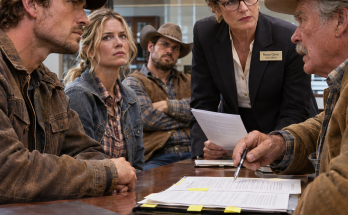
The meeting took place in Piper’s conference room.
My father arrived wearing a dark navy suit.
Dexter came with him.
Greta was absent.
Marlene arrived with her attorney.
She looked nervous, but she held her head high.
Harlon barely acknowledged her.
He placed a folder on the table.
“I’ve prepared a settlement proposal.”
Marlene didn’t touch it.
“Before we discuss money, I want you to answer one question.”
My father looked irritated.
“What?”
“Why did you tell everyone I stole from the company?”
He stared at her.
“I was young. Things were complicated.”
“No. They weren’t complicated. You took what belonged to both of us.”
Harlon looked at his attorney.
His attorney quietly advised him to remain calm.
But Marlene wasn’t finished.
“I lost my home, my inheritance, and my relationship with my family. I spent years wondering whether our father died believing I had betrayed him.”
She paused.
“Did he?”
My father looked down.
For a long time, he said nothing.
Then he spoke.
“No.”
Marlene’s eyes filled with tears.
“What?”
“He knew.”
She slowly leaned back.
My father continued.
“He found the bank transfers. He confronted me. He told me to return the money.”
“Did you?”
“No.”
“Why?”
Harlon closed his eyes.
“Because by then, the money was gone.”
Marlene began crying.
Not loudly.
Not dramatically.
Just quietly, as if forty years of unanswered questions had finally received an answer.
“You let me leave believing I had disappointed him,” she whispered.
My father didn’t respond.
“You let me spend my life thinking my own father hated me.”
He looked up.
“I was afraid.”
Marlene shook her head.
“You were greedy, Harlon. And you were afraid of losing what you had taken.”
For once, my father had no argument.
The negotiations continued for several weeks.
Eventually, the parties reached a settlement that was reviewed by independent counsel.
Marlene received financial compensation tied to the documented historical interests, along with a negotiated share in certain assets connected to the original trust.
The company also agreed to correct several historical records and fund an independent review of its governance procedures.
It wasn’t possible to reverse forty years.
No amount of money could return the years she had spent away from her family.
But it was a beginning.
And for the first time, her name appeared in the Atwood family records without an accusation beside it.
I thought the worst was over.
I was wrong.
Because my father still had one final battle to fight.
And this time, it wasn’t about the company.
It was about Dexter.
After the settlement, Dexter began calling me.
At first, he wanted to know how much money Marlene had received.
Then he wanted to know whether the company would survive.
Finally, he asked me to meet him alone.
We met at a quiet coffee shop near downtown Denver.
He arrived twenty minutes late.
His expensive watch was gone.
His usual designer jacket had been replaced by an ordinary gray coat.
He sat across from me.
“Dad is falling apart.”
I stirred my coffee.
“I’m sorry to hear that.”
“You don’t sound sorry.”
“What do you want, Dexter?”
He looked down.
“I need help.”
“With what?”
“My finances.”
I waited.
He sighed.
“I invested in a commercial property with Dad. It was supposed to be a guaranteed return. Now the lenders are reviewing everything, and my name is on several of the documents.”
I looked at him.
“Did you sign them?”
“Yes.”
“Then you need an attorney.”
“I can’t afford one.”
I leaned back.
“Dexter, you have spent years laughing at me because I didn’t take Dad’s money. You called me weak. You told everyone I was wasting my life.”
He looked embarrassed.
“I know.”
“And now you want me to rescue you?”
He rubbed his face.
“I know I was wrong.”
For a moment, I saw something familiar in him.
Not the arrogant younger brother who had spent years competing with me.
Just a frightened man who had finally discovered that money could disappear.
“I’ll give you the number of an attorney,” I said. “But I won’t pay your debts or sign anything on your behalf.”
He nodded slowly.
“That’s fair.”
Then he looked at me.
“Silus, do you think Dad will ever forgive you?”
I almost smiled.
“I’m not the one who needs forgiveness.”
Six months later, the Atwood empire looked very different.
Harlon remained involved in the business, but the company had undergone major restructuring.
Several senior executives resigned.
The board appointed independent oversight.
Financial decisions that had once depended entirely on my father’s approval now required proper review.
Dexter stepped away from several business ventures while dealing with his own financial and legal responsibilities.
And I continued building my architectural firm.
I never accepted a position in my father’s company.
I never asked for a share of its profits.
I didn’t need to.
My life was already full.
Daphne and I celebrated our tenth wedding anniversary that year.
We invited Marlene and her family.
Greta came too.
She had begun visiting us regularly, sometimes bringing Calvin little gifts or helping Daphne in the garden.
Harlon was not invited.
Not because I wanted revenge.
But because we needed peace.
Then, one Sunday afternoon, someone knocked on our front door.
I opened it.
My father stood outside.
He looked older than I remembered.
His hair had become almost completely white, and the confidence that once filled every room seemed to have disappeared.
He held a small gift bag.
“Can I come in?”
I looked behind him.
Nobody was waiting in the driveway.
“Why are you here?”
He glanced toward the living room.
“I wanted to see Calvin.”
I didn’t move.
“Have you come to apologize?”
He swallowed.
“I want to talk to you.”
“That’s not what I asked.”
He looked down at the gift bag.
“Silus, I’m not very good at this.”
I waited.
Finally, he said the words.
“I’m sorry.”
I said nothing.
He continued.
“I was wrong about Daphne. I was wrong about Calvin. I was wrong about Marlene.”
His voice became quieter.
“I thought protecting the family meant protecting the money. I thought the name was more important than the people carrying it.”
He looked at me.
“I was wrong.”
For a moment, I didn’t know what to say.
Then I heard little footsteps behind me.
Calvin appeared in the hallway, holding his blue stuffed elephant.
“Daddy, who’s there?”
My father looked at him.
His face changed.
“Hello, Calvin.”
Calvin studied him.
Then he asked an innocent question.
“Are you Grandpa Harlon?”
My father nodded.
“Yes, buddy.”
Calvin looked at the gift bag.
“Did you bring me something?”
My father smiled weakly.
“I did.”
Calvin accepted the bag and pulled out a wooden dinosaur set.
His eyes widened.
“Wow! Thank you!”
Then he ran toward the living room.
“Mommy! Look what Grandpa brought!”
My father watched him disappear.
His eyes became wet.
“He’s a good boy.”
“He is.”
“I should have held him when he was three.”
I looked at my father.
“Yes. You should have.”
He lowered his head.
“I don’t expect you to forget what I did.”
“Good. Because I won’t.”
He nodded.
“But perhaps, someday, you might let me be his grandfather.”
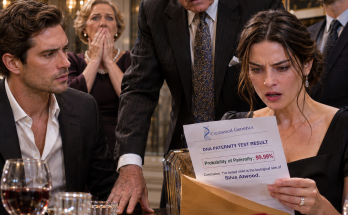
I thought about the years of insults, the stolen trust, the secret DNA test, and the way he had tried to turn my wife into an enemy.
I also thought about Calvin.
My son deserved to know that people could make mistakes and take responsibility for them.
But he also deserved protection from anyone who might hurt him again.
“Grandfather isn’t a title you inherit, Dad,” I told him. “It’s something you earn.”
He looked up.
“I understand.”
“If you want to be part of Calvin’s life, you will respect Daphne. You will never question his parentage again. You will never use money to control him. And you will never make him feel that he has to earn your love.”
My father nodded.
“I agree.”
“Then we can start slowly.”
He wiped his eyes.
“Thank you.”
I stepped aside.
And for the first time in years, I allowed him to enter my home.
Not as the owner of an empire.
Not as the head of the Atwood family.
Just as a man who had finally begun to understand what he had lost.
A year later, we gathered at Marlene’s house for Calvin’s fifth birthday.
The garden was decorated with green and blue balloons.
There was a dinosaur cake on the table, and Calvin was running around with his cousins.
Marlene sat beside Greta, laughing as they watched the children play.
Daphne stood near the cake, taking photographs.
My father arrived shortly before the party began.
He carried a small wooden box.
Inside was an old family photograph.
It showed my grandfather standing between Harlon and Marlene when they were young.
For years, my father had kept it hidden.
He handed it to Marlene.
“I thought you should have this.”
She looked at the photograph.
Her fingers trembled.
“Where did you find it?”
“In my study.”
She studied his face.
“Thank you.”
It wasn’t a complete reconciliation.
Some wounds take longer than a few apologies.
But it was something.
When everyone gathered around the birthday cake, Calvin climbed onto a small chair.
“Wait!” he shouted.
Everyone stopped.
He pointed toward my father.
“Grandpa, come stand next to me!”
My father looked surprised.
Then he walked forward.
Calvin grabbed his hand.
“Today we’re all family!”
Everyone laughed.
I looked at Daphne.
She smiled and squeezed my hand.
My father stood beside Calvin while we sang.
For the first time, I didn’t see a family divided by bloodlines, inheritance, and old secrets.
I saw people who had been given another chance to do better.
After the cake was cut, Marlene approached me.
“You know,” she said, “your grandfather would have liked this.”
I smiled.
“I wish I had known him better.”
She touched my shoulder.
“He would have been proud of the man you’ve become.”
I looked across the garden.
Daphne was helping Calvin open his presents. Greta was laughing with Marlene. Dexter had arrived with his wife, and although our relationship was still distant, he had begun making an effort.
My father sat quietly on a bench, watching his grandson play.
For years, Harlon had believed the Atwood name was protected by money, property, and shared DNA.
But he had nearly destroyed everything trying to prove that a little boy didn’t belong.
And the irony was that Calvin had never needed a DNA test to prove he belonged.
He belonged because we loved him.
He belonged because Daphne and I had chosen to build a home where he would never have to question whether he was wanted.
And he belonged because family was never supposed to be a competition over who carried the right blood.
That evening, after everyone had gone home, Daphne and I sat together on the back porch.
Calvin was asleep upstairs.
She rested her head against my shoulder.
“Do you think your father has really changed?”
I looked toward the garden.
“I don’t know.”
“Do you forgive him?”
I thought about it.
“I think I’ve stopped letting what he did control my life. That’s a start.”
She smiled.
Then she asked something I would remember for the rest of my life.
“What do you want Calvin to remember about his family?”
I looked at her.
“Not the money. Not the company. Not the last name.”
I reached for her hand.
“I want him to remember that nobody ever had to prove they deserved a place at our table.”
She leaned closer.
And I finally understood something my father had spent sixty-five years failing to learn.
An empire can be inherited.
A fortune can be divided.
A family name can be written on buildings, contracts, and bank accounts.
But love cannot be purchased, and belonging cannot be measured by a laboratory.
My father had spent his life protecting an empire.
I had spent mine building a family.
And when I looked at the little boy sleeping upstairs, I knew which one would matter long after all the money was gone.

One Comment on “My Father Secretly DNA-Tested My Son”