And the moment I heard his voice, I understood why he had hidden the truth.
It was nine o’clock when Michelle and I arrived at Samuel Bennett’s office in Cedar Rapids.
Neither of us had slept much.
Michelle sat beside me in the waiting room, twisting a tissue between her fingers.
She hadn’t spoken to Todd since the detective began investigating the forged documents.
The children were staying with her friend, and she’d told me she was considering separating from him.
I hadn’t pushed her.
Some decisions are too important for a mother to make on her daughter’s behalf.
But I could see the fear in her eyes.
“Mom,” she whispered, “what if Dad really did give us that money?”
I looked at her.
“Then we’ll find out why.”
She swallowed.
“And what if Todd lied about everything?”
I took her hand.
“Then you’ll have to decide what kind of life you want after the truth comes out.”
Before she could answer, a receptionist appeared.
“Mrs. Henderson? Mr. Bennett is ready for you.”
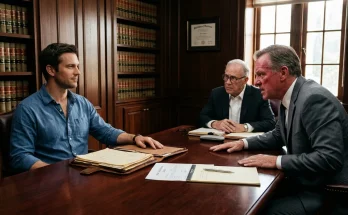
We followed her down a quiet hallway into an office lined with bookshelves.
Samuel Bennett was an elderly man with white hair, a navy-blue suit, and the kind of gentle expression that reminded me of my husband’s old family doctor.
He stood when we entered.
“Judy Henderson.”
I nodded.
He came around his desk and offered his hand.
“I knew your husband for many years.”
My throat tightened.
“He never mentioned you.”
Samuel smiled sadly.
“That sounds like Dale. He didn’t believe in worrying people before there was something they needed to worry about.”
I sat down.
Michelle took the chair beside me.
On Samuel’s desk was a thick brown envelope.
My name was written across the front.
Dale’s handwriting.
I recognized it immediately.
Samuel noticed me staring.
“He prepared this during the final months of his illness.”
I reached toward it, then stopped.
“Before we open that,” I said, “I need to know something.”
“Of course.”
“Did my husband give Todd seventy-five thousand dollars?”
Samuel’s expression became serious.
“Yes.”
Michelle made a small sound beside me.
I turned toward her.
Her face had gone pale.
Samuel continued.
“But the circumstances were not what your son-in-law represented.”
I leaned forward.
“Then tell us.”
Samuel opened a folder.
“Several years ago, Todd approached your husband about selling the railroad property. He had already been discussing the land with Russell Mercer, despite having no ownership interest in it.”
I nodded.
“I found Dale’s notebook.”
“Then you know your husband refused.”
“Yes.”
Samuel folded his hands.
“What you may not know is that Todd had already borrowed money based on his expectation that the property would eventually be sold.”
Michelle covered her mouth.
Samuel looked at her gently.
“He told Russell that Dale would agree. When Dale refused, Todd found himself responsible for a debt he couldn’t repay.”
I felt my stomach tighten.
“How much?”
“At that time, approximately sixty-two thousand dollars, including fees and interest.”
I closed my eyes.
Todd had been gambling with somebody else’s property long before he tried to make me pay rent in his basement.
Samuel continued.
“Russell threatened to pursue collection. Todd told Dale that the financial consequences could cost Michelle and the children their home.”
Michelle began crying.
“I didn’t know.”
Samuel nodded.
“Your father believed you didn’t.”
I looked up sharply.
“He did?”
“Yes. He was very clear about that.”
Samuel took a document from the folder.
“Dale didn’t want his daughter and grandchildren to suffer for Todd’s decisions. But he also refused to sell the land or give Todd control over it.”
“So what did he do?” I asked.
“He arranged a settlement.”
Samuel placed the document in front of us.
It showed a payment of seventy-five thousand dollars.
But the money hadn’t been given to Todd as a gift.
It had been used to settle his obligations and prevent the threatened loss of the family home.
The agreement required Todd to acknowledge that he had no ownership interest in Dale’s land, no authority to negotiate its sale, and no right to represent himself as acting on Dale’s behalf.
It also required him to disclose the arrangement to Michelle.
I looked at my daughter.
She was staring at the paper.
“He never told me,” she whispered.
Samuel’s face softened.
“Your father wanted you to know. Todd promised that he would explain everything.”
I swallowed.
“And the down payment on their house?”
Samuel looked at another document.
“From what I understand, Todd later represented the financial relief from the settlement as money he’d received through work. Your father was deeply disappointed when he learned that.”
Michelle began shaking.
“All those years, I thought Todd had earned that money.”
I reached for her hand.
Samuel continued.
“Dale was angry, but he didn’t want to destroy your marriage. He hoped Todd would honor the agreement and become more responsible.”
I stared at the papers.
“And he didn’t.”
“No.”
Samuel paused.
“Instead, Todd apparently resumed dealing with Russell after your husband’s death.”
I looked down at the signature on the settlement.
Todd’s handwriting.
Clear.
Unmistakable.
He had signed away any claim to the land.
He had accepted the benefit of Dale’s help.
And years later, he’d tried to take the property anyway.
I thought of the yellow legal pad.
The $800 circled twice.
The four days of babysitting.
The basement room with its tiny window.
I finally understood something that had bothered me from the beginning.
Todd hadn’t merely wanted my Social Security.
He’d wanted control over my circumstances.
If I lived under his roof, he could make me feel dependent.
He could pressure me.
He could convince me that signing papers was the price of keeping peace in the family.
And if I’d agreed?
I might never have discovered the land until it was too late.
Samuel closed the folder.
“Judy, your husband anticipated that Todd might try something like this.”
I looked at him.
“How?”
“Because Todd made a remark during one of their final conversations.”
My heart tightened.
“What remark?”
Samuel hesitated.
“He told Dale that once he was gone, you wouldn’t know what to do with the property.”
I stared at him.
“And what did Dale say?”
Samuel smiled faintly.
“He said, ‘You’d be surprised what my wife knows how to do.’”
Tears filled my eyes.
I could hear Dale saying it.
That quiet confidence.
That gentle stubbornness.
He’d never been a man who raised his voice to prove his strength.
He simply did what needed doing.
Samuel reached toward the brown envelope.
“There’s something else.”
I wiped my cheeks.
“What?”
“Your husband established a trust to preserve certain records and provide legal assistance if the land was ever challenged.”
I thought of the bank statements.
“Eighty-six dollars and fifty cents every month?”
Samuel nodded.
“Those payments covered administrative and document-storage expenses under an arrangement he maintained for years. When his health declined, he funded the remaining obligations in advance.”
I shook my head.
“We were counting pennies, and he was paying to protect paperwork?”
Samuel leaned forward.
“He was protecting you, Judy.”
I looked at the envelope.
“Why didn’t he tell me?”
Samuel was quiet for a moment.
“Because he knew that if you learned Todd was in trouble, you might sacrifice the property to help Michelle.”
I closed my eyes.
He was right.
Of course he was right.
I would have sold the land.
I would have emptied our savings.
I would have done anything to keep my daughter from suffering.
Dale had known that about me.
He’d loved that about me.
But he’d also known that kindness without boundaries could leave a person with nothing.
Samuel opened the envelope.
Inside was a small digital recorder.
My breath caught.
“Is that…?”
“Yes.”
He placed it on the desk.
“Your husband recorded this shortly before he entered hospice.”
Michelle began crying quietly.
Samuel looked at me.
“Would you like to hear it now?”
I nodded.
But when he reached for the button, I stopped him.
“Wait.”
He looked up.
I took Michelle’s hand.
“Whatever he says, I want my daughter to hear it with me.”
Samuel nodded.
Then he pressed play.
For a moment, there was only a faint rustling sound.
Then a cough.
And then I heard the voice I had missed every single day for almost two years.
“Well, Judy girl…”
My heart broke.
That was what Dale used to call me when we were young.
Judy girl.
He hadn’t said it often during his final illness.
Hearing it again felt like someone opening a door to a room I’d thought was gone forever.
“If you’re listening to this, sweetheart, I suppose I’ve gone on ahead.”
I covered my mouth.
Michelle gripped my hand.
Dale continued.
“I don’t know how much time I’ve got left. The doctors have been honest with me, and I reckon it’s time I was honest with you.”
His voice was weak.
But unmistakably his.
“I’ve been thinking about that first winter we were married. Remember the old house with the frozen pipes? You wore two sweaters to bed, and I told you we’d have a better place someday.”
I laughed through my tears.
I remembered.
The roof leaked.
The furnace barely worked.
We’d eaten beans three nights a week.
But we’d been happy.
Dale continued.
“I never gave you the fancy house I promised. Never bought you the diamond ring you deserved. And I know you always told me you didn’t care about those things.”
His voice trembled.
“But I cared, Judy. I cared because you gave me everything you had, and I wanted to leave you something besides memories.”
I began sobbing.
Samuel quietly placed a box of tissues beside me.
Dale coughed again.
“That little piece of land my father left me isn’t much to look at. But someday, somebody might need it. And if they do, I want you to be the one who decides what happens to it.”
He paused.
Then his voice became firmer.
“Now, there’s something you need to know about Todd.”
Michelle stiffened beside me.
“I helped him once. Not because he deserved it, but because Michelle and those babies didn’t deserve to lose their home over his foolishness.”
I closed my eyes.
“But I made him sign papers promising he’d never come after that land again.”
There was another pause.
“And Judy, if he ever breaks that promise, don’t you dare blame yourself.”
Tears rolled down my cheeks.
“You spent your whole life making room for everybody else. You made room for me when I was a broke farmhand. You made room for my parents when they needed help. You made room for our daughter every time she needed somewhere to land.”
His voice cracked.
“But sweetheart, you’ve earned the right to have a little room for yourself.”
I looked at Michelle.
She was crying so hard she could barely breathe.
Dale continued.
“I don’t know where you’ll be living when you hear this. Maybe you’ll still be at the farm. Maybe you’ll find yourself a little place in town.”
I looked down at the keys resting in my handbag.
My little two-room rental.
My porch swing.
My own front door.
It was almost as though he’d seen the future.
“But wherever you are, Judy, I want you to remember something.”
The recording went quiet for several seconds.
Then Dale spoke the words that would change the rest of my life.
“A home isn’t something you owe people for loving you. And being a mother doesn’t mean you stop being a person.”
I pressed my hand against my heart.
“I love Michelle. I love those grandchildren. But I love you, too. And I don’t want you spending your last good years trying to prove you deserve a place at somebody else’s table.”
Michelle bent forward, crying into her hands.
Dale’s voice softened.
“So if anybody ever makes you feel like a burden, you go find yourself a place where you can breathe. Buy yourself some flowers. Sit outside when the weather’s nice. Eat pie for supper if you feel like it.”
I laughed through my tears.
That sounded exactly like him.
“And don’t worry about what people say. You worked hard enough for two lifetimes.”
He coughed.
Then came his final words.
“Judy girl, I couldn’t give you the world. But I hope I left you enough to choose your own little corner of it.”
A long silence followed.
Then, very softly:
“And if there’s anything waiting for me on the other side, I’ll be saving you a seat. But don’t you hurry. You’ve still got living to do.”
The recording ended.
Nobody spoke.
Samuel looked down at his desk.
Michelle cried silently.
And I sat there holding a tissue, feeling as though Dale had reached across two years of grief and taken my hand.
For so long, I’d measured my life by what I had lost.
My husband.
The farmhouse.
The familiar routines.
The feeling of being needed.
But Dale had left me something I hadn’t known how to give myself.
Permission to live.
Not merely survive.
Live.
After several minutes, Samuel spoke.
“Judy, there are some practical matters we need to discuss.”
I nodded.
He explained that the trust documents, Dale’s notebook, and Rebecca’s testimony could help establish what had happened.
The disputed signatures would need expert examination.
The property records would need to be corrected through the proper legal process.
And the suspected fraud would be investigated.
There were no guarantees.
No instant solutions.
No magical check waiting to solve everything.
But for the first time, I had something more valuable than a promise.
I had evidence.
And I had people willing to help me protect my rights.
When we left the office, Michelle walked beside me in silence.
We reached my Buick before she finally spoke.
“Mom?”
I turned.
She was crying again.
“I’m so sorry.”
I reached for her hand.
“Honey, we’ve both got things to learn from this.”
She shook her head.
“No. I mean I’m sorry for that day at the kitchen table.”
I waited.
“For letting Todd put that paper in front of you. For acting like you had to earn your place in our family. For making you feel like taking care of the grandchildren was something you owed us.”
My eyes filled.
“Michelle…”
She continued.
“I remember how Dad used to come home exhausted and still help me with my homework. I remember how you worked all day at the lumberyard and came home to cook supper and wash clothes.”
Her voice broke.
“And somehow, I grew up thinking that because you were always there for us, you were supposed to keep being there whenever we wanted.”
I squeezed her hand.
“Being there for family is a beautiful thing, sweetheart.”
She nodded.
“But it should be a choice.”
I smiled through my tears.
“Yes.”
She hugged me.
For a long time, we stood beside the Buick while cars passed along the street.
Then she whispered, “I don’t want your money, Mom.”
I held her tighter.
“I know.”
“I just want my mother back.”
I kissed her forehead.
“You never lost me.”
But the truth was, we’d both nearly lost something.
She’d nearly lost the mother she knew.
And I’d nearly lost the woman I still had the right to become.
The following weeks were difficult.
Todd moved out of the family house while Michelle considered her options.
She met with an attorney of her own to understand her financial responsibilities and protect the children.
The sheriff’s investigation continued.
Russell’s company denied wrongdoing.
Todd claimed he had misunderstood the earlier agreement and blamed Russell for preparing the disputed documents.
Russell blamed Todd.
Neither explanation accounted for the handwriting practice sheets, the inconsistent signatures, or the false witness information.
The evidence didn’t resolve itself overnight.
But it didn’t disappear, either.
Rebecca provided her written account of the hospital meeting.
Walter supplied hospital records showing he had been recovering from surgery on the date he supposedly witnessed my signature.
Samuel produced the settlement agreement Todd had signed years earlier.
And Eleanor continued challenging the property claim.
Eventually, the disputed filing was withdrawn after the court proceedings and document examinations exposed serious problems with its authenticity.
The criminal investigation took longer.
Russell and Todd both faced charges connected to the attempted fraudulent property transaction. The case proceeded through the courts, and Todd ultimately admitted his role in arranging false documents and attempting to obtain money from the proposed sale.
Russell contested the allegations against him, but the evidence eventually led to his conviction on fraud-related charges.
I didn’t attend every hearing.
I didn’t need to.
Justice wasn’t something I had to watch every minute to believe in.
What mattered was that my husband’s name was cleared.
The land remained mine.
And no one could use a forged signature to take it from me.
Todd’s actions also had consequences at home.
Michelle filed for divorce.
It wasn’t an easy decision.
She cried.
She questioned herself.
She worried about the children.
But one evening, sitting at my kitchen table, she said something I will never forget.
“Mom, I kept thinking that staying married meant keeping the family together. But the children were watching me accept things I would never want them to accept.”
I reached across the table.
“Then teach them something different.”
She nodded.
“I’m going to.”
I was proud of her.
Not because she was leaving her marriage.
But because she was beginning to make decisions based on the truth instead of fear.
As for the land, Eleanor arranged an independent appraisal.
The figure came back at approximately $910,000, subject to development approvals and market conditions.
I stared at the report for a long time.
Nearly a million dollars.
I thought of all the times Dale and I had argued about whether we could afford a new washing machine.
All the years he’d patched his work boots instead of buying new ones.
All the evenings I’d sat beside him at the kitchen table, adding up bills with a pencil.
He’d died without ever seeing what that little piece of land might become.
But I knew what he would have said if he’d seen the appraisal.
“Well, Judy girl, I reckon we can finally afford that washing machine.”
I laughed until I cried.
Several months later, a different development company approached Eleanor with an offer.
Unlike Russell’s company, they were willing to negotiate openly, provide independent legal review, and allow me time to consider my options.
I didn’t rush.
I had the property surveyed.
I reviewed the proposed access requirements.
I spoke with a tax professional.
And I made sure every document was explained before I signed anything.
Eventually, I agreed to sell part of the land while retaining a smaller parcel.
The transaction provided enough money, after expenses and taxes, to give me financial security for the rest of my life.
I didn’t become a different person overnight.
I didn’t buy a mansion.
I didn’t purchase a luxury car.
I didn’t start wearing expensive jewelry or treating people differently.
In fact, the first thing I bought was a new pair of comfortable walking shoes.
The second was a proper winter coat.
And the third was something I’d wanted for nearly forty years.
A little house of my own.
Not a rental.
Not a farmhouse tied to somebody else’s job.
Not a basement beneath my daughter’s kitchen.
A home.
It stood on a quiet street with maple trees along the sidewalk.
It had two bedrooms, a bright kitchen, and a small garden.
There were no stairs at the front entrance.
The windows were large enough to let the morning sun pour into every room.
And in the backyard stood an old apple tree.
The day I received the keys, I sat on the front porch for nearly an hour.
I didn’t cry.
I simply looked around.
At the grass.
The flowers.
The blue sky.
The little brass house number beside the door.
And I felt a peace I hadn’t known since Dale died.
Mr. Brandt, who had rented me that first little house near the grain elevator, came by to congratulate me.
He shook my hand.
“Well, Judy, looks like you’ve moved up in the world.”
I smiled.
“Maybe a little.”
He glanced at the porch.
“Bet you won’t miss that grain dust.”
I laughed.
“Actually, I think I will.”
Because that tiny rental had given me something no expensive home could replace.
It had taught me I could begin again.
I kept the two keys Mr. Brandt had given me.
The front door key.
The back door key.
I placed them in a small wooden frame beside Dale’s photograph.
Underneath, I wrote:
THE FIRST KEYS I CHOSE FOR MYSELF.
When Michelle saw them, she cried.
She understood.
A few months later, she and the children moved into a modest rental not far from my new house.
She returned to full-time work at the clinic and began rebuilding her finances.
I helped when I chose to.
Sometimes I picked the children up from school.
Sometimes I made supper for everyone.
Sometimes I watched Sadie and Caleb on Saturday afternoons so Michelle could rest.
But there was no schedule written on notebook paper.
No four-day requirement.
No demand that I earn my keep.
If I wanted a quiet afternoon, I took one.
If I wanted to visit Ruth, I went.
If I wanted to sit in my garden reading a book, nobody made me feel guilty.
And something wonderful happened.
The more freely I gave my time, the more I enjoyed giving it.
Because love feels different when it isn’t being collected like rent.
One Sunday afternoon, nearly a year after Todd first slid that paper across Michelle’s kitchen table, we gathered at my house for dinner.
Michelle brought a homemade apple pie.
Caleb carried a board game.
Sadie arrived holding a bouquet of dandelions.
“For your table, Grandma.”
I placed them in a little glass jar.
“They’re beautiful.”
She smiled.
Then she looked around my kitchen.
“Grandma?”
“Yes, sweetheart?”
“Is this your forever house?”
I paused.
Forever.
At sixty-eight, I knew better than to make promises about forever.
But I looked at the sunlight falling across the floor.
At Michelle laughing with Caleb.
At the flowers on the table.
At Dale’s photograph beside the window.
And I smiled.
“I think it’s my right-now house, sweetheart.”
Sadie frowned.
“What’s that?”
“It’s a house where I’m happy today.”
She considered this.
Then she nodded.
“That’s good.”
I laughed.
“Yes, it is.”
After dinner, Michelle helped me wash the dishes.
She dried a plate, placed it in the cupboard, and glanced toward the framed keys.
“Mom, can I ask you something?”
“Of course.”
“Do you ever wish you’d moved into our basement?”
I looked at her.
She wasn’t asking to hurt me.
She genuinely wanted to know.
I set down the dishcloth.
“No, honey.”
She nodded slowly.
“Not even before all the trouble started?”
I thought about the nights I’d spent alone on the porch swing.
The loneliness.
The fear.
The guilt.
The way I’d missed my grandchildren so badly that I’d wondered whether independence was worth it.
Then I answered.
“There were nights when I wished things had been easier.”
Michelle looked down.
“But I never wished I’d given up the right to choose.”
She wiped her eyes.
“I understand now.”
I touched her cheek.
“That’s all I ever wanted.”
That evening, after everyone left, I sat alone on the porch.
The sun was setting behind the maple trees.
A cool breeze moved through the branches.
Somewhere down the street, a dog barked.
I had a cup of tea beside me and a warm blanket over my knees.
For the first time in years, I wasn’t waiting for something.
Not for a phone call.
Not for a bill.
Not for somebody to tell me where I belonged.
I simply sat there.
And I thought about Dale.
I thought about the way he’d held my hand during thunderstorms.
The way he’d warmed my car on freezing mornings.
The way he’d always saved me the last piece of pie.
I thought about his final message.
“You’ve still got living to do.”
I smiled.
“I know, sweetheart.”
Then I reached into my coat pocket and pulled out something I’d kept since that Saturday afternoon.
A folded sheet of notebook paper.
Todd’s original offer.
$800.
Two circles around the number.
I’d carried it through every move.
Every appointment.
Every frightening discovery.
Not because I wanted to remember his cruelty.
But because I wanted to remember the moment I finally chose myself.
I unfolded it carefully.
The paper was creased and soft from being handled.
I looked at the number.
Eight hundred dollars.
Nearly half my Social Security.
Four days of babysitting.
A basement room with one tiny window.
And a lifetime of feeling as though I had to pay for the privilege of being loved.
I stood and walked inside.
At my kitchen table, I took out a pen.
Below Todd’s number, I wrote:
“Rent in my first little house: $550.”
Then:
“Freedom to come and go: Mine.”
“Time with my grandchildren: Given with love.”
“Right to say no: Mine.”
I paused.
Then I wrote one final line.
“Value of the years I have left: Not for sale.”
I folded the paper and placed it in the drawer beside Dale’s letter.
I thought that would be the end of it.
But two weeks later, something happened that brought the entire story full circle.
It was a Thursday afternoon.
I was watering the flowers near my front steps when a car pulled into the driveway.
A man stepped out.
He was older than I remembered.
His shoulders were rounded.
His face looked tired.
Todd.
I hadn’t seen him since the court proceedings.
He stood beside the car for a moment, uncertain whether to approach.
I set down the watering can.
“Hello, Todd.”
“Hello, Judy.”
He looked toward the house.
“Nice place.”
“Thank you.”
He swallowed.
“I won’t stay long.”
I waited.
He took a folded piece of paper from his pocket.
My heart tightened.
For one strange moment, I was back at Michelle’s kitchen table.
Another piece of paper.
Another number.
Another request.
But this time, Todd didn’t hand it to me.
He held it between trembling fingers.
“I’ve been going through some things,” he said.
I nodded.
“I know.”
“I’ve had a lot of time to think about what I did.”
I said nothing.
He looked down.
“I told myself I was doing it for Michelle and the kids.”
His voice cracked.
“But the truth is, I wanted money. I wanted people to think I was successful. And every time I made a bad decision, I found somebody else to blame.”
I watched him carefully.
He continued.
“When Dale refused to sell the land, I hated him for it.”
My chest tightened.
“I know.”
Todd nodded.
“I told myself he was selfish.”
He wiped his eyes.
“But he wasn’t. He was protecting you.”
For a moment, neither of us spoke.
Then Todd unfolded the paper.
It wasn’t a bill.
It wasn’t a demand.
It was a handwritten apology.
He held it out.
“I don’t expect you to forgive me.”
I took the paper.
He looked at me.
“And I don’t expect Michelle to take me back.”
I nodded.
“That’s her decision.”
“I know.”
He glanced toward the front door.
“Can I ask you something?”
“Yes.”
“Did Dale really leave you a recording?”
I felt tears rise unexpectedly.
“Yes.”
Todd swallowed.
“Did he say anything about me?”
I thought about the message.
About Dale’s quiet disappointment.
About the seventy-five thousand dollars.
About the warning he’d left for me.
Then I answered.
“He said he helped you because he loved Michelle and the children.”
Todd began crying.
I let him.
After a moment, he whispered, “I wish I’d thanked him.”
I looked toward the sky.
“So do I.”
He wiped his face.
Then he said, “I’m sorry, Judy.”
I nodded.
“I believe you’re sorry.”
He looked up hopefully.
But I continued.
“That doesn’t undo what happened.”
His expression fell.
“I know.”
“And it doesn’t mean things can go back to the way they were.”
He nodded again.
“I understand.”
I looked at the apology in my hand.
Then at the man who had once tried to turn my retirement into his financial rescue plan.
“Todd, I hope you become the kind of father your children deserve.”
His eyes filled.
“And I hope you learn that loving people means respecting what belongs to them. Their money. Their choices. Their peace.”
He lowered his head.
“I’ll try.”
I nodded.
“Then start there.”
He walked back to his car.
Before getting in, he turned.
“Judy?”
“Yes?”
“Thank you for listening.”
I watched him drive away.
I didn’t invite him inside.
I didn’t offer money.
I didn’t promise forgiveness on a timetable.
But I didn’t shout, either.
Because I’d finally learned that boundaries didn’t have to be cruel to be firm.
That evening, I called Michelle.
I told her Todd had stopped by.
She listened quietly.
Then she asked, “Did you forgive him?”
I thought for a moment.
“I hope one day I can let go of all the anger.”
She nodded.
“But that doesn’t mean I’ll ever let him make decisions for me again.”
Michelle was silent.
Then she said, “Dad would be proud of you.”
I looked at his photograph.
And smiled.
“I think he would.”
The following March marked three years since Dale died.
On the anniversary, I drove to the cemetery with a bouquet of yellow daisies.
They were his favorite flowers, though he’d always insisted flowers were a waste of money.
I sat beside his headstone for a long time.
I told him about the children.
About Michelle’s new job.
About my garden.
About the apple tree.
About the little house I’d finally bought.
I told him the land was secure.
That the people who had tried to take it had been held accountable.
And that I was doing exactly what he’d asked.
Living.
Before I left, I placed my hand against the cool stone.
“You were wrong about one thing, Dale.”
The wind moved gently through the trees.
“You said you never gave me the home you promised.”
I smiled through my tears.
“But you did.”
I thought about our first winter.
The frozen pipes.
The two sweaters.
The beans for supper.
The nights we’d fallen asleep holding hands because the house was so cold.
“You gave me a home for forty-three years. And when you couldn’t stay, you made sure I knew how to find one for myself.”
I kissed my fingertips and touched his name.
“Thank you, sweetheart.”
Then I stood and walked back to my car.
As I drove home, I passed the grain elevator.
The trucks were lined up along the road, just as they had been the evening I first moved into my little rental.
I slowed down.
For a moment, I could almost see myself sitting on that porch swing.
A lonely widow.
Sixty-seven years old.
Afraid of losing her daughter.
Afraid of being a burden.
Afraid that saying no would cost her the only family she had left.
I wished I could reach through time and tell that woman something.
I wished I could sit beside her and take her hand.
And say:
“Judy, you’re going to be all right.”
“Your daughter will find her way.”
“Your grandchildren will still love you.”
“And the little house you chose because it had its own front door will lead you somewhere you never imagined.”
But most of all, I wished I could tell her this:
“You don’t have to become smaller just because somebody else needs more room.”
I drove the rest of the way home with the windows down.
When I pulled into my driveway, Sadie and Caleb were waiting on the porch with Michelle.
They’d come to surprise me.
Sadie ran toward the car.
“Grandma! We made you something!”
She handed me a piece of construction paper covered in bright crayon drawings.
There was a yellow house.
A big apple tree.
Three smiling stick figures.
And a fourth figure with gray hair standing in the middle.
Above the drawing, in Caleb’s careful handwriting, were the words:
GRANDMA’S HOUSE — WHERE EVERYBODY IS LOVED.
I stared at the picture.
Then I hugged them so tightly they squealed.
Michelle stood beside us, smiling through her tears.
And in that moment, I understood the greatest gift Dale had left me.
It wasn’t the land.
It wasn’t the money.
It wasn’t even the house.
It was the reminder that I had never needed to purchase my place in my own family.
I belonged because I loved them.
And they belonged because I loved them.
Not because of what I could pay.
Not because of what I could provide.
Not because of how many days I babysat.
Just because we were family.
That night, after everyone had gone home, I hung the children’s drawing beside the framed keys from my first rental.
Then I stood back and looked at them.
Two little pieces of metal.
One colorful drawing.
And a lifetime of lessons.
I thought about that Saturday afternoon when Todd pushed the paper toward me.
Eight hundred dollars.
Two circles.
A basement.
Four days of work.
He’d believed he was offering me a place to live.
But he hadn’t understood what I was really looking for.
I didn’t need someone to give me a corner of their house.
I needed the freedom to decide where my life belonged.
And at sixty-eight years old, I had finally found it.
So if there’s one thing I hope people remember from my story, it’s this:
Getting older doesn’t mean your life becomes somebody else’s to manage.
You can love your children without financing their mistakes.
You can adore your grandchildren without becoming an unpaid employee.
You can forgive someone without handing them another opportunity to hurt you.
And you can start over at sixty-seven, seventy-seven, or ninety-seven, because as long as you’re still breathing, your story isn’t finished.
I still receive my Social Security check every month.
I still clip coupons out of habit.
I still save leftover soup in old butter containers.
And I still think twice before buying something I don’t need.
But now, when I sit at my kitchen table and look around my home, I remember something Dale said in his final recording.
“You’ve still got living to do.”
And I intend to do exactly that.
Because the day I refused to pay $800 to live in my daughter’s basement wasn’t the day I turned my back on my family.
It was the day I finally stopped turning my back on myself.
And the most beautiful part?
My grandchildren don’t come to my house because I’m obligated to watch them.
They come because they want to.
My daughter doesn’t call because she needs my Social Security money.
She calls because she misses her mother.
And every night, when I turn the key in my own front door, I remember the man who loved me enough to make sure I would never have to beg for a place in anyone else’s home.
Dale never made me rich while he was alive.
But he left me something far greater than wealth.
He left me the courage to know that my life was still worth living on my own terms.
And if he could see me now, standing on my porch with the sunset shining through the apple tree, I know exactly what he’d say.
He’d smile that crooked smile of his, tip his old farm cap, and whisper:
“That’s my Judy girl. I knew you’d find your way.”………………………………………
PART 6 — THE STRANGER WHO KNOCKED ON MY DOOR WITH MY HUSBAND’S FINAL SECRET
It was just after nine when the doorbell rang.
I was standing in the kitchen, waiting for my coffee to finish brewing.
Through the window, I saw a woman beside my porch railing.
She appeared to be in her early fifties, with dark hair streaked with silver and a long brown coat buttoned to her chin.
She wasn’t holding flowers.
She wasn’t carrying a package.
She held a faded manila envelope against her chest.
When I opened the door, she looked at me with an expression I couldn’t quite understand.
Relief.
Fear.
And something that looked remarkably like grief.
“Mrs. Henderson?”
“Yes?”
She swallowed.
“My name is Caroline Whitmore.”
I waited.
“I knew your husband.”
My fingers tightened around the door handle.
“Dale?”
She nodded.
“Yes.”
There was something about the way she said his name that made my stomach turn.
Not because it sounded romantic.
Because it sounded painful.
“I’m sorry to come without calling,” she continued. “But I’ve spent months trying to decide whether I should tell you what I know.”
I studied her.
“Tell me what?”
She glanced toward the street.
“May I come inside? It’s about something Dale did before he died.”
For a moment, I considered closing the door.
I’d spent enough of my life uncovering secrets.
I’d survived forged documents, family betrayal, and a legal battle over land I hadn’t even known I owned.
I wanted peace.
But then Caroline opened the envelope.
She pulled out a photograph.
And my breath caught.
It showed Dale standing beside a young woman outside a brick building.
He was wearing his old green work jacket.
The same jacket he’d worn during harvest for nearly fifteen years.
His arm rested gently around the woman’s shoulders.
And both of them were smiling.
I recognized the building immediately.
It was the old county hospital.
The photograph was dated eleven years earlier.
I looked at Caroline.
“Who is she?”
Her eyes filled with tears.
“That’s my daughter.”
I stared at the photograph.
“And why was my husband with her?”
Caroline took a shaky breath.
“Because your husband saved her life.”
I stood completely still.
Then I stepped aside.
“Come in.”
We sat at my kitchen table.
The same table where I’d read Dale’s letter.
The same table where I’d finally learned to stop sacrificing my future for other people’s mistakes.
I placed two cups of coffee between us.
Caroline wrapped her hands around hers but didn’t drink.
“Eleven years ago,” she began, “my daughter, Emily, was sixteen.”
I nodded.
“She was a wonderful girl. Smart. Kind. Always singing around the house.”
Her voice trembled.
“Then she became very sick.”
I leaned forward.
“What happened?”
“Her kidneys began failing. We spent months going from doctor to doctor, trying to understand what was wrong.”
I felt my chest tighten.
“Was she all right?”
Caroline looked at the photograph.
“Eventually. But there was a time when we thought we were going to lose her.”
I waited.
“Her father had left us years earlier. I was working two jobs, and we had almost nothing saved.”
She wiped her eyes.
“The medical bills were overwhelming. We were behind on rent. I was terrified.”
I knew that kind of fear.
The fear of opening another envelope.
The fear of hearing the telephone ring.
The fear that one unexpected expense could destroy everything you’d worked for.
Caroline continued.
“One afternoon, I was sitting outside the hospital crying when a man stopped beside me.”
My heart began pounding.
“Dale?”
She nodded.
“He asked whether I was all right.”
I smiled sadly.
That sounded exactly like my husband.
Dale had never been able to walk past somebody who was hurting.
“He sat beside me,” Caroline said. “And I told him everything.”
She looked at me.
“I didn’t know him. I didn’t know he was married. I didn’t even know his last name.”
“What did he say?”
“He told me that sometimes life gives us more than we can carry, and there’s no shame in letting somebody help.”
I closed my eyes.
I could hear him saying those words.
Caroline reached into the envelope.
“He came back the next day.”
She placed a receipt on the table.
“And he paid part of Emily’s medical expenses.”
I stared at the amount.
$4,800.
My mouth went dry.
“Four thousand eight hundred dollars?”
Caroline nodded.
“He told the hospital not to tell us who paid.”
I shook my head.
“Dale and I didn’t have that kind of money.”
“I know.”
I looked up.
“Then where did he get it?”
Caroline hesitated.
“That’s part of why I’m here.”
She pulled out another document.
It was a handwritten agreement.
I recognized Dale’s signature immediately.
He’d borrowed money against a small savings account.
A savings account I hadn’t known existed.
My stomach tightened.
“He took out a loan?”
Caroline nodded.
“To help Emily.”
I stared at the paper.
For a moment, I didn’t know what to feel.
Pride.
Sadness.
Confusion.
My husband had spent his life being generous.
But he’d also spent years telling me we needed to be careful with every dollar.
Why had he hidden this?
Caroline seemed to understand my silence.
“He told me he couldn’t bear the thought of a mother losing her child because she couldn’t afford help.”
I swallowed.
Then she added, “But that’s not the only reason.”
I looked up.
“What do you mean?”
Caroline lowered her eyes.
“He said he’d lost someone when he was young.”
My heart tightened.
“Who?”
She hesitated.
“A little boy.”
I stared at her.
“A little boy?”
Caroline nodded.
“He said the child had been very sick, and there hadn’t been enough money for the treatment he needed.”
I felt a strange coldness spread through my chest.
Dale had never told me about a little boy.
Not once.
We’d been married forty-three years.
We’d raised Michelle together.
I’d known about his parents, his brothers, his childhood on the farm.
But I’d never heard this story.
“Are you sure he said a boy?”
“Yes.”
I looked toward Dale’s photograph on the mantel.
“Did he tell you the child’s name?”
Caroline nodded slowly.
“Daniel.”
I stopped breathing.
Daniel.
The name hit me like a memory I’d buried beneath decades of ordinary life.
Years before Michelle was born, Dale and I had talked about baby names.
He’d wanted Daniel if we had a son.
I’d asked him why.
He’d simply said it was a good name.
I’d never questioned it.
Now I wondered whether there had been another reason.
Caroline continued.
“Your husband told me he’d spent years wishing somebody had helped that child.”
My hands began trembling.
“Did he say Daniel was his son?”
Caroline looked startled.
“No. He never said that.”
I exhaled slowly.
But the question had already entered my mind.
And once a question like that takes hold, it doesn’t easily leave.
Caroline reached for my hand.
“Mrs. Henderson, I didn’t come here to upset you.”
“Then why did you come?”
She looked down.
“Because Emily asked me to.”
I frowned.
“Your daughter?”
Caroline nodded.
“She’s twenty-seven now. She’s married. She has a little boy of her own.”
I smiled faintly.
“That’s wonderful.”
“It is.”
Caroline’s eyes filled.
“And every year on the anniversary of the day your husband helped her, she sends flowers to the hospital.”
I stared at her.
“Why?”
“Because she says she wouldn’t have the life she has now without him.”
My throat tightened.
Caroline opened the envelope one last time.
Inside was a folded letter.
“Emily wrote this for you.”
I took it carefully.
The handwriting was neat.
Across the top were the words:
“To the wife of the man who gave me a second chance.”
I unfolded the letter.
“Dear Mrs. Henderson,
You don’t know me, but I feel as though I’ve known your family for years.
When I was sixteen, I was frightened, sick, and convinced my future was over.
Your husband helped my mother when she had nowhere else to turn.
He never asked for recognition.
He never asked for repayment.
He only asked that if I recovered, I would do something kind for somebody else.
I’m writing because I want you to know his kindness didn’t end with me.
I became a nurse.
I’ve spent the last five years helping children whose families are frightened and overwhelmed.
Every time I comfort a mother, I remember what your husband did for mine.
And last month, my little boy asked me why I always tell him to help people.
I told him about a farmer named Dale.
I told him that sometimes the smallest kindness can change generations.
Thank you for sharing your husband with the world.
Love,
Emily.”
By the time I finished reading, tears were falling onto the paper.
For so long, I’d thought of Dale’s legacy as something he’d left behind.
The land.
The house.
The money.
The legal documents.
But here was proof that his greatest legacy had never been measured in dollars.
It was living inside people I’d never met.
I pressed the letter against my chest.
“Thank you for bringing this.”
Caroline smiled through her tears.
“There’s one more thing.”
I laughed softly.
“Everyone seems to have one more thing about my husband.”
She smiled.
Then her expression became serious.
“Emily wants to meet you.”
My heart warmed.
“I’d like that.”
“But before she comes, there’s something she believes you should know.”
I looked at Caroline.
“What?”
She took a small photograph from her purse.
It showed Emily holding a little boy, perhaps four years old, with curly brown hair and bright blue eyes.
I smiled.
“He’s beautiful.”
Caroline nodded.
“His name is Daniel.”
I looked up sharply.
“Daniel?”
“Yes.”
She swallowed.
“Emily named him after the child your husband told us about.”
I stared at the photograph.
Then Caroline said something that made my heart pound.
“Mrs. Henderson, Emily has spent years trying to learn who that little boy was.”
I shook my head.
“I don’t understand.”
“She wanted to know why his story meant so much to Dale.”
I looked at her.
“And did she find out?”
Caroline hesitated.
“Not completely.”
I felt my stomach tighten.
“What did she find?”
She opened her handbag and removed an old newspaper clipping.
The paper was yellowed and fragile.
Across the top was a headline from more than fifty years earlier.
LOCAL FAMILY MOURNS DEATH OF SIX-YEAR-OLD BOY.
Beneath the headline was a photograph.
A little boy standing beside a young man.
The young man was Dale.
I recognized him immediately.
He couldn’t have been more than seventeen.
He had the same gentle eyes.
The same crooked smile.
And the same way of resting his hand protectively on somebody’s shoulder.
But the boy beside him was a stranger.
I stared at the photograph.
“Who is that?”
Caroline pointed to the caption.
My eyes moved slowly across the faded print.
“Daniel Henderson, age six, pictured with his older brother, Dale Henderson.”
I stopped breathing.
His younger brother.
Not his son.
His brother.
A brother he’d never told me about.
I looked up at Caroline.
“Dale had a little brother?”
She nodded.
“That’s what the article says.”
I pressed a hand against my mouth.
I’d met Dale’s parents.
I’d known his two surviving brothers.
But nobody had ever mentioned Daniel.
Not once.
Caroline spoke gently.
“Sometimes families stop talking about the people they’ve lost because the pain becomes too much.”
I nodded slowly.
I knew that was true.
After Dale died, there were days I couldn’t bear to hear his name.
Not because I wanted to forget him.
But because remembering hurt.
Still, I couldn’t understand why he’d kept Daniel’s existence from me for forty-three years.
Caroline stood.
“I should go.”
I rose with her.
“Thank you.”
She hugged me.
It was an unexpected embrace.
But I held her tightly.
At the door, she paused.
“Mrs. Henderson, Emily will call you next week.”
I smiled.
“I’d like that.”
Then Caroline looked at me with a strange expression.
“There’s something else I should tell you.”
I felt a familiar chill.
“What?”
“When Emily found that newspaper clipping, she contacted the historical society.”
I nodded.
“They sent her copies of some old records.”
“What records?”
Caroline hesitated.
“Records concerning the accident that killed Daniel.”
I frowned.
“I thought you said he was sick.”
“That’s what your husband told me.”
My heart began pounding.
“But the newspaper article says something different.”
I looked down at the clipping.
I hadn’t read the entire story.
Only the headline and caption.
Caroline pointed to a paragraph near the bottom.
I read it slowly.
Daniel had been hospitalized after an accident involving farm equipment.
He’d survived the initial injuries.
But complications developed.
The family had struggled to pay for specialized care.
And after several weeks, the little boy died.
I felt tears fill my eyes.
“Oh, Dale.”
Caroline nodded.
“But there’s a detail Emily noticed.”
I looked up.
“What detail?”
“The article mentions the equipment belonged to a neighboring farm.”
I frowned.
“Whose farm?”
Caroline took a breath.
“The Mercer family.”
My heart stopped.
Mercer.
Russell Mercer.
The man who had tried to take my husband’s land.
The man who had worked with Todd to pressure Dale.
The man whose company had submitted documents bearing forged signatures.
I stared at Caroline.
“Are you telling me Russell’s family was involved in Daniel’s accident?”
She nodded slowly.
“That’s what the old report suggests.”
My hands began trembling.
For years, I’d believed Dale disliked Russell because of a dishonest business deal.
Then I’d learned Russell had tried to acquire our land.
But now there was something else.
Something much older.
Something rooted in a tragedy that had happened before I even met my husband.
I looked toward Dale’s photograph.
And suddenly, I remembered something he’d said during our marriage.
It had been after Russell tried to change the price of that farm equipment.
Dale had come home furious.
I’d asked him why he disliked Russell so much.
He’d stared out the kitchen window for a long time.
Then he’d said:
“Some people spend their whole lives taking from others, Judy. And some of us spend our whole lives trying to make sure they don’t get another chance.”
At the time, I thought he was talking about money.
Now I wasn’t so sure.
Caroline touched my arm.
“I’m sorry. I didn’t mean to bring you more pain.”
I shook my head.
“No. You brought me something important.”
She looked relieved.
After she left, I sat at the kitchen table with the old clipping.
I studied the photograph of Daniel.
His little smile.
His untidy hair.
The way he leaned toward his older brother.
Dale had been just a boy himself.
Seventeen.
And he’d carried that loss for the rest of his life.
I began to understand why he’d helped Emily.
Why he’d been so protective of Michelle.
Why he’d refused to let Russell Mercer control anything that belonged to our family.
But one question remained.
Had the accident truly been an accident?
Or was there something about Daniel’s death that Dale had never been able to forgive?
I didn’t want to spend the rest of my life chasing ghosts.
I’d worked too hard to find peace.
Yet I also knew that understanding my husband’s past might help me understand the man he’d become.
So the next morning, I called Walter Price.
When I mentioned Daniel’s name, he went completely silent.
“Walter?”
He sighed.
“Judy, where did you hear that name?”
I told him about Caroline.
The photograph.
The newspaper clipping.
The Mercer farm.
When I finished, Walter didn’t speak for a long time.
Then he said, “I wondered whether this day would ever come.”
My stomach tightened.
“You knew about Daniel?”
“Yes.”
“Why didn’t you tell me?”
“Because Dale made me promise I wouldn’t bring it up unless you asked.”
I closed my eyes.
Another promise.
Another secret.
“Walter, I’m tired of finding out my husband had an entire life nobody told me about.”
His voice softened.
“I understand.”
“Then please. Tell me what happened.”
Walter took a long breath.
“Daniel was six when he died. Dale was seventeen. Their father had been working on the Mercer farm that summer.”
I listened.
“One afternoon, Daniel followed Dale out to the fields. There was an accident involving a piece of machinery.”
I pressed a hand against my chest.
“Was Dale there?”
“Yes.”
My heart sank.
Walter continued.
“He tried to save his little brother. He was injured himself.”
I looked at the photograph.
The protective hand on Daniel’s shoulder.
The smile.
The love.
“What happened afterward?”
Walter hesitated.
“The Henderson family believed the equipment had been poorly maintained. There were arguments about who was responsible.”
“And Russell?”
“Russell was only a child then. His father owned the farm.”
I closed my eyes.
“So Russell didn’t cause the accident?”
“Not according to anything I know.”
I exhaled.
I was relieved.
I didn’t want another reason to hate somebody.
Walter continued.
“But there was a dispute over the medical expenses. Dale’s father believed the Mercer family should help. Russell’s father refused responsibility.”
My throat tightened.
“And Daniel died.”
“Yes.”
I sat in silence.
Then Walter said something that made me look up.
“Judy, the land Dale inherited wasn’t originally part of his father’s farm.”
I frowned.
“What?”
“It was part of a settlement reached years after Daniel’s death.”
My heart began pounding.
“A settlement?”
Walter nodded.
“The families eventually resolved their dispute. A parcel near the railroad spur was transferred to Dale’s father.”
I stared at the wall.
The land.
The eighteen acres.
The property Russell had spent years trying to acquire.
It wasn’t merely an inheritance.
It was connected to Daniel.
To a little boy who’d died before I ever knew his name.
Walter continued.
“Dale’s father left it to him because he knew how much Daniel’s death had affected him.”
I wiped my eyes.
“And Dale kept it all those years.”
“Yes.”
“Even when we needed money.”
“Yes.”
I looked at Dale’s photograph.
Suddenly, the land meant something entirely different.
It wasn’t just property.
It was a reminder of a brother he’d lost.
A promise he’d made to himself.
A piece of family history he’d never known how to explain.
And when Russell tried to take it through Todd, Dale must have felt as though the Mercer family was reaching into his life all over again.
I thanked Walter.
Then I sat alone for a long time.
That afternoon, I drove to the cemetery.
I walked past Dale’s grave to the older section, where his parents were buried.
I’d visited their headstones many times.
But I’d never noticed the small marker beside them.
It was partly hidden beneath an overgrown shrub.
I knelt and brushed away the leaves.
There was a name carved into the stone.
DANIEL HENDERSON
BELOVED SON AND BROTHER
1958–1964
Beneath the dates were six words.
FOREVER SIX, FOREVER IN OUR HEARTS.
I sat back on my heels.
And I cried.
For Daniel.
For Dale.
For the family that had carried a grief so heavy they couldn’t speak of it.
I thought about all the times my husband had quietly helped strangers.
All the times he’d given away money we could barely spare.
All the times he’d stopped beside someone in trouble.
Maybe he’d spent his entire life trying to save the little boy he couldn’t save at seventeen.
Maybe every act of kindness had been his way of keeping Daniel alive.
I placed a small yellow daisy on the headstone.
Then I whispered, “Your brother was a good man.”
The wind moved gently through the cemetery.
And for the first time, I felt as though I understood a part of Dale that had always been just beyond my reach.
I went home before sunset.
I made myself supper.
I watered the flowers.
And I placed Daniel’s photograph beside Dale’s on the mantel.
I thought that was enough.
I thought the story had finally found its resting place.
But at seven-fifteen that evening, my telephone rang.
It was Samuel Bennett.
“Judy?”
“Hello, Samuel.”
His voice was unusually serious.
“I received a call today from someone who says he knew your husband’s family.”
I sat down.
“Who?”
“An elderly man named Harold Mercer.”
My heart stopped.
Mercer.
“Is he related to Russell?”
“He’s Russell’s uncle.”
I gripped the telephone.
“What does he want?”
Samuel hesitated.
“He says he has something that belonged to Dale’s father.”
I closed my eyes.
“What something?”
“A letter.”
I stared at the wall.
“About the land?”
“About Daniel.”
My heart began pounding.
Samuel continued.
“Harold says the letter was written shortly after the accident. He claims it explains something that never appeared in the newspaper.”
I swallowed.
“What does it explain?”
There was a long silence.
Then Samuel said:
“Judy, according to Harold, Dale spent his entire life believing he was responsible for his little brother’s death.”
Tears filled my eyes.
“But he wasn’t?”
Samuel took a slow breath.
“Harold says he has proof that Dale was protecting someone else.”
I gripped the phone.
“Who?”
Samuel hesitated.
Then he answered.
“The person who was actually operating the machinery that day.”
I closed my eyes.
“And who was that?”
Samuel’s next words made the room spin.
“Judy, Harold says it was a little boy named Russell Mercer.”
I stared at Dale’s photograph.
The man who had spent his life protecting others.
The man who had refused to surrender his family’s land.
The man who had carried a secret for more than fifty years.
And suddenly, I realized that even after everything I’d discovered, there was one final truth my husband had taken to his grave.
Because the man who tried to steal my future might have been the same boy my husband had protected from losing his own.|

One Comment on “PART 5 — THE LAST MESSAGE FROM MY HUSBAND”